Intel is expected to take several years to start producing high-end chips for Apple due to design and factory line issues.
“The ideal case is 2-3 years for Intel to release the first high-end Apple chip model,” Malcolm Penn, CEO of semiconductor research company Future Horizons, told Reuters. “About two years to design a highly complex system on chip (SoC), and an additional four months to design a high-volume production line.”
According to Penn, his assessment is based on the assumption that Intel’s technology is mature, with design tools reliable enough for Apple to use. Otherwise, the prediction time will be even longer.
Future Horizons experts also said that Intel’s chip manufacturing segment currently has “no track record” in outsourcing to third parties. Therefore, the handshake with Apple was “a risky leap of faith and commercial and financial risk”, and called the deal a “hasty marriage”.
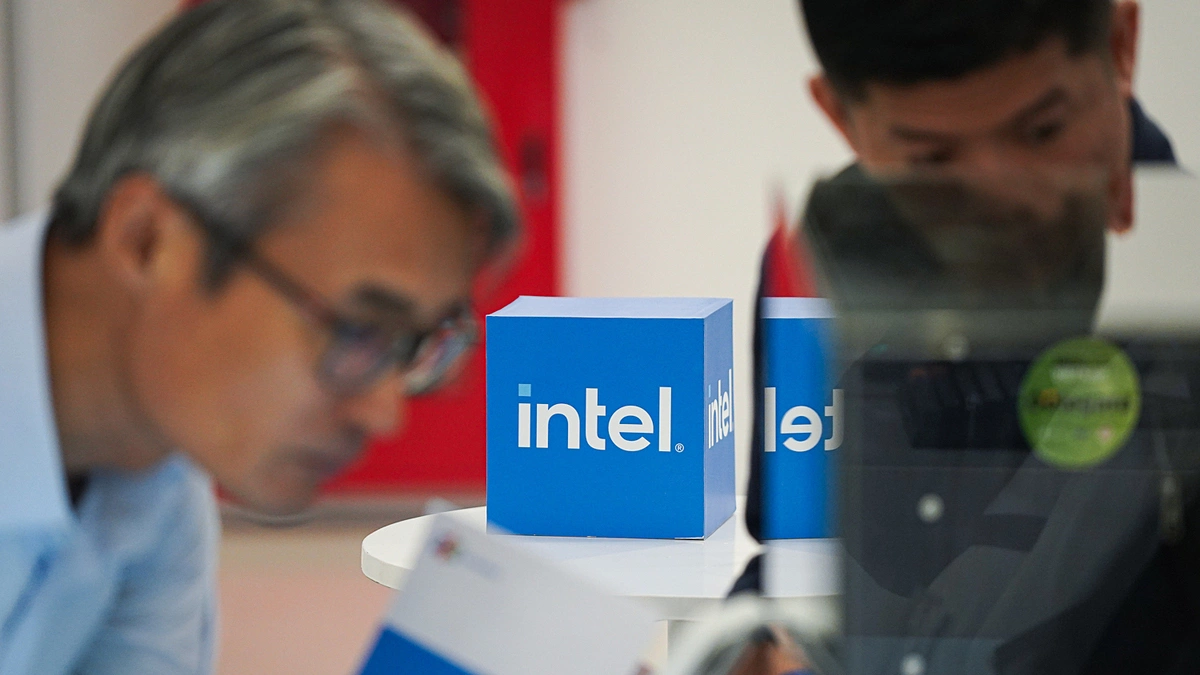
A visitor is looking at chips at the Intel booth at an innovation event in Hanoi, October 2024. Image: Luu Quy
Penn’s comments were made in the context of Intel and Apple reaching a preliminary agreement on processing some chips in early May, partly thanks to the promotion of the US government, according to WSJ. On June 18, US President Donald Trump also said that Apple had agreed to cooperate with Intel to design and produce chips in the US.
On June 16, Intel confirmed that it is piloting advanced chip production 18A-P, equivalent to a 2 nm process, which is expected to attract leading partners, including Apple. The 18A-P was first announced last year and is the latest variation on the 18A progression. The technology is in the testing phase – a technical check step before being put into mass production.
After missing out on the early wave of AI chips, Intel is starting to show significant progress. Along with Apple, the company joined hands with Tesla in April. These two partners are considered to help the American chip company enhance its reputation, promote technological innovation and increase competitiveness in the global semiconductor manufacturing race.
However, analysts have many mixed opinions, such as which Intel technology Apple will choose. Some think that Apple will follow in Tesla’s “footsteps”, which means waiting for the more advanced 14A process (expected 2028-2029) instead of the current 18A. Others believe that Apple will “sacrifice” outstanding technological advances in exchange for reliability, thereby prioritizing the use of 18A-P.
“Apple probably wants to use Intel’s 14A process. So it’s still a while away,” said Bob O’Donnell, an analyst at Technalysis Research. “If true, this would be an important development for Intel’s chip manufacturing business and the US semiconductor manufacturing industry in general.”
Daniel Newman, CEO of technology research company Futurum Group, estimates that mass production of Apple-designed chips is unlikely to take place before 2028 due to Intel’s limitations. Instead, the initial stage focuses on less important components, used in MacBook Air or some iPad Pro models.
Apple can even “hedge risks” by requiring Intel to produce low-end product trials before investing in important chip models. According to TechCrunchIntel has long had problems with chip progress and quality. With a partner like Apple, the company will have to meet high expectations regarding the rate of quality products – a factor that is being applied to TSMC.
“Investors base their valuation on the expectation of a perfect Intel in manufacturing, but the company has not achieved this in nearly 20 years,” commented Paul Meeks, head of technology research at Freedom Capital Markets. “Admittedly, it seems that Intel has made new strides, but we should have a reasonable degree of confidence.”
Previously, experts assessed that Apple’s cooperation with Intel would bring benefits to both. While Intel revived the semiconductor processing segment, which had been stagnant for a long time, the handshake helped Apple diversify its supply chain. They currently depend on TSMC to produce chips, but this company’s advanced production lines are overloaded due to huge demand from AI “giants” like Nvidia or AMD.
Intel’s current growth is largely influenced by US government policy. Last year, President Trump’s administration spent $8.9 billion from the Chip Act in exchange for 10% of Intel’s shares, and planned to pour an additional $10 billion to expand factories in the US. In the past 12 months, Intel shares increased 464%, bringing the market capitalization of this giant to 608.7 billion USD.
In the past, before switching to Apple Silicon, Apple used chips designed by Intel for Macs but often encountered delays. This resumption of cooperation, even as a outsourcing partner, marks a major turning point for both American technology icons.