Vietnam will have a national strategy on quantum technology, including special policy mechanisms for the field and identification of priority technologies for development.
The information was given by Associate Professor, Dr. Dinh Van Trung, Director of the Institute of Physics at the Academy, one of the members participating in building the quantum strategy, at the conference “Quantum technology in the new era” held on June 23. Accordingly, Vietnam plans to identify four technology pillars: security and quantum communications; quantum sensing and precision measurement; computational simulations and quantum algorithms; supporting materials and components.
In particular, post-quantum security is a priority, the reason the conversion review will take many years, while information, energy, and financial systems that use current encryption systems can all be decrypted when a powerful enough quantum computer appears. Hacker groups can collect data now to wait for decryption when there are sufficient technical conditions.
“To ensure data security and digital sovereignty, it is necessary to review all key systems and build a roadmap for converting to post-quantum cryptography,” Dr. Trung said.
The 2030 goal also determines the establishment of a national center for general coordination of quantum technology, human resource development, the formation of a quantum innovation ecosystem connecting the state, institutions, businesses and promoting international cooperation.
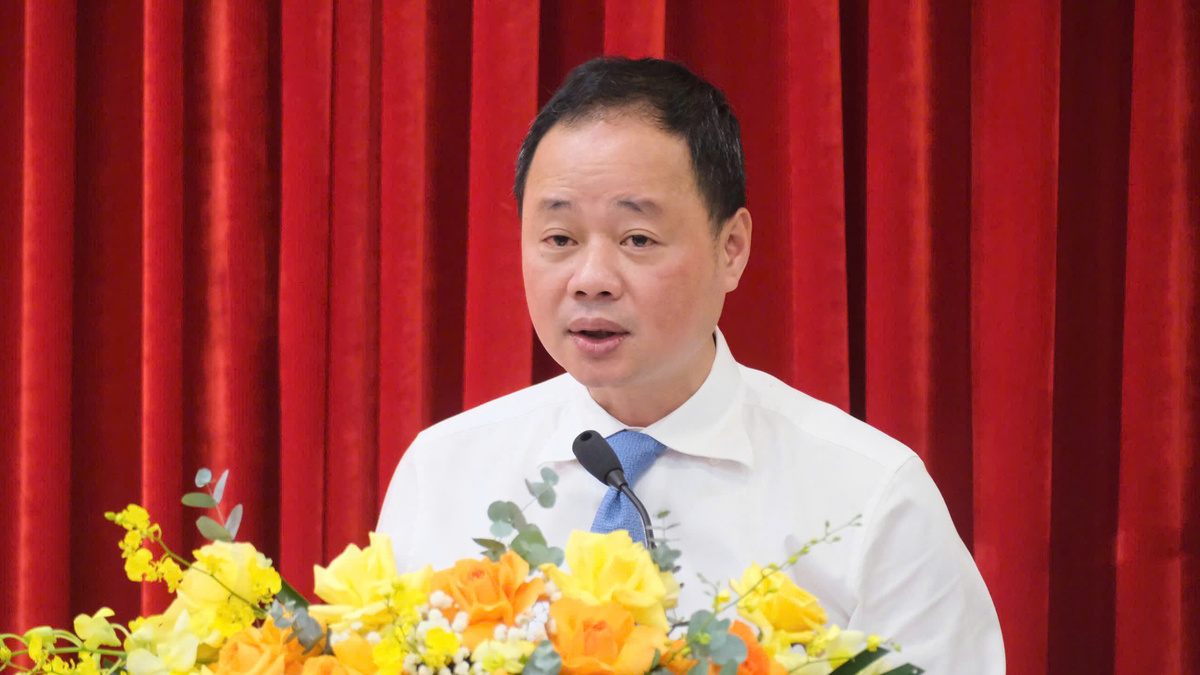
Associate Professor, Dr. Dinh Van Trung spoke at the conference on June 23. Image: HCMA
According to Prof. Dr. Tran Hong Thai, Deputy Head of the Central Policy and Strategy Committee, President of the Vietnam Academy of Science and Technology, many contents of quantum technology in the world are being researched, tested and verified. But if we wait until the standards have been determined, the market and supply chain have been controlled, Vietnam will no longer have a chance to participate. Accordingly, from now until 2030, Vietnam’s nearest goal is to build a national strategy, guiding the development of the quantum technology industry.
The representative of the Central Policy and Strategy Committee said that we should continue to perfect the quantum technology approach towards an ecosystem, including long-term investment and risk-taking mechanisms, shared infrastructure, solutions to build human resources and priority technologies suitable to Vietnam’s conditions.
“The strategic investment mechanism for quantum technology needs to accept risks and accept that not all products have value, but achieve the ultimate goal of Vietnam’s quantum industry developing,” Dr. Thai said.
Prof. Dr. Tran Hong Thai, Deputy Head of the Central Policy and Strategy Committee, spoke at the conference. Image: NB
Dr. Nguyen Quoc Hung, Director of the Institute of Quantum Technology at Hanoi National University, proposed that Vietnam’s national quantum strategy should clearly define goals in each stage, from foundation research to infrastructure development, application and commercialization. “Vietnam’s current weakness is that it does not have a strong technical team in quantum technology,” he said, recommending building a national program on human resources, combining specialized training and capacity building training.
Sharing the same opinion, Dr. Nguyen Hoang Duong, Deputy Head of the Academy’s Science and Technology Department, said that it is necessary to develop long-term human resources through both training and attraction policies. At the same time, the state needs to invest in key laboratories and shared research and testing infrastructure to serve R&D and training.
Regarding the technologies Vietnam aims to develop, Mr. Nguyen Vu Ha, Deputy General Director of Viettel Group, said that it is necessary to add quantum computers, helping Vietnam to be more proactive in developing applications and products and limiting the impact of fluctuations such as embargoes.
“The expected pillars are not yet focused on the core of technology which is quantum computing. We propose that the national quantum strategy should go into core technology,” he said.