Samsung and the National Archaeological Museum have presented a new immersive experience in 360-degree format which puts the technological capabilities of the Korean company at the service of the museum to recreate a Roman house, allowing users to tour the different spaces of the Roman domus of ancient Hispania.
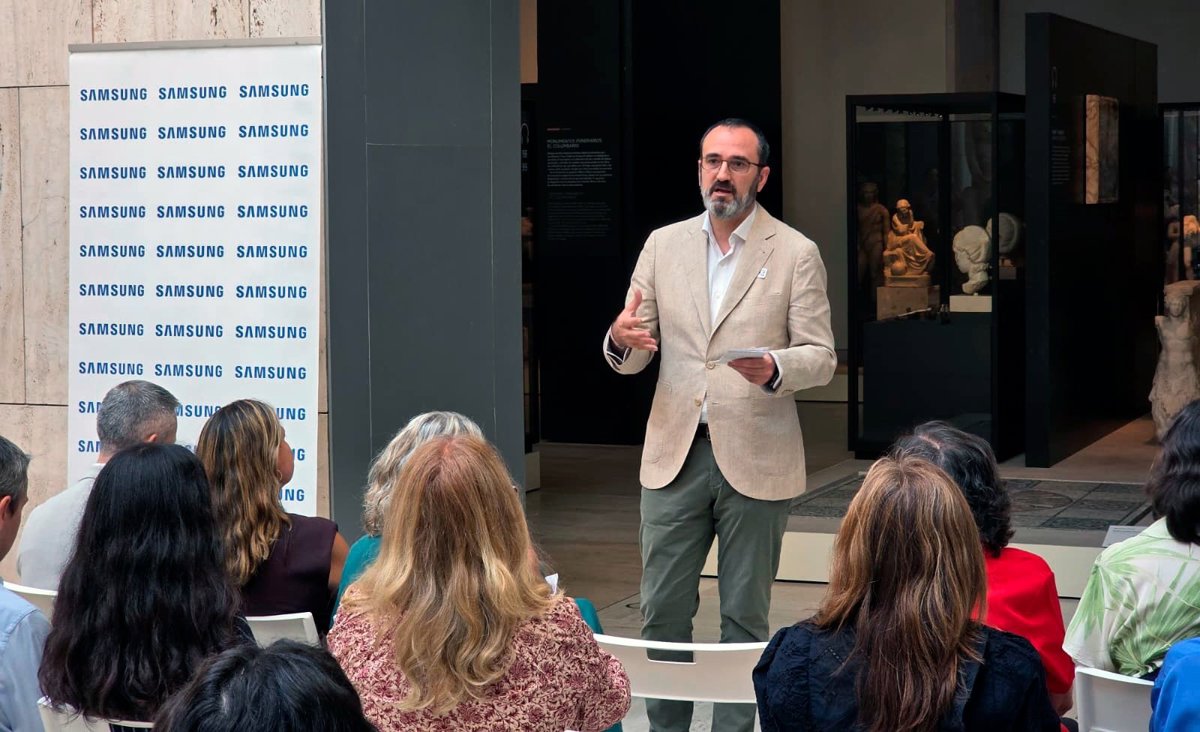
The new experience was presented this Monday before the press in Madrid, at an event in which both entities announced the renewal of your collaboration agreement for the next two yearsfurther extending this relationship between museum and technology, which began a decade ago to promote new forms of bring historical heritage closer to citizens through technology.
As a result of this agreement, Samsung and the National Archaeological Museum have presented a new virtual experience that allows the visitor to access a 360-degree interactive video, to discover in an immersive way every detail of the rooms that made up a Roman domus 2,000 years ago.
“Today we present a 360-degree virtual recreation of a Roman domus. Within the framework of our permanent connection, we have integrated this experience as a museographic resource of the installation“, declared the director of the National Archaeological Museum, Isabel Izquierdo.
“The experience is tremendously simple. You only need a digital device from any manufacturer, scan the QR code and the journey begins through the content”, declared the Director of Brand and Innovation of Samsung Spain, Miguel Ángel Ruiz, in relation to the ease of use of this immersive journey through the mobile phone and a Roman house understood as a social and architectural “microcosm”.
That is, it is enough scan QR code with a ‘smartphone’arranged in room 21 of the museum’s permanent exhibition, to start the immersive tour through the screen, with a voice-over that guides users and contextualizes the spacesthe activities that took place inside and the everyday utensils that were part of daily life at that time.
The QR gives access to the video on YouTube which, while it is playing, allows you to use the mobile screen to explore the area in a 360-degree virtual experience. This means that can be moved, rotated or pointed anywhere to take a virtual walk and follow the steps of the narrative.
OBJECTS AND SPACES THAT COME TO LIFE
This project seeks give the necessary context to the original archaeological pieces within what is its historic domestic environment, and allows the real objects seen within the app to “come to life” when visiting room 21 of the museum.
“There are objects that you can see in this room belonging to those different rooms of the Roman domus which now come to life in this application“says Izquierdo, by allowing the visitor to see in situ how each of the objects would be arranged.
“While in a current house we think of fixed functions such as a dining room with its table and chairs, In the Roman world, rooms were much more flexible and they could serve different purposes,” says the person in charge of the exhibition’s contents, María Jesús Rubio Visiers, highlighting the differences between the modern home and the microcosm of the domus.
Samsung has been collaborating with this institution for a decade, which comes to ratify its commitment to culture and national heritage. “It is part of our vision of being part of the heritage of each country we are in,” Ruiz stated in this regard. This initiative is part of the commitment of both entities to the use of technology as a bridge to global knowledge.
All in all, this new immersive experience is now available at the National Archaeological Museum to learn about the Roman domus to anyone in the languages of Spanish, English and French.