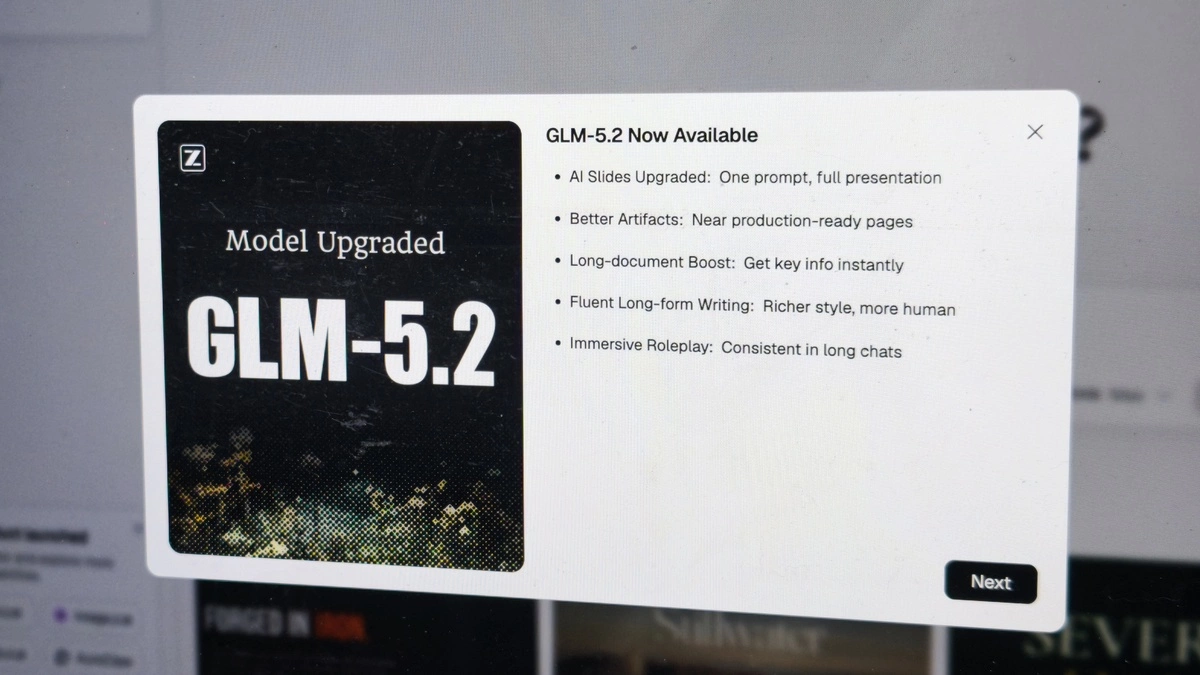
GLM-5.2 from Zhipu (China) is considered to be comparable to some advanced American models in finding security errors.
WSJ citing security experts that the capability gap between leading US and Chinese models is narrowing significantly. Chinese AI systems are also becoming popular due to their cheaper prices, meeting the need for businesses to control AI costs.
According to cybersecurity company Semgrep, in several benchmark tests, Zhipu’s GLM-5.2 outperformed Anthropic’s Claude Opus 4.8. When provided with additional instructions, Opus 4.8 and GLM-5.2 can compete with Mythos – the most powerful model today in terms of security bug finding capabilities.
“China is ensuring that the gap will become smaller and smaller over time,” said Lior Div, CEO of cybersecurity company 7AI.
In early June, billionaire Elon Musk predicted on X that by the first quarter of 2027, Chinese AI developers would catch up with Anthropic’s strongest model today. At that time, Tang Jie, co-founder of Zhipu, publicly responded: “It won’t take that long.”
Zhipu introduces the latest model GLM-5.2. Image: Nam Nguyen
AI is becoming increasingly effective at finding security flaws, but can be exploited to carry out cyber attacks. Therefore, using artificial intelligence to quickly detect and patch vulnerabilities becomes even more urgent. According to SCMPZhou Hongyi, founder of 360 Security Technology, warned that China’s cybersecurity industry needs “its own Mythos” to deal with risks from AI.
Claude Mythos was announced by Anthropic in early April. However, due to concerns that it could detect and exploit security vulnerabilities of any system, instead of commercializing it, the company only granted access to a number of companies and organizations through Project Glasswing – an initiative described as “an effort to protect the world’s most important software”.
Meanwhile, the US government is also controlling new AI models before launch to ensure safety. However, some experts tell WSJ that the policy could be counterproductive when the US restricts new models of OpenAI and Anthropic, but allows open weight models of DeepSeek and Zhipu to be widely applied.
“Restricting the latest US models is encouraging companies globally to switch to the cheaper Chinese open weight model, weakening the US AI industry,” commented Niels Provos, a researcher who formerly led the security team at Google and Stripe.