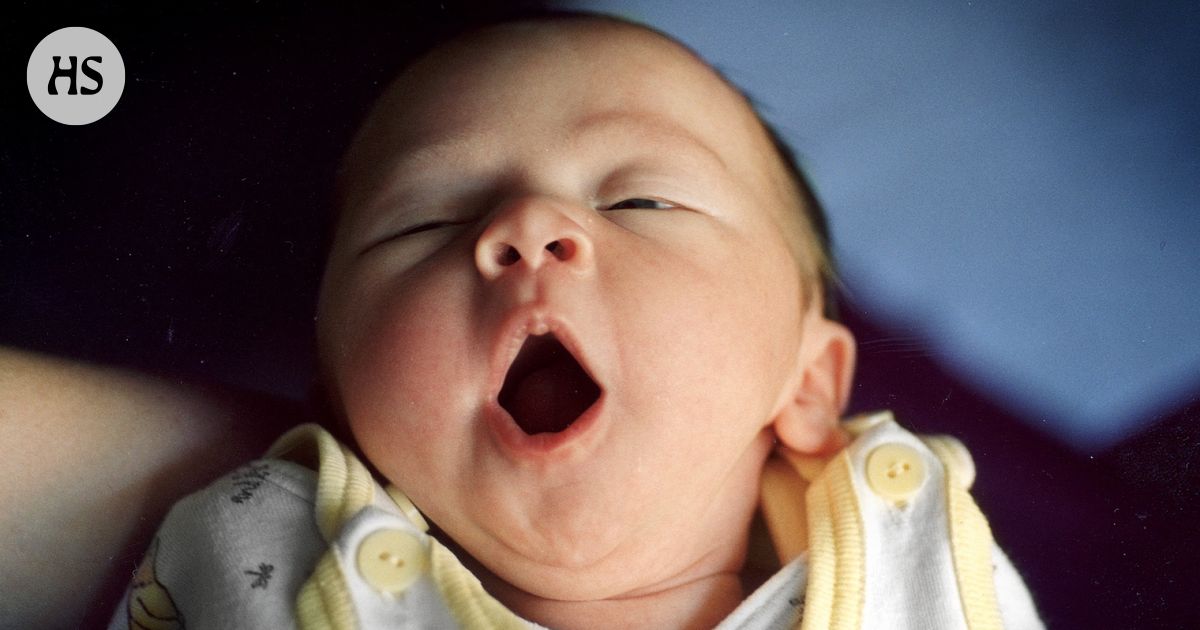
Pregnant a woman yawns. After about a minute and a half, the fetus in the womb also yawns.
Italian researchers in the exam this happened so repeatedly that the timing of the yawn no longer seemed a coincidence.
When the mothers looked at yawning people and started yawning themselves, the fetuses also yawned more often than usual.
Perception suggests that fetal movements can be influenced not only by the child’s own development, but also by what happens in the mother’s body.
According to the researchers, this is the first practical evidence at least that the mother’s yawning can cause the fetus to yawn.
The final data of the study included 36 pregnant women at 28–32 weeks of pregnancy.
Mothers were made to yawn in an experiment by showing them videos of people yawning.
At the same time, their faces were filmed with a video camera and the faces of the fetuses were monitored with ultrasound. This allowed the researchers to see when the mother and fetus yawned.
The researchers examined the recordings frame by frame. They distinguished yawning from the usual opening and closing movements of the mouth. They then determined whether the fetal yawning coincidentally followed the mother’s yawning more often.
A machine learning model was used to compare the movement patterns of maternal and fetal yawns. The way the mouth opened and closed during yawning was also similar for the mother and fetus.
The fetus until now, yawning has largely been considered an automatic movement produced by the fetus’s own nervous system.
Now the results suggest that the bodily changes related to the mother’s yawning can also affect when the fetus yawns. However, the research does not yet say what the exact mechanism of this connection is.
According to the researchers, this matching of the mother’s and the fetus’s bodies can be one of the early starting points for the development of social interaction.
The study was published Current Biology in the journal.