During Gamescom 2026, the largest gaming industry trade show, NVIDIA announced the introduction of the DLSS 4.5 Ray Reconstruction update and the new RTX Mega Geometry architecture. DLSS Ray Reconstruction technology represents a neural rendering system designed to replace traditional noise reduction filters with an artificial intelligence network trained on supercomputers, capable of processing and outputting high definition pixels in the portions of the image where the sampling of light rays is incomplete.
The implementation of the second generation transformer model within DLSS 4.5 offers 35% greater computational capacity and handles 20% more parameters than the previous version, improving lighting precision, temporal stability and definition of moving elements. The update, which can be integrated via the “DLSS Override – Model Presets” section within the official application for GeForce RTX series graphics cards, it is already applicable on thirty marketed video games including Alan Wake 2, Cyberpunk 2077, Indiana Jones and the Great Circle and PRAGMATA.
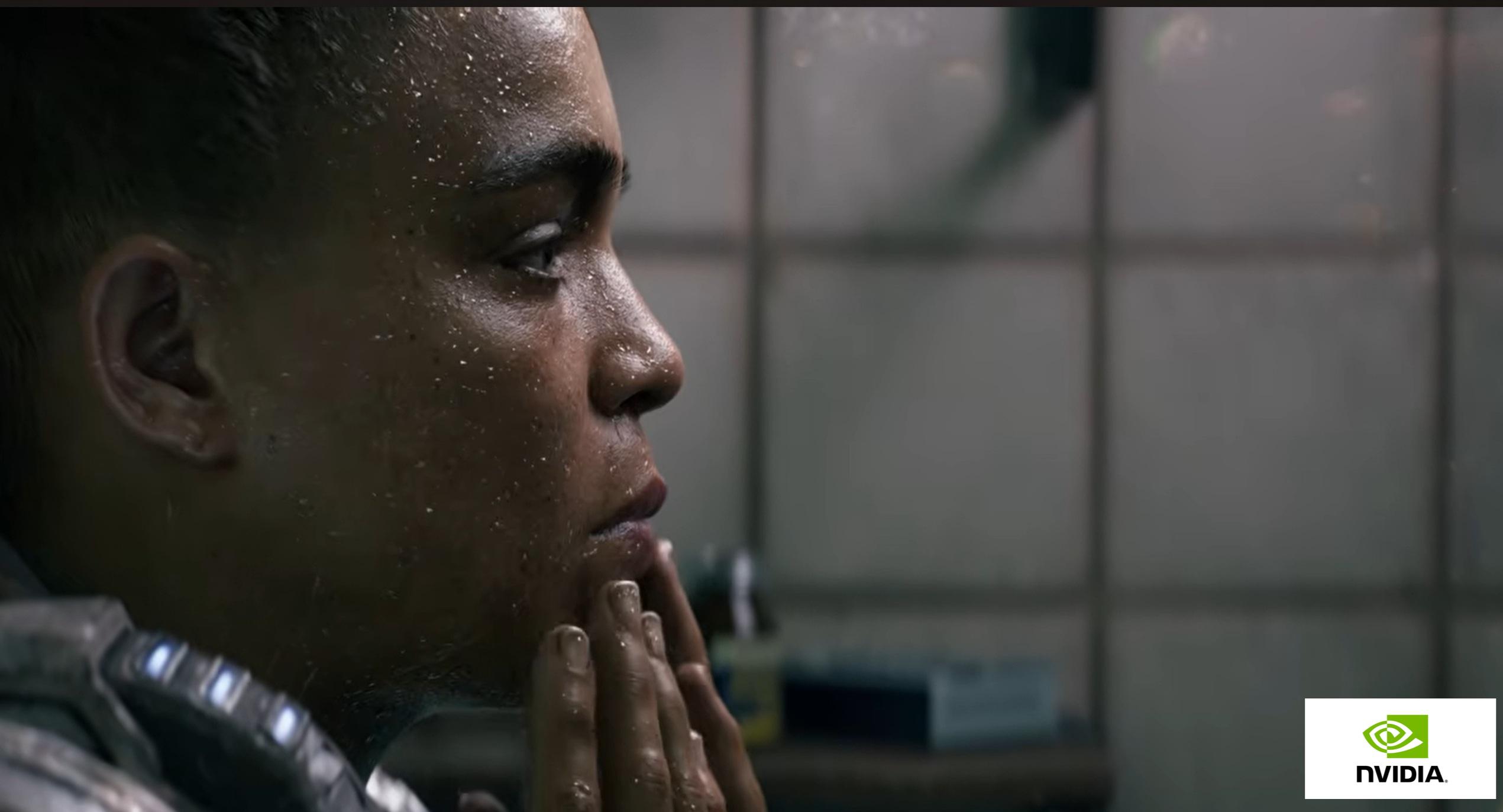
At the same time, NVIDIA has unveiled RTX Mega Geometry technology, scheduled to debut with the release of the Gears of War: E-Day video game on October 6. This solution addresses a structural weakness of Unreal Engine 5 related to the Nanite geometry management system: previously, when Nanite’s very high-detail geometries were processed together with the DXR 1.2 or Vulkan ray tracing libraries, the graphics engine converted the complex structures into a low-resolution static mesh only for the processing of shadows and reflections, generating visual discrepancies compared to the main scene. The technology developed by the engineers solves the limitation by allowing ray tracing over the entire native polygonal detail, improving the consistency of shadows and reflections even on small elements such as debris, vegetation or metal surfaces.
The RTX Mega Geometry architecture is set to be integrated into Microsoft’s DirectX Raytracing 2.0 industry standard, extending full Nanite geometry tracking compatibility to all future titles developed in Unreal Engine 5. Finally, As part of the Gamescom 2026 announcements, the adoption of DLSS 4.5 suites and advanced lighting technologies has been confirmed in upcoming industry productions such as 007 First Light, CONTROL Resonant, AION 2 and Black State.