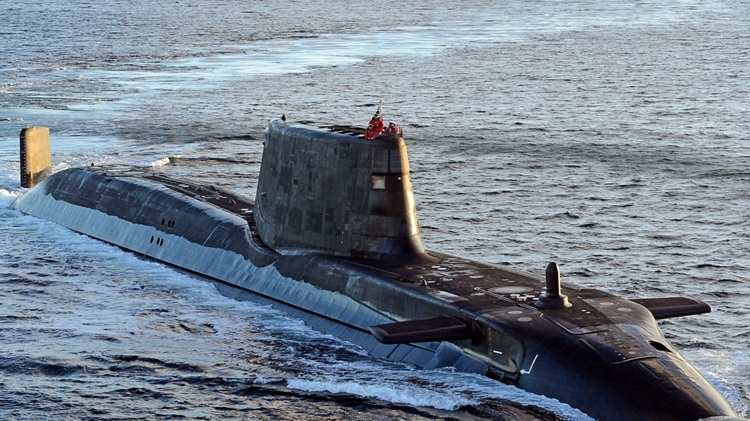
The British Astute submarine can stay underwater for 25 years before needing to refuel, while the reactor core used in modern US naval ships can operate continuously for over 1.6 million km.
Theo Science ABCIn 1960, the US Navy submarine USS Triton completed the first trip around the world underwater, traveling 49,491 km in 60 days and 21 hours without rising to the surface and the reactor on board could operate for many years.
Theo Interesting Engineeringnuclear-powered submarines are capable of surviving under the sea for several weeks to several months without needing to regularly surface for air or charge their batteries like conventional submarines. In essence, a nuclear submarine is a self-sufficient environment, able to produce energy, oxygen and fresh water, and contain enough food and supplies for the crew to survive for long periods of time.
Reactors generate heat through nuclear fission, so nuclear submarines can continuously generate power while completely submerged underwater. BGR said that before the USS Nautilus used nuclear power (in 1954), submarines mainly used diesel-electric engines, which were limited in diving time. The electric motor, which is activated when the submarine is submerged, needs to be recharged after traveling 129 km or up to 4 days underwater. The diesel engine must run to recharge the batteries, requiring the submarine to surface to take in air.
In a typical naval reactor, the heat generated is transferred to water in a separate steam system, which is used to drive turbines to provide power and propulsion. The steam then condenses back into water and is reused in a closed cycle. This design gives nuclear submarines almost unlimited operating range. According to the US Department of Energy, reactor cores used in modern naval ships can operate continuously for over 1.6 million km.
British Royal Navy nuclear submarine Astute. Image: Wikipedia
How to create oxygen and fresh water
Relying on electrolysis (using electric current to create hydrogen and oxygen from water through a chemical reaction), today’s submarines can produce oxygen on board for the crew to breathe without an atmospheric supply, while also removing carbon dioxide and many other pollutants from sealed environments.
The nuclear fission process provides enough energy for the electrolysis device. However, direct treatment of seawater available around ships will produce toxic chlorine gas. Seawater must go through a reverse osmosis process to filter out the salt before creating pure oxygen.
The reactor on the ship is especially useful, because it provides a huge source of energy to help the life support system operate continuously. Similar to oxygen, nuclear submarines can produce fresh water from seawater through a distillation system.
One of the biggest limitations forcing nuclear submarines to surface is food. According to the US Navy, this is a major limitation on underwater patrol time.