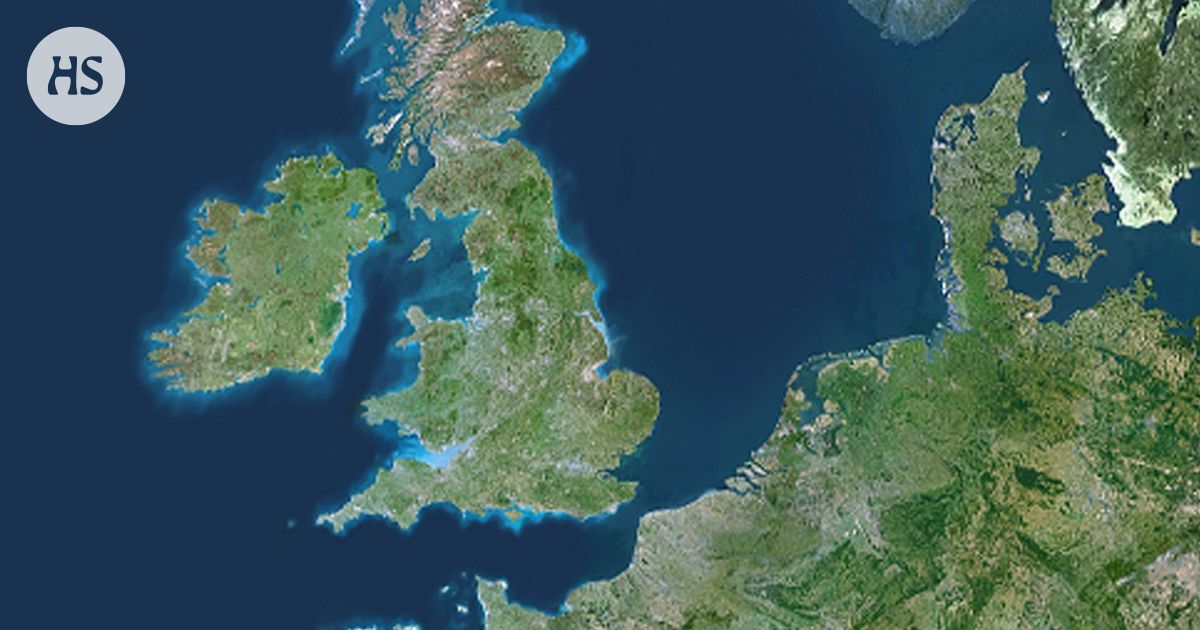
When during the ice age, a lot of water was bound to the continental glaciers and the sea level therefore fell, a large part of the North Sea was dry land.
That area named Doggerland was milder than previously known, a study of bottom sediments now shows.
The cold trees and large forest animals enjoyed themselves there. It offered ancient people a perfect opportunity to adapt to new ways of life, speculate British and American researchers from the US National Academy of Sciences In the Pnas science journal.
Woodiness was not a surprise in itself. Some sort of drier past was inferred long ago from peats and tree remains found on the seabed.
The name Doggerland was given to the area in the late 1990s after the Dogger depression in the middle of the North Sea.
It was then realized that the entire southern part of the sea from the northern tip of Denmark to the middle of Britain had been dry.
However, it was not known what kind of trees had grown in the region and when.
Now the researchers solved it by identifying the species from the DNA that had been stored in the bottom layers.
The samples were drilled from an ancient river valley 30-40 meters deep under the sea, at a distance of twenty kilometers from the east coast of England.
For example, there were wild boars running around in the forest.
Findings confirm the idea that not all European trees retreated to the southern parts of the continent during the ice age, but also persisted in places in the northern protected areas.
During the last glaciation more than 16,000 years ago, oaks, elms and walnut bushes, among other things, grew along the ancient river.
For example, they did not return to England until thousands of years later. For example, there were wild boars running around in the forest.
The researchers conclude that thanks to the lush vegetation, forest game and seafood from the nearby coast, Stone Age people were able to learn new ways of living here.
They were needed when conditions changed as the climate warmed and the Ice Age Suurriista disappeared.
Glaciers as the sea melted and the sea rose, Doggerland began to sink beneath the waves. However, some of it persisted for a long time.
The studied valley did not sink even in a powerful tsunami, which was raised from the Norwegian Sea by one of the largest known landslides in the Norwegian Sea more than 8,000 years ago.