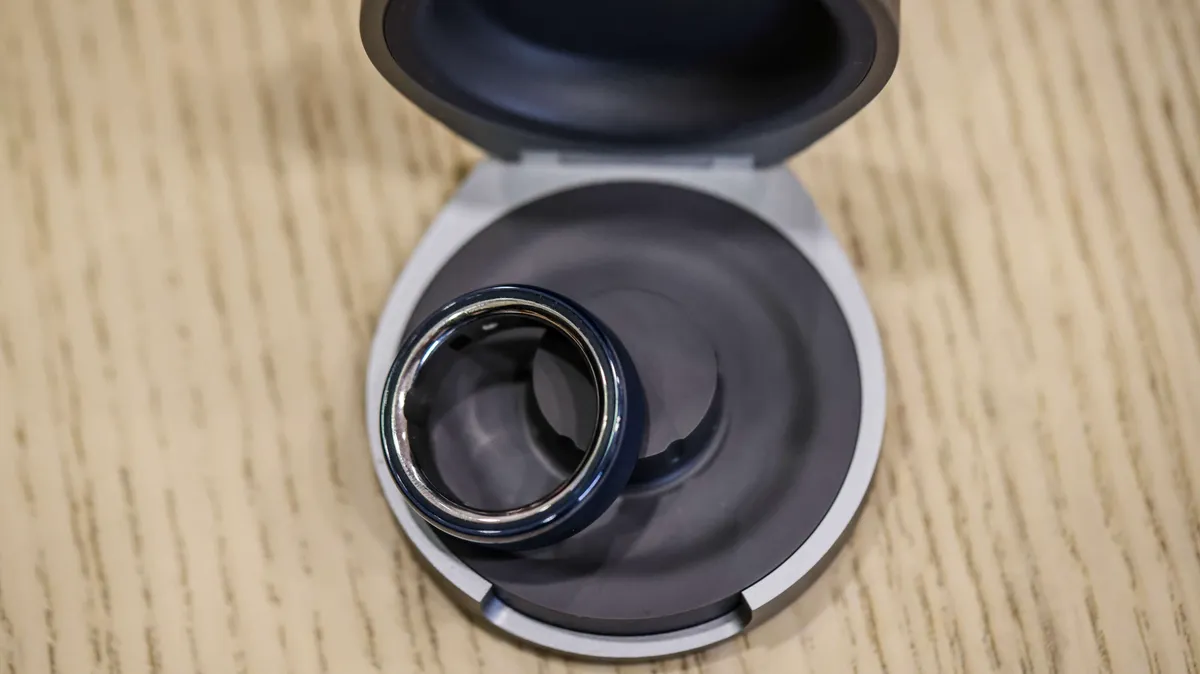
American financial website Marketwatchin columnist Brett Arends warns investors smart ring company Ouraan related risks. According to him, plenty of warning signs have accumulated.
According to Arends, one of them is that most of the roughly $2.2 billion raised in the IPO will go to the company’s current owners.
The Marketwatch columnist states that the investor should consider participating in two listings or whether it is worth holding on to the stock if it gets a spike when it goes public.
Oura was scheduled to list this week in the United States, aiming for a market value of 12.8-14.1 billion dollars, or approximately 11.1-12.3 billion euros. However, on Tuesday, the company said he was postponing the listing due to the uncertainty of the IPO market.
In his column, Arends estimated that the market value of $14 billion seems large in relation to the company’s revenue, which was $1.9 billion in the first nine months of the fiscal year.
“At the same time, business expenses doubled in the first nine months, growing even faster than turnover,” Arends writes.
He reminds that Oura competes with its smart ring in the market of the world’s largest and most powerful consumer companies. The more successful Oura’s rings are, the more likely these tech giants will launch their own similar products.
Samsung is already making his own ring. Apple, Google and many others manufacture similar wearable devices, such as the Apple Watch, which also track activity and health values and synchronize with a mobile phone.
Oura can also become a desired shopping destination
However, Arends does not knock out Oura completely. According to him, in the future, a major consumer electronics company or even a company in the healthcare sector might consider buying Oura cheaper and faster than starting operations from scratch. He also reminds that Oura already cooperates with the American pharmaceutical giant Eli Lilly’s with, which is also known to be participating in the initial public offering.
Arends also praises the company’s profit figures.
“Oura is growing fast. At last count, revenue is growing 74 percent a year. The company is profitable, and at last count had little or no net debt.”
According to Arends, Oura also has the advantage that rings are less disturbing to many consumers than smartwatches, many of which are quite clumsy.
Arends states that the single most impressive piece of information in the more than 300-page IPO prospectus is that 40 percent of Oura’s new customers come through recommendations from current customers.
“It says quite a lot about the customer experience and brand loyalty. Also, customer churn, i.e. the proportion of paying subscribers who cancel their subscriptions each year, is reasonably moderate,” Arends writes.
Despite this, the columnist’s conclusion is blunt.
“I myself would invest in this IPO and hold the shares only if I believed Oura would be able to either beat its huge competitors or perhaps entice them to buy itself.”
Arends reminds readers of the smart bracelet company Fitbitin. After its IPO, it was subjected to severe punishment by competitors and eventually ended up being bought by Google for only about a third of its IPO price.
“The winners were only quick profit seekers who participated in the IPO, but sold the shares soon after trading started.”