This Thursday marks World Coding Day in a moment of profound transformation of programmingwhich has gone through milestones such as the theoretical bases formulated by Turing in the 20th century, the free software movement at the end of the same century or the emergence of Artificial Intelligence (AI), which has been a step towards the democratization of programming by bringing it closer to people without technical knowledge.
UNESCO Member States designated October 29 as World Coding Day in 2024 to recognize the role that coding has played in today’s digital world, in which a mobile phone allows, through natural language with AI, to design mobile applications or user experiences, something that was not possible just a few years ago.
At Entelgy, The BusinessTech Consultancy, they have analyzed the origins and evolution of coding since the first languages - when in the 19th century, Ada Lovelace, the British mathematician and writer considered the first computer programmer in history, designed one of the first algorithms intended to be executed by a machine— to the impact that the use of natural language AI is currently having in programming. A recent example is Epic Games, creator of Fortnite, which has confirmed that it uses ‘vibe-coding’ in Unreal Engine.
“Our dependence on digital technology is absolute. Every application, every banking transaction and every critical infrastructure depends on the code,” says the Head of Technology and AI at Entelgy, Jorge Herrero, going on to point out that “the future of software development not only involves making it more accessible through AI, but also ensuring that it is robust, ethical and secure from its conception.”
FROM TURING TO THE FIRST PROGRAMMING LANGUAGES
If during the decades following Turing’s theoretical foundations, formulated in 1936, the first programming languages and advances in translation of instructions into code made it possible to develop scientific applications more easily, it was in the sixties when this discipline was established. to extend beyond the scientific field and lay the foundations for the subsequent digital revolution.
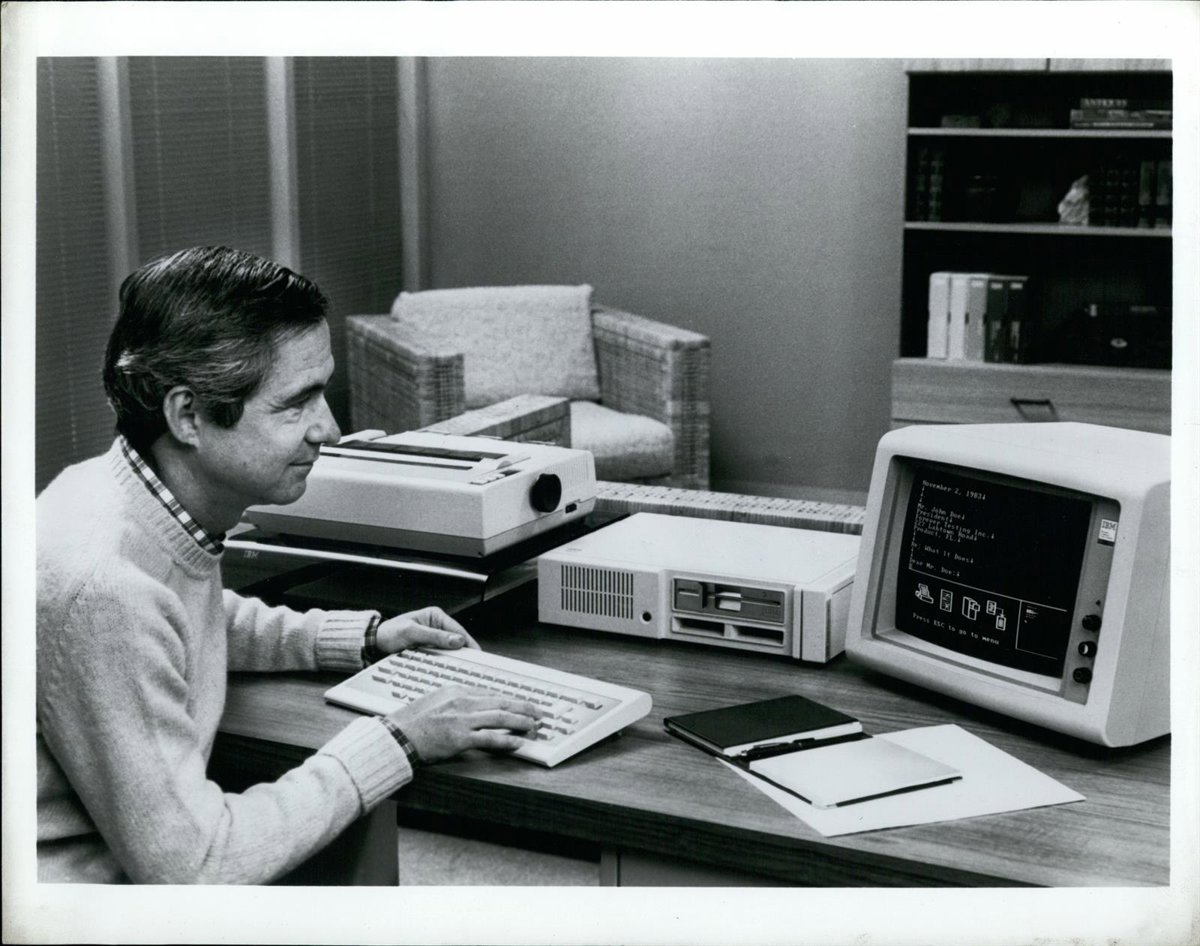
The 1960s and 1970s were essential for programming languages to allow more structured instructions to be coded, with examples such as the C language, which, added to the expansion of personal computers in the early 1980s, contributed to more and more people getting into coding.
The emergence of the internet It was another of the reasons that led to the expansion of learning in this subject and promoted, above all, the free software movement, which, thanks to its essence of sharing the source code so that a community of developers could modify and share programs, fostered a new, more collaborative way of developing software.
Collaboration between developers connected through the Internet, thanks to tools like Git, designed by Linus Torvalds (creator of Linux), put the verb “collaborate” at the top, especially because be the central engine so that starting in the 2000s it began to make the ‘cloud’ known such as cloud computing to store data, use applications and develop services over the Internet.
THE CLOUD, STREAMING AND MOBILES
Free software was the basis for Amazon’s own AWS cloud, launched in the mid-2000s, to lay the foundations for the giant that the American company is today, especially in the financial aspect, since it was born on Linux and other open source technologies to lower the costs of its data centers.
Today, Linux supports 90% of the public cloud workload. That is to say, that the ‘cloud’ industry would not have been economically viable if large companies had had to pay for proprietary software licenses.
There is another important actor in the history of programming, Spotifyas one of the great examples of a streaming platform for digital distribution, by solving the challenge of latency in 2008 with its hybrid P2P architecture, and laid the operational foundations for massive data distributionwhile Netflix took streaming engineering a step further with migration to the cloud and adaptive video distribution.
These technologies used the arrival of mobile devices, social networks and digital services to consolidate the presence of ‘software’ in the daily lives of millions of people around the world. A jump in which iOS and Android were key as mobile operating systems, the first, closed source and launched with the first iPhone in 2007, and the second, which arrived in 2008 based on the Linux kernel and as an open source project.
This does not mean that the rapid evolution of digital went hand in hand with the risks posed by malicious software, such as Stuxnet in 2010, and the Heartbleed vulnerability in 2014, which has meant that words like ‘phishing’ and ‘malware’, among others, are part of people’s lives in all possible forms of cyberattacks.
AI DEMOCRATISES PROGRAMMING
Finally, if AI has meant a paradigm shift in programming, mainly due to the use of natural language that brings it closer to anyone, in the professional and industrial field it has represented an evolutionary step that has reduced the times in ‘debugging’, finding ‘bugs’ and optimizing the system.
A change that is reflected in Microsoft’s ability to resolve more than 1,400 security vulnerabilities in its products in the last update released this October, when until a few years ago it corrected between 60 and 80 bugs per month on average, or that Epic has confirmed that it uses ‘vibe-coding’ to develop code and features of Unreal Engine, one of the most widespread game engines and used by some of the most important video game studios in the industry.
Forums – Profil de vesinhxanhsachdep
Home.Php
vesinhxanhsac的个人资料 – 旅榜 –
Home.Php
vesinhxanhsac的个人资料 超级变速器官方论坛
vesinhxanhsac的个人资料 – 行先摄影网-专业的摄影大赛网络服务平台 – Powered by Discuz!
Home.Php
Khaos Gaming Community Forum – Profile of vesinhxanhsachdep
vesinhxanhsac的个人资料 – 住家网 – Powered by Discuz!
Вход
vesinhxanhsac的個人資料 – Regal Credit Finance Limited – Powered by Discuz!
vesinhxanhsac的个人资料 康创联盛官网
vesinhxanhsac的个人资料 – 兴化乐吾论坛 – Powered by Discuz!
vesinhxanhsac的個人資料 – 遊戲年代 GOAL GOAL – 遊戲年代 GOAL GOAL
vesinhxanhsac的空间 – 巧小君 qiaoxiaojun.vip 小君广场舞 巧小君99 小君舞蹈秀 – Powered by Discuz!
Member.Php
Home.Php
vesinhxanhsac的个人资料 88M2传奇资源网
palangshim
vesinhxanhsac的个人资料 循经太极 –
Home.Php
Home.Php
Forums – Profile of vesinhxanhsachdep
vesinhxanhsac的空间 华强北水货手机报价 二手手机回收
vesinhxanhsac的個人資料 – 真愛旅舍 – Powered by Discuz!
vesinhxanhsac的个人资料 – 百色|右江论坛 – Powered by Discuz!
vesinhxanhsac的个人资料 – HuiFa Family – Powered by Discuz!
Beyblade Forum
vesinhxanhsac的個人資料 – ADEN LINEAGE M – Powered by Discuz!
dahuafu.us