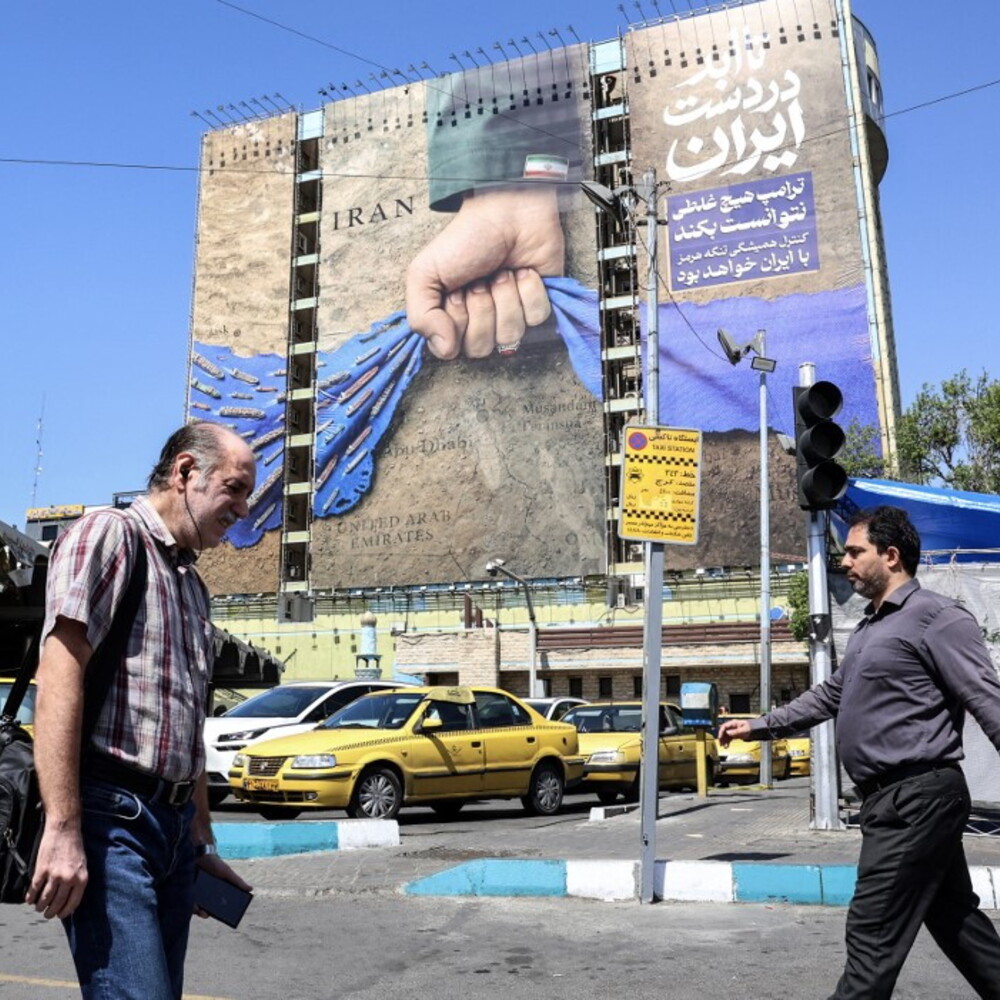
The President of the United States Donald Trump defined the war with Iran “almost over”anticipating the possibility of a new phase of negotiations with Tehran. His statements emerge from an interview given to Fox News host Maria Bartiromo, some extracts of which were released on social media in view of the full broadcast of the interview on the program Mornings with Maria Bartiromo.
According to what the journalist anticipated, Trump has reiterated several times that he believes the conflict is “very close to the end”. The president argued that a possible direct attack on Iran would have devastating consequences for the country: “If we left at this exact moment, it would take them twenty years to rebuild their country. And we’re not done yet,” he said, adding that Tehran would now be “determined to reach an agreement.”
Regarding the attack against Tehran, “I had to change direction – Trump reiterates – because if I hadn’t done it today we would have an Iran with a nuclear weapon and if they had had it today we would call everyone in that country ‘gentlemen’ and I don’t think we want that”.
White House, second meeting in Pakistan considered
Washington is discussing a possible second round of negotiations with Iran, again in Pakistan, the White House said today, after the failure of the first round last weekend in Islamabad. “These talks are ongoing, but nothing is official until you hear from the White House,” said White House spokeswoman Karoline Leavitt. “But we are optimistic about the prospect of an agreement,” he added.
“Most likely they will be held in the same place as the previous time,” he specified.
Axios: US and Iran close to agreement to end war
American and Iranian negotiators made progress in the latest round of talks yesterday to move closer to a framework agreement to end the war. Axios reports this, citing two US officials. Vice President JD Vance, White House envoy Steve Witkoff and senior adviser Jared Kushner were engaged in calls and exchanging proposals with the Iranians and mediators yesterday. The parties – with the contribution of Pakistani, Egyptian and Turkish mediators – have tried to fill the points still open for an agreement before the ceasefire expires on April 21. Sources close to the negotiations have warned, however, that an agreement is not guaranteed, given the substantial differences between the US and Iran.
Lebanon: Netanyahu convenes security cabinet on truce in Lebanon
Prime Minister Benjamin Netanyahu has convened the security cabinet this evening at 8pm local time (7pm in Italy) to discuss a possible ceasefire in Lebanon. The Times of Israel reports it, citing Reuters.
An extension of the truce and a resumption of negotiations are looming
An extension of the ceasefire between the United States and Iran beyond the scheduled April 21 deadline is looming, and a resumption of negotiations before that date. The Associated Press reports this, citing mediation sources. According to the AP, regional sources explained that there has been progress, and that the United States and Iran have “agreed in principle” to extend the ceasefire. The mediators are also pushing for a compromise on the three issues that prevented an agreement at last weekend’s direct talks in Islamabad: Iran’s nuclear program, free movement in the Strait of Hormuz and the payment of war damages.
Lebanon: media, one-week truce from tonight
A week-long truce in Lebanon could come into force this evening. The newspaper al Mayadeen revealed this, citing an Iranian security source.
“Following pressure from Iran, a ceasefire in Lebanon will be approved this evening,” the source explained. The truce would expire together with the one in force between Iran and the United States. However, the same source urged caution: it is possible that Israeli Prime Minister Benjamin “Netanyahu could move again to undermine this agreement”, he explained.
Today a Pakistani delegation will be in Tehran for mediation
A delegation from Pakistan is expected in Tehran today to discuss the ongoing negotiations with the United States. This was reported by the spokesperson of the Foreign Ministry, Esmaeil Baqaei. “This trip follows the talks in Islamabad” last weekend, he said. “The Pakistani side has held consultations and talks with the Americans, and during today’s visit, we will discuss our positions and views in detail,” he said.
Vance: “The truce is holding”
Also confirming a climate of relative détente was US Vice President JD Vance, who, speaking to journalists, declared that the “truce is holding”. While recognizing the complexity of the diplomatic path, Vance said he was confident in the possibility of an agreement.
Speaking later at a forum of the conservative organization Turning Point in Phoenix, Vance explained the US administration’s position: the United States would be ready to treat Iran “like a normal country” economically, provided that Tehran verifiably renounces the development of nuclear weapons. “The United States will help it prosper in the world economy,” he said, stressing that the goal is to foster lasting stability.
The vice president’s statements come a few hours after Trump announced that negotiations with Tehran could resume within two days. According to an article in the New York Times, Iran has proposed to Washington a five-year suspension of its nuclear program. However, the US delegation judged the period too short to guarantee effective security.
Tehran: “Ready to manage security in Hormuz with the Gulf States
Iran is ready to ensure the security of the Strait of Hormuz together with other coastal states if the war ends. This was assured by the spokesperson of the Iranian Foreign Ministry, Esmaeil Baqaei. “Iran, together with coastal states, can ensure the security of this waterway, provided that the war waged by America and the Zionist regime against Iran in the region comes to an end,” he said. Baqaei also praised the line held by the Europeans on the blockade of the strait. “The security of the Strait of Hormuz has been guaranteed by Iran for several decades. In these 40 days, security has been compromised by the war waged by the United States and the Zionist regime,” he said during a press conference, “we are pleased that the Europeans have shown wisdom and have not fallen into the trap set by the United States and the Zionist regime.”
Trump: “China is very happy that I will reopen the Strait of Hormuz”
“China is very happy that I am definitively opening the Strait of Hormuz. I do it for them too, and for the whole world.” US President Donald Trump wrote it on his social network Truth. “This situation will never happen again. They agreed not to send weapons to Iran,” he continued, “President Xi will give me a big, warm hug when I get there in a few weeks.” “We are collaborating intelligently and very effectively! Isn’t it better than fighting?”, Trump concluded, recalling however that the US “is very good at fighting, if necessary, much better than anyone else!!!”.
Tehran: “Wise Europeans, no interference in the region”
Iran called on Europe to be “wisdom” and avoid “interference” in the Strait of Hormuz. “Any move or interference in regional affairs will only serve to complicate the situation,” Foreign Ministry spokesperson Esmaeil Baqaei said. “We are pleased that many European countries are wise enough not to fall into the trap that the United States and the Zionist regime have set,” he added.
Starmer: “I won’t give in to Trump’s threats, it’s not our war”
“My position on the war with Iran has been clear from the beginning: we will not be dragged into this war. It is not our war.” Thus British Prime Minister Keir Starmer, during question time in the Commons. Responding to a question from Liberal Democrat leader Ed Davey, who cited Donald Trump’s threats to tear up the trade deal with the UK over the British government’s stance on the war, Starmer reiterated London’s position. “It’s not our war – said the British Prime Minister – and I was under a lot of pressure to take a different path, and this pressure also included what happened last night”, he added, referring to Trump’s offspring. “I will not change my mind. I will not give in. It is not in our national interest to get into this war, and we will not,” he added.
Fars, Iranian oil tanker bypassed US blockade
An Iranian oil tanker included in the US sanctions list would have managed to bypass the American blockade and enter the Strait of Hormuz. This was reported by the Iranian Fars agency. According to reports, the ship, identified as a VLCC (Very Large Crude Carrier), entered Iranian waters “without any concealment and with the navigation system active”, crossing the open sea and the strait.
Trump, “I’m not thinking about extending the ceasefire”
President Donald Trump is not considering an extension of the expiring ceasefire with Iran. He told ABC News, saying “I’m not thinking about extending the ceasefire.” The US president’s assessment comes after the announcement of a possible second round of talks between Washington and Tehran, with the mediation of Pakistan, this week or early next week. “It could end well or badly, but I think an agreement is better because then they can rebuild,” Trump said.
Centcom, naval blockade fully implemented in 36 hours
US Central Command (Centcom) said the naval blockade against Iran was “fully implemented” within 36 hours of its launch. We read it in a post on X that quotes the boss Brad Cooper. The US military has ensured that it has completely blocked seaborne trade between Iran and other countries through a naval blockade, declaring that it has achieved “maritime superiority” in the Middle East.
https://log.concept2.com/profile/2893979
https://www.elephantjournal.com/profile/qwqsbtfaxi/
https://bookwyrm.social/user/JosephReyes42
https://beteiligung.amt-huettener-berge.de/profile/TheodoreTurner39/
https://talkmarkets.com/profile/vfzxmbqefd-260404-133735
https://projectnoah.org/users/lukemartinez49
https://zerosuicidetraining.edc.org/user/profile.php?id=553955
https://www.annuncigratuititalia.it/author/RyanScott79/
https://www.fanart-central.net/user/grbiflbsik/profile
https://www.trackyserver.com/profile/241151
https://motion-gallery.net/users/949363
https://profile.ameba.jp/grbiflbsik
https://runtrip.jp/users/762502
https://app.thestorygraph.com/profile/kevinjones98
https://hedgedoc.envs.net/s/lrfTIAErJ
https://hedgedoc.envs.net/s/I4IhGyiiD
https://pinshape.com/users/8941334-connorlewis91?tab=designs
https://graph.org/httpsmliveprivatesuscom-04-03-2
https://www.infoq.com/profile/Theodore-Davis.1/#allActivity
https://bestadsontv.com/profile/525603/grbiflbsikd-grbiflbsik
https://www.siteinspire.com/profile/26787-liveprivates
https://www.callupcontact.com/b/businessprofile/liveprivates/10034284
https://telegra.ph/httpsmliveprivatesuscom-04-03
https://www.tumblr.com/resonantsiegeprotector/813765325081427968/spice-up-your-online-experience-with-live?source=share
https://dev.to/grbiflbsik