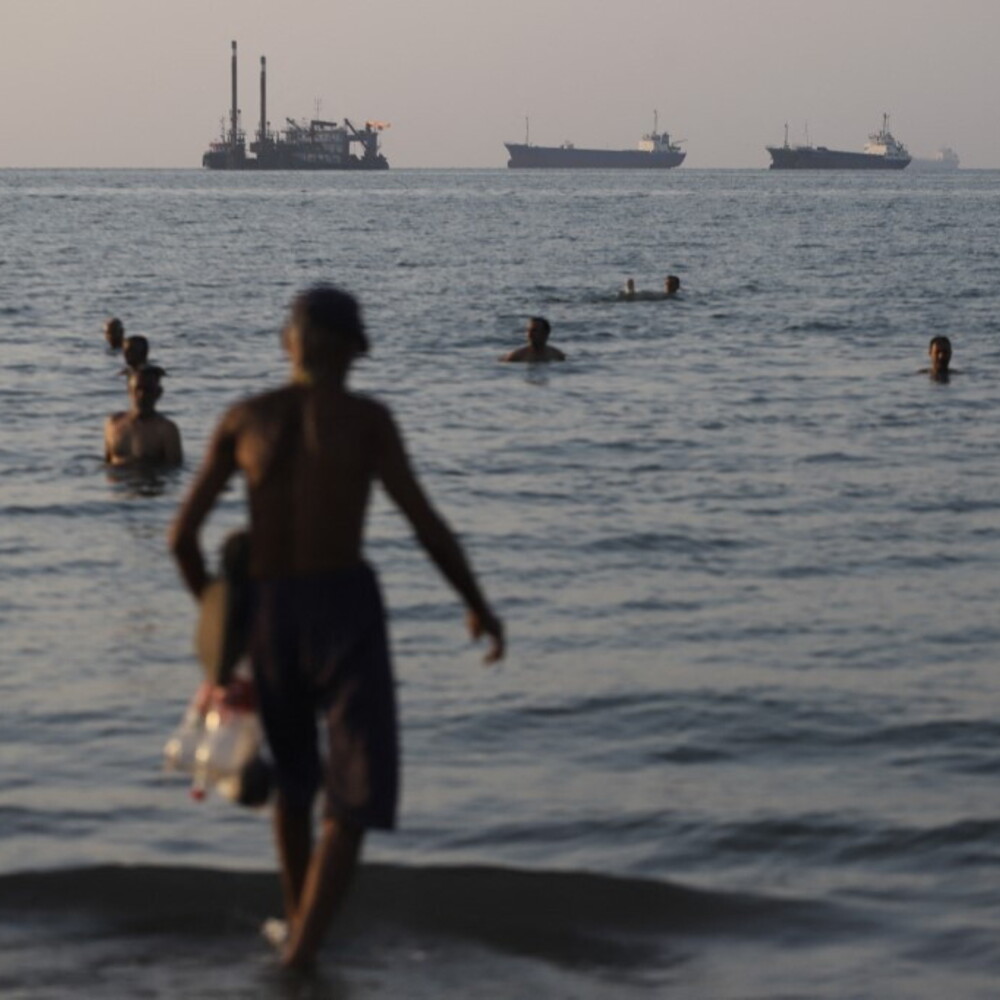
Free passage or not to cross Hormuz? Waiting for a response, Donald Trump on Truth reports that “the ships begin to move, many loaded with petroliumout of Strict. They are traveling on the Southern “Highway,” which is totally safe, secure and pristine. There are other transit areas”. Despite the announcement of theagreement between the United States and Iran,and the promise of a soon reopening in Hormuz, there is still a lot of confusion.
Shipowners be careful
The main maritime transport organizations, in fact, urge caution. For shipowners and operators in the sector, the conditions of safety they don’t allow it yet an immediate recovery of navigation. The giant of the seas, the Dane Maersksaid he “welcomed” the agreement announced by the United States and Iran, but specified that “It’s too early to assess its impact and that no changes are currently expected for the group’s activities in the Middle East.”
Yesterday the American president welcomed the agreement with Tehran by inviting ships from all over the world to “start the engines“and to resume commercial traffic. According to the Iranian Mehr agency, the memorandum of understanding between the two countries provides for the reopening of the Strait within 30 days. However, hundreds of PETROLEUM and merchant ships remain stranded in the Persian Gulf after months of conflict.
“Leaders’ statements still do not provide sufficient information on key aspects such as timing and safe routes,” he said Jacob Larsensafety manager of the international shipping association BIMCO. According to Larsen, “the security situation for the maritime industry remains volatile” and it would still be “very risky” to resume transits immediately.
Along the same lines too Intertankothe international tanker owners association. The maritime director Phillip Belcher he called on the companies to maintain “a prudent approach” at least until the official signing of the agreement expected on Friday. The organization’s director general, Tim Wilkins, also called on the United States and Iran to ensure that Hormuz is “free from the threat of mines” that were allegedly laid during the conflict.
US sources: agreement signed by Trump, Vance and Ghalibaf
The memorandum of understanding between the United States and Iran was signed electronically by the American president, Donald Trump, by deputy JD Vance and, on the Iranian side, by the speaker of Parliament, Mohamed Bagher Ghalibaf. Several American media reported this, citing a US official.
Again according to the same source, the memorandum provides for the immediate reopening of the Strait of Hormuz and the lifting of the American naval blockade.
Situation of seafarers and safe corridors
L’International Maritime Organization (Imo) estimates that around 20 thousand seafarers are currently stranded on ships in the area and reports that eleven workers in the sector have lost their lives during the crisis. The United Nations agency said it was working with Oman, Iran and other coastal states to define safe corridors intended both for the evacuation of trapped crews and for the resumption of international trade. The International Transport Workers’ Federation (ITF) also warned against excessive optimism. According to the union, the accumulation of idle ships and the need to carry out crew changes and rest periods for seafarers mean that the return to normality in maritime traffic could take “weeks, if not months”.
Iranian fares and services
Teheranhas made it known that it will not require tolls from ships in the Strait of Hormuz but it will apply rates for maritime services. This was stated by the spokesperson of the Iranian Foreign Ministry, Esmaeil Baqaeiin the aftermath of the announced agreement between the USA and Iran, the details of which are not yet known. “Iran has always said that it does not want to collect tolls. However, in exchange for the services that we will provide, including navigation services, environmental protection, possible ship insurance and other services that will be provided by Iran and Oman, the necessary fees will be collected.”
The hope of the USA and France
“We expect the Strait to remain toll-free in the long term, and that is one of the things we will try to work out in these technical negotiations,” said the US vice president, JD Vancein an interview with CNBC.
The French president Emmanuel Macron has promised that it will “do everything” to ensure that Iran does not impose tolls on the vital shipping channel of the Strait of Hormuz. Speaking on TF1 TV hours after the agreement reached between Iran and the United States to end the war in the Middle East, Macron said that a joint Franco-British mission to ensure the opening of the strait is ready to depart “very quickly”, with the French flagship aircraft carrier Charles de Gaulle ready to enter the zone “within two or three days”.
The position of Italy
“In the night – declared the prime minister Giorgia Meloni – we have already expressed, together with France, Germany and the United Kingdom, our strong appreciation for the memorandum of understanding signed by the United States and Iran in the last few hours. Heartfelt thanks go to all the mediators, and in particular to Qatar and Pakistan, who made this agreement possible.”
“Italy, as in the past, is ready to support the diplomatic process towards an overall agreement. The principles are clear: Iran cannot acquire a nuclear weapon and freedom of navigation must be guaranteed. We are ready, together with the other partners and, subject to the necessary parliamentary authorization, to contribute to an international naval presence to accompany the full reopening of the Strait of Hormuz”, concluded Meloni.
https://hellspin-austria.com/bonus
https://hellspin-austria.com/casino
https://hellspin-austria.com/deposit
https://hellspin-austria.com/download
https://hellspin-austria.com/faq
https://hellspin-austria.com/legal
https://hellspin-austria.com/login
https://hellspin-austria.com/mirror
https://hellspin-austria.com/mobile
https://hellspin-austria.com/payments
https://hellspin-austria.com/problems
https://hellspin-austria.com/promocode
https://hellspin-austria.com/review
https://hellspin-austria.com/slots
https://hellspin-iceland.com/apk
https://hellspin-iceland.com/app
https://hellspin-iceland.com/bonus
https://hellspin-iceland.com/casino
https://hellspin-iceland.com/deposit
https://hellspin-iceland.com/download
https://hellspin-iceland.com/faq
https://hellspin-iceland.com/legal
https://hellspin-iceland.com/login
https://hellspin-iceland.com/mirror
https://hellspin-iceland.com/mobile