“Sharp increase in Cyclospora infections among travelers returning from Mexico.” The latest alert comes from the British Health Security Agency (Ukhsa) a few days ago. And it signals a further front that adds to the widespread epidemic of intestinal infections caused by the parasite, recorded since the beginning of May in the USA, with cases reported in total in 45 states according to the US Centers for Disease Control and Prevention (CDC). It’s just one of infectious emergencies of the crowded summer 2026. The map which signals microorganisms in action is global and touching multiple continents: from the Americas to Africa – where one of the largest and fastest Ebola epidemics is underway in the Democratic Republic of Congo – up to Asia, which is witnessing the return of Covid in China and an intense season of mosquito-borne Dengue, particularly in Sri Lanka, but even up to the slopes of the Himalayas in Nepal. And also leprosy (in Florida) and scattered outbreaks of measles which are calling into question the status of disease-free zones in several countries.
The summer is proving to be challenging, especially for children Use, dealing with several outbreaks. Starting precisely from the anomalous peak of cyclosporiasis
, infection that causes explosive diarrhea. The epidemic – the largest so far detected in relation to this parasite – also recorded the first 2 deaths in Michigan, one of the most affected states with over 11 thousand reported cases and hospitalizations exceeding 190. These are rare occurrences, because – as specified by the CDC – cyclosporiasis in general “is not a lethal disease”. But the news of the 2 deaths (both patients had significant previous pathologies) comes in the middle of a delicate situation that already at the end of July was common to at least 9 US states, including Michigan, whose outbreaks have been linked to the lettuce served in Taco Bell restaurants, supplied by Taylor Farms and coming from central Mexico. The investigations are still ongoing and, according to the ‘Washington Post’, the problem could widen further, if it is true that now also in 6 other states the cases have been traced back to chopped iceberg lettuce from central Mexico, bringing the total to 15 (after Illinois, Indiana, Kansas, Kentucky, Michigan, Ohio, Oklahoma, Pennsylvania and West Virginia, now also Arkansas, Iowa, Missouri, Nebraska, New Hampshire and North Carolina). Again in the USA, the spotlight has also been turned back on one of the oldest infectious diseases documented in history, la leprosy. According to state health data, available by consulting the Report on the Frequency of Notifiable Diseases, 17 cases were reported from the beginning of 2026 to July 8, but attention on the disease had already risen in 2025, the year in which a peak of 36 cases was recorded (out of 174 recorded throughout the USA), which had exceeded the previous peak of 29 observed in 2015. Among the 36 patients last year, local media report, it is believed that 27 contracted the infection in Florida. The increase, ‘Florida Today’ reports, is mainly concentrated in the counties of central Florida, with those of Brevard, Lake, St Johns and Volusia accounting for over 50% of cases, a share defined as disproportionate to the population that lives there. This area, which runs along the Interstate 4 corridor, a major highway, is also known to be home to an animal that carries the disease, thearmadillo in nine bands, which ends up in the spotlight again.
This is a further summer alert which adds, together with the cyclosporiasis alert, to a long-standing problem that the United States has been dealing with for several months now: the forceful return of measles
. In 2026, cases have already reached a record, recording the highest figure in the last 35 years and exceeding the previous peak reached in 2025. According to data as of July 30 released by the CDC in recent days, infections in the USA have exceeded 2,370 in 2026, involving 45 jurisdictions, with 37 new outbreaks. And 93% of affected patients were not vaccinated. In 2025, there were a total of 2,289 confirmed cases. A step backwards in the control of a disease that was declared eradicated in the US in 2000, a status that is now in the balance. And in this context, Health Secretary Robert F. Kennedy Jr., who has repeatedly hit the headlines for critical statements towards vaccines, urged parents to vaccinate their children during a heated interview on ‘CNN’. Overall, there have been more cases of measles in the United States in the last 2 years than in the rest of the 21st century combined. Before 2026, only 1991 had seen a higher number of infections in a single year. By moving more than 10 thousand kilometers to another continent, Asia, you risk meeting an old acquaintance: Covid, the very country where the most serious pandemic of modern times began at the end of 2019. Since then, a lot of water has passed under the bridge and today the virus is no longer as scary as it was then, but in the meantime in the month of July the Asian giant recorded a peak in cases which, for the first time this year, brought Covid-19 back to first place among flu-like syndromes, above the flu. Chinese media report that in the week from 13 to 19 July the rate of positive Covid tests in patients with respiratory symptoms had reached 16.3%, an increase of 4.3 percentage points compared to the previous 7 days, and in the week from 20 July the figure grew by another 4 percentage points, reaching 20.3%. The positivity rate was higher in the southern provinces than in the northern regions, and the most affected age group ranges from 15 to 59 years. On the bright side, the Chinese Center for Disease Control and Prevention highlighted that most patients experienced mild symptoms. According to the latest update from the Chinese CDC, after the increase in recent weeks, viral activity now stands at moderate levels. The variant circulating is NB.1.8.1.
Still on the eastern side, the alarm is also concentrated in Asia Dengue, with it Sri Lanka which in July recorded the highest number of monthly cases of the year: 29,980. In the first 2 days of August, another 646 were reported. And throughout 2026 – as reported by the local newspaper ‘The Morning’ – the toll is 86 thousand infections, according to the latest report published by the National Dengue Control Unit. The report also recorded 62 dengue-related deaths this year, and 137 high-risk areas were reported. Even in Nepal
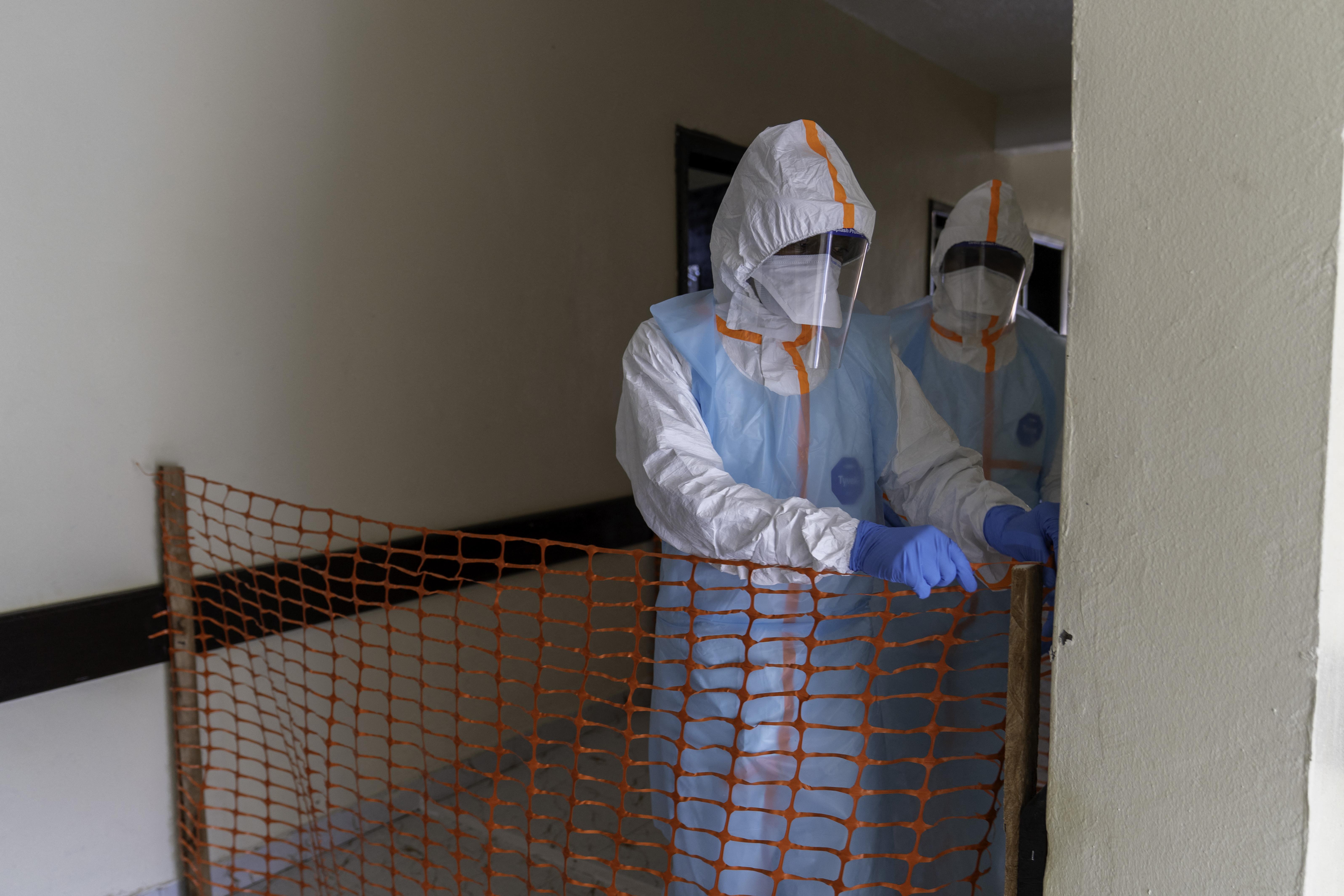
As the seasonal peak of transmission approaches, Dengue infections have already spread to 72 of the country’s 77 districts and are recording significant numbers, with 2,025 confirmed cases and 2 confirmed deaths reported so far this year. Health authorities, reports ‘The Himalayan Times’, have warned that dengue transmission is expected to further increase during and after the monsoon season and have urged local administrations to strengthen prevention and control measures. A 3-month campaign is starting to combat the proliferation of mosquitoes. But there is another red flag on the world map of infectious emergencies this summer, and it is the one that is worrying international authorities the most. It flies in Africa, in Democratic Republic of the Congo, grappling with a serious epidemic since mid-May Ebola, which has also recorded cases in neighboring Uganda. The World Health Organization on May 17 declared it a public health emergency of international concern. And the contagion has not yet stopped. According to the latest update with data as of August 3, the toll in the 5 affected provinces – Haut-Uélé, Ituri, Nord-Kivu, Sud-Kivu and Tshopo – continues to rise (and Ituri remains the main epicentre): so far a total of 3,874 confirmed cases have been recorded, with 1,751 deaths. At this moment 717 patients are in isolation or hospitalized, and 749 people have recovered since the beginning of the epidemic. The mortality rate is estimated at 45.1%, while the contact tracing rate has reached 78.4%, as reported by the DRC Ministry of Communication and Media in a post on X. Efforts to contain the spread of the virus continue.