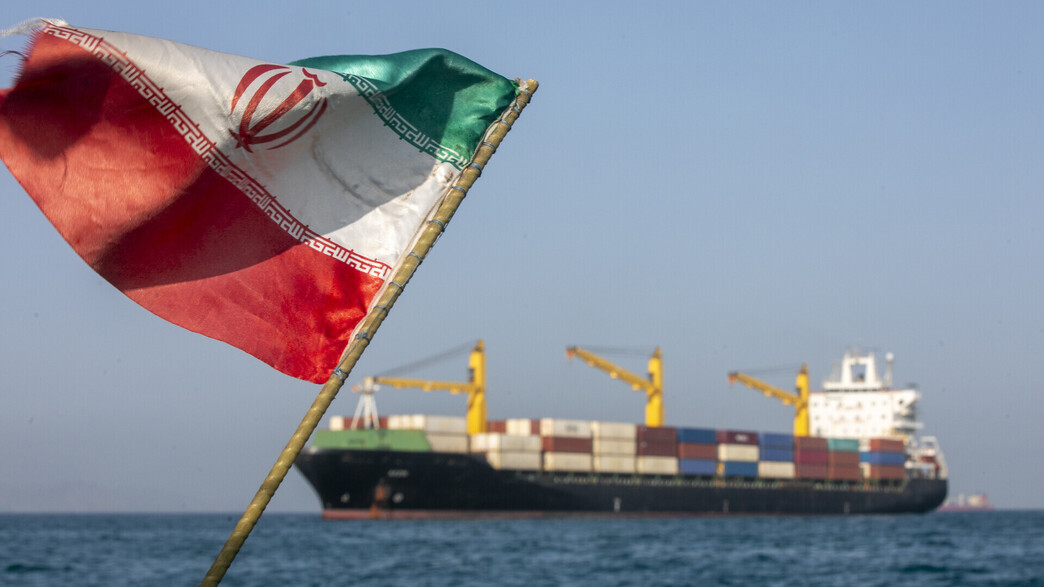
The spokesman for the Revolutionary Guards said that Tehran is making the opening of Hormuz conditional on the US accepting its conditions • “If the US does not accept our conditions, the Strait of Hormuz will not be opened in any way”, he threatened • He accused Washington of interfering in the negotiations with Oman
The spokesman of the Revolutionary Guards announced today (Wednesday) that agreements were reached between Iran and Oman regarding the Strait of Hormuz. According to him, the new understandings concern the division of the shipping lanes between the two countries in the Strait, as well as the regulation of the revenues arising from the activity there. Alongside the announcement of the agreements, Iran set conditions for the US regarding the possibility of opening the maritime route.
“If the US stops creating difficulties and returns to the understandings reached, we will be able to open the Strait of Hormuz within the framework of the understandings reached,” said the spokesman. He emphasized that Tehran will not compromise on their demands vis-à-vis the US administration as a condition for changing the policy in the Strait. “Our terms must be accepted by the US, if the US does not accept our terms, the Strait of Hormuz will not be opened in any way.”
The Revolutionary Guards attacked the American involvement in the diplomatic talks between Iran and Oman, and claimed that Washington was responsible for the delays in reaching agreements. “The United States is piling difficulties on the negotiations between Iran and Oman, and because of this there have been delays,” the spokesman claimed, repeating the threat according to which the strategic transition will remain closed as long as the United States does not meet Iranian demands.
This is how the Gulf countries bypass the closure of Hormuz
New documentation published last night indicates unusual activity in scope in the Gulf of Oman, where in recent days many tankers transporting oil to each other in the heart of the sea have been concentrated. According to the tracking company TankerTrackers, these are at least 20 hubs of oil transfer meetings between ships, in the framework of which cargo is transferred from one tank to another without the need to unload at the port.
According to the estimate published by the tracking company, which is considered one of the most reliable sources in this field, in total it is about 25 million barrels of crude oil, along with an additional amount of refined oil products. TankerTrackers noted that the source of the oil is in almost all the countries of the region, with the exception of Iran. In a follow-up tweet, she emphasized that several additional “ship-to-ship” meetings were identified, including one in which a gas cargo was transferred between Iranian ships.
The significance of the documentation and the unusual activity is that the Gulf countries are managing to a considerable extent to circumvent the closure of the Strait of Hormuz by Iran. This morning Reuters reported that huge Saudi tankers with more than four million barrels of oil left the Gulf of Oman area for destinations in China.
The phenomenon creates an unusual appearance of a concentration of tankers in the Gulf of Oman, to the point of what looks like a huge “oil parking lot” in the heart of the sea. Instead of each tanker continuing on a normal route with its cargo, transfers are made between the vessels, which make it possible to change the identity of the tanker carrying the oil and continue the transportation by sea.