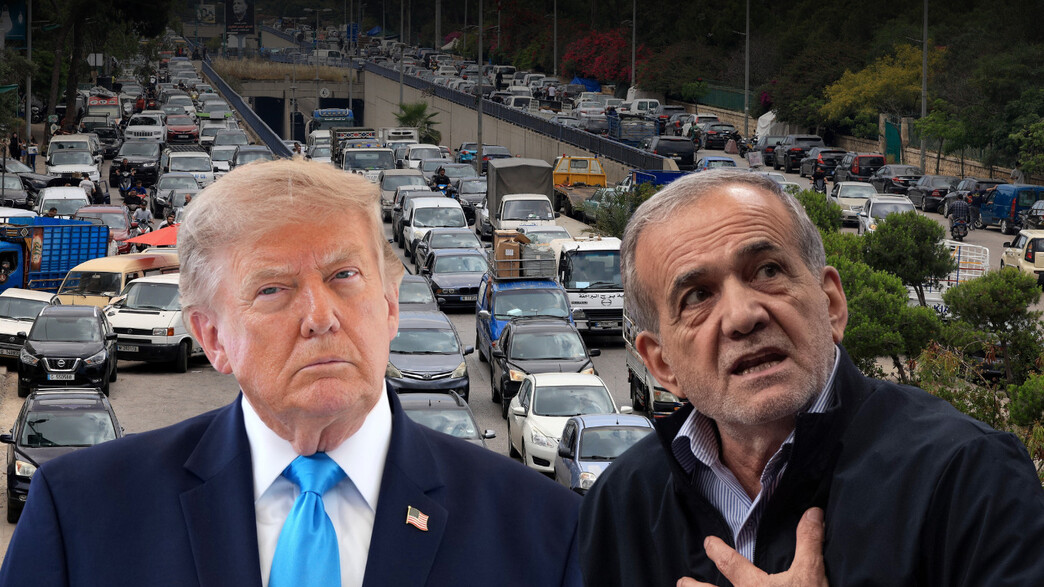
Many reports in Iran point to a severe shortage of fuel • Opposition officials report a “red alert” against a lack of criticality, which ignites a debate even at the top of the government • Against the background of the threats from the USA, there is a panic among the citizens and a storm in the shops • Industrial plants have announced the stoppage of work
The fuel crisis in Iran is getting worse, bringing Iran closer to a critical point, the opposition website “Iran International” reported. At the same time, in Iran, it is reported that basic staple products such as rice and oil are running out of the shelves, and even large industrial plants have announced the shutdown of their activities due to a lack of electricity.
Iran’s strategic fuel reserves have reached the level defined as “red alert” and may be depleted within a few weeks, if the current rate of use continues, according to “Iran International”. The strategic reserves are intended to serve as a safety net in situations of severe shortages and emergencies. However, in recent weeks they have been used at a rate that has led professional officials within the country to warn of the consequences of continuing to withdraw from the reservoir.
According to the report, if the rate of fuel withdrawal from the reserves remains as it is today, the remaining stocks may run out within a few weeks. Such a situation will greatly limit the government’s ability to deal with disruptions in local production or fuel imports, and to prevent widespread interruptions in supply. All of this is happening at the same time as the economic war that the Trump administration declared this week on Iran.
It was also reported that the increasing use of the emergency reserves also created a dispute within the Iranian government, between the government of President Massoud Pazkhian and the Revolutionary Guards. At the center of the dispute is the question of how long the strategic fuel reserves can continue to be used.
Revolutionary Guards officials are opposed to unlimited use of the reserves, while the government wants to continue withdrawing fuel from them in order to keep gas stations operating and reduce public fear of shortages and price increases.
A gap of about 15 million liters per day
Iran produces about 120 million liters of gasoline per day, but consumes about 135 million liters. This means a daily gap of about 15 million liters between production and consumption, and for now it is not clear how this gap should be resolved. Ali-Akbar Segab Esfahani, the head of the Iranian Organization for Energy Optimization and Strategic Management, has already estimated for about two weeks that the daily shortage of gasoline is 14 to 15 million liters.
Before the shortage became acute, imports covered about half of the gap. A major part of the supply came from Russia. However, the naval blockade, Ukrainian attacks against Russia’s refining and oil infrastructure, and the closure of the supply route through the Caspian Sea have largely limited Iran’s ability to continue to maintain the volume of imports.
There is also a shortage of gas stations in Tehran
The shortage of gasoline has already reached Tehran, and some gas stations in the capital had to close their operations. According to a report in Iran International, the authorities ordered the transfer of fuel from neighboring districts to reopen some of the stations, but dozens of other stations are still at risk of closure.
Videos and messages sent by citizens document long queues, closed stations and difficulties in obtaining gasoline in Tehran as well as in Alborz, South Khorasan and Khorasan Razavi provinces. In a document that has gone viral in the past day, we can see a particularly long line of cars waiting for a gas station in southern Iran. The publisher of the video wrote in a tweet, “A terrible situation prevails in the South regarding the supply of fuel, and this situation is quickly spreading all over the country. Then this fucking cleaver will threaten America.”
The regional director of the Iranian National Oil Products Distribution Company in Tehran explained that the temporary closures at some of the stations were caused by a sudden increase in demand and loads along the fuel transportation routes.
The shortage also affects transportation prices, according to reports from citizens. Among other things, it was reported that the prices on the travel apps Snap and Tapsi have risen sharply, because the number of drivers willing to accept rides has decreased.
The resident of Tehran testified that the gas stations are busy, the GPS system is not working, and he cannot work on Snap. According to him, the prices have gone up, but there are not enough drivers who accept rides, so people are left without income and without gas, and are also unable to move from place to place.
Another citizen said that the price of a normal ride on Snap increased from 1 million riyals last month to 3.2 million riyals. A resident of Shiraz also told about a sharp increase in the prices of travel on apps. This week the value of the riyal fell to a new low, at a value of more than two million riyals to one US dollar.
The Snap driver said that using the air conditioner while transporting passengers requires him to refuel approximately once every two days, but his cap has already run out. According to him, purchases over the quota are limited to 25 liters.
Among other things, citizens wondered if the government was creating a deliberate shortage of fuel – to prepare the ground for a price increase.
The options of the government
The Iranian government is considering three courses of action to deal with the shortage. One option is to limit the supply of gasoline to the level of local production. The second option is to reduce the subsidized quotas and sell additional quantities at an unlimited price. The third option is to transfer fuel quotas from vehicles to people.
The fear that the rise in gasoline prices would lead to protests encouraged the government to use the strategic reserves to buy time. Fuel prices are a particularly sensitive issue in Iran – a sharp increase in gasoline prices in November 2019 led to protests across the country, which were followed by a deadly crackdown by the authorities that resulted in the deaths of more than 1,500 people, according to estimates.
Now, the attempt to postpone the difficult decisions by using the emergency reserves creates a new problem: the reserve designed to protect Iran during periods of serious disruptions in the fuel supply itself may be depleted within weeks.
Factories are also shut down in Iran
At the same time as the fuel crisis, the lack of electricity also hurts the Iranian industry.
Two large petrochemical companies in Iran have shut down production until further notice due to a lack of electricity in the Mehshahr area of Khuzestan province in the south, state media reported yesterday.
Arvand Petrochemical Company stated that all production activity was shut down due to the worsening of the electricity shortage in the Mahashahar region, against the background of a severe heat wave. Jadir Petrochemical also suspended production. The company stated that the reason for this is limitations in the supply of electricity, along with an interruption in the supply of the chlorine raw material it needs.
Scarcity panic throughout Iran
The economic pressure exerted by the United States on Iran, which is expected to increase in the coming days and weeks, is already well felt throughout the country. Many Iranians flocked this week to buy groceries amid a growing shortage of basic products and fuel, and in several areas there were protests against the regime due to the economic situation.
The Wall Street Journal reported that some supermarkets in Tehran ran out of cooking oil and rice, after residents rushed to purchase large quantities and stockpile food for fear of shortages. “There was hysteria, and in some neighborhoods customers rushed to supermarkets,” an Iranian citizen told the American newspaper. “The risk of a shortage, which stems from the threats of American sanctions, caused panic.”
Many Iranians are forced to take out loans even for their most basic needs, and lending services have become more and more common. Many residents avoid buying meat because of the price, and find it difficult to purchase enough food for their family on their own.
The difficult economic situation has reignited manifestations of protest in Iran, which had stopped almost completely in recent months, since the regime’s massacre. At the beginning of the week, about a hundred fired workers demonstrated at a steel plant in western Iran, and a day later oil and gas workers demonstrated at rigs and marine facilities at the Aslavia energy hub. The demonstrations also included teachers, pensioners and other frustrated citizens, and some were organized by labor organizations. Despite this, this does not imply or indicate the possibility of a renewal of the protest in Iran on a large scale.
“No matter how much military power we have, if our people find it difficult to exist and the country suffers from a lack of financial circulation and economic growth, we will not be able to move forward,” said the Speaker of the Iranian Parliament, Kalibaf, in recent days – a signal that even at the top of the regime, the seriousness of the situation is well understood. At the end of the week, Iranian President Massoud Pazkhian said that “the war must come to an end at some point,” and that “it is better to tell the world that we won and that we are ending the war.” Sources associated with The Revolutionary Guards attacked the remarks and called them “an expression of weakness”.