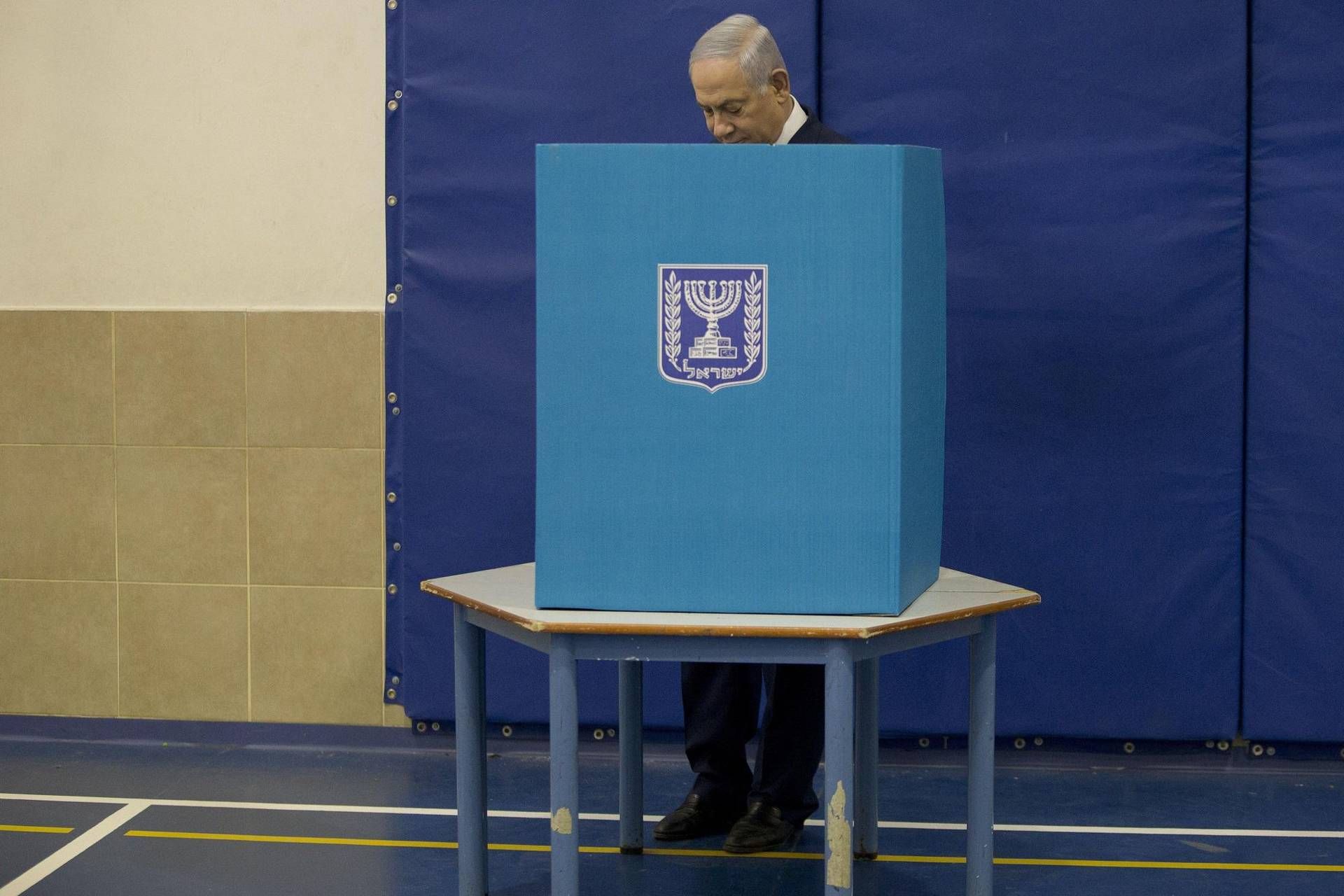
The scenario of ”new elections” seems to be the ”most likely” one in Israel in the aftermath of the parliamentary elections which recorded a record turnout, with a historic participation of Arab voters, but which did not assign the majority of the 61 seats in the Knesset to either of the two main blocs, that of Netanyahu and Eisenkot. But new elections would lead to a ”political vacuum” in which ”an interim government” will find itself having to take ”strategic decisions” such as ”the offensive against Iran” and managing ”the Lebanese front, Gaza, Syria”. Michael Milshtein, one of the most influential Israeli political analysts and director of the Forum for Palestinian Studies at the Moshe Dayan Center in Tel Aviv, explains this to Adnkronos. ”Although almost all the votes have been counted, we do not yet know the final results: in fact, the thousands of ballots” in double envelopes are missing, for example those ”coming from soldiers, diplomats and prisoners which will be counted by Friday morning. Only then will we have the full picture. For now we can say that neither Netanyahu nor Eisenkot seem capable of forming a government”, notes the analyst.
Therefore, ”at the moment there are three scenarios. The first is that Gadi Eisenkot renounces his own principles and the promises made, choosing to collaborate with Arab parties, in particular with Ra’am, the United Arab List, effectively replicating the experience of four years ago”, explains the former Israeli intelligence colonel.
”The main problem is that it would be a very weak, unstable and fragile government, probably destined to collapse within six months or a year. So while it’s not impossible, I think this scenario is pretty unlikely,” Milshtein says. ”There is a second scenario in which Gadi Eisenkot could break his promise again, starting negotiations with Netanyahu for the formation of a government of national unity,” the analyst continues. Bennett, Lapid and perhaps even Smotrich could be involved in this government, but not the Arab parties and, apparently, not even the Haredi. This is, once again, a big question mark, given that Eisenkot had explicitly promised not to take a similar path,” Milshtein recalls. In favor of this scenario, however, the American president ”Donald Trump and also our president, Herzog, have expressed themselves. They are pushing towards this solution”.
Finally, there is ”a third scenario which foresees that we find ourselves, once again, having to face new elections. It’s really sad to say, but many Israelis are deeply disappointed and frustrated by this electoral limbo”, explains the analyst. ”Unfortunately, I think this is the most likely scenario at the moment, as the other two appear decidedly less plausible. The main problem is that we are not faced with a simple political ‘vacuum”, explains Milshtein. ”While the elections are being held, in a few weeks, a month or more, it is necessary to carry out an offensive against Iran. Furthermore, there are urgent matters to be handled on the Lebanese front, in Gaza and Syria, which cannot be postponed,” says the former colonel.
”It is extremely problematic for an interim government to have to make strategic decisions of this magnitude on all these fronts,” he explains. In any case, ”perhaps by Friday morning we will have a clearer idea of what the main orientations are”, but it is ”unlikely that one of the parties will be able to obtain 61 seats”. Instead, it is likely that next week will be dedicated to finding solutions through complex, perhaps even very creative, strategies. And both sides could talk again about the possibility of calling new elections”, concludes the analyst.