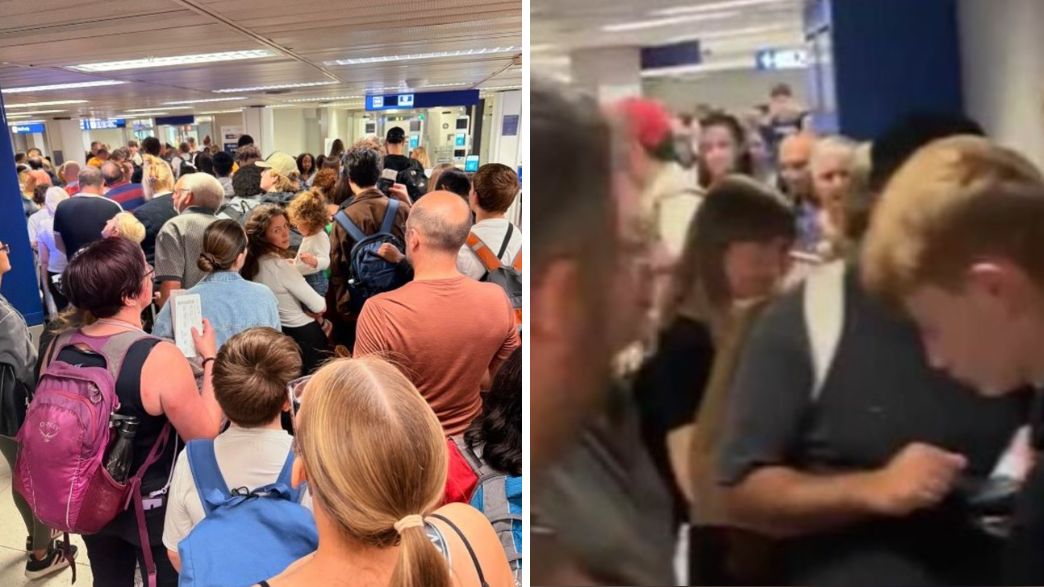
A wave of huge disruptions is hitting major airports across Europe following the full implementation of the EU’s new Entry and Exit System (EES). The transition to the digital system, which became fully operational on April 10, led to a chaotic weekend, with passengers forced to wait in lines of over three hours, many experiencing medical distress and hundreds missing their flights.
The worst scenes were recorded yesterday at Milan’s Linate airport, when a combination of heavy heat inside the terminal and an appallingly slow work rate of border control turned the corridors into what passengers called a “queue from hell.” Eyewitnesses reported tourists who lost consciousness and even vomited while they were stuck in severe overcrowded conditions. Keira, a 17-year-old passenger from Oldham, UK, described a grim situation where airport staff only handed out water to those waiting at around 11am, shortly before many of them discovered their planes had already taken off without them.
Keira, who had been unwell earlier due to suspected food poisoning, was one of around 100 EasyJet passengers left stranded after the flight to Manchester took off with only 30 passengers on board. The airline confirmed that the flight was delayed for 52 minutes in an attempt to allow the passengers to reach the gate, but the pilot was ultimately forced to take off since the crew had reached the maximum number of operating hours allowed according to safety regulations. For many, the financial consequences were immediate and heavy: Keira’s mother had to pay £520 for alternative tickets to Gatwick Airport instead of their original destination in Manchester, while other passengers reported spending more than £1,600 on complex connecting flights via Luxembourg just to get home.
The root of the crisis lies in the new EES requirements for “third country” citizens. The new system replaces the manual stamping of passports with mandatory registration of biometric data, including face scanning and fingerprints. While the EU claims the system will eventually speed up border crossings and help enforce the 90-day stay limit, the initial registration process has proven catastrophic for existing infrastructure. Many warnings were issued last week, but few were prepared for the complete collapse of order that was witnessed last weekend.
The disruptions were not limited to Italy: in Portugal, authorities at Lisbon, Porto and Faro airports were forced to temporarily stop collecting biometric data on the morning of April 11 after queues became “excessive”. The spokesman for the Public Security Police, Sergio Suarez, confirmed that this is an emergency measure designed to ensure that passengers do not miss their flights. Similar reports of “ghost flights” (planes taking off with only single passengers) also came from Brussels airport, where a flight to the UK was reported to have taken off with no passengers on board when the gate was closed, as all ticket holders were still trapped in passport control.
The airlines reacted angrily to the implementation of the system, and in “EasyJet” they called the delays “unacceptable” and called on the border authorities to use the “allowed flexibility” to bypass the checks during unusual rush times. At the same time, Ryanair’s CEO, Michael O’Leary, accused the European Union of actually “punishing” the passengers, noting that significant disruptions had already begun to accumulate since the beginning of the phased implementation of the system.
Despite the airlines’ apologies, passengers expressed deep frustration with the level of assistance on the ground. Adam Lomas, an accountant from Wakefield, UK, who was stuck in Milan with his wife and four-month-old daughter, described a bureaucratic nightmare in which the airport and airline wasted hours arguing over responsibility for the situation. Lomas reported that he was unable to reach a human representative, and instead had to deal with “chatbots” that repeatedly disconnected due to technical glitches.