The national airline of Thailand announced a plan to cut operating frequency on a large scale for many domestic and international flights in May 2026.
This downsizing decision reflects the harsh reality the aviation industry is facing. Thai Airways is caught in the middle of a cruel “pincer”: operating costs and fuel prices are escalating rapidly, while passenger travel demand plummets during the low tourist season.
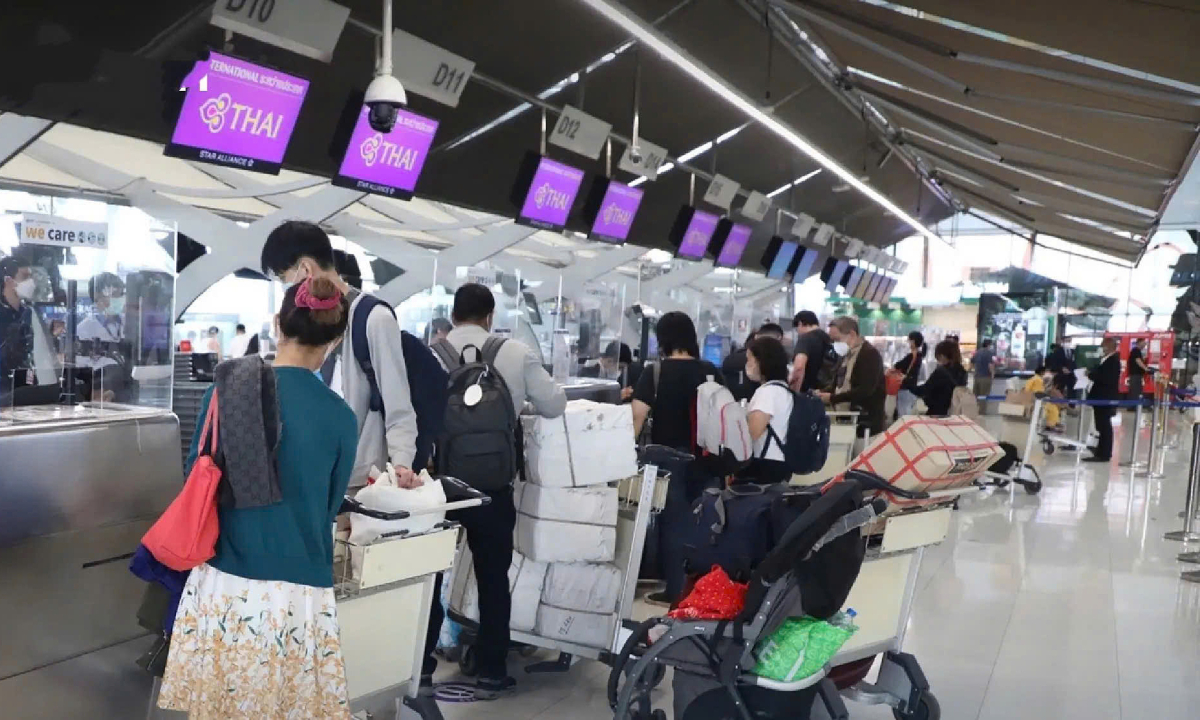
Passengers at Thai Airways check-in counter. Image: The Nationthailand
In Southeast Asia, the Bangkok – Singapore route will reduce from 5 to 4 flights per day. Meanwhile, flight routes to Vietnam have not recorded any adjustments, but routes to Phnom Penh (Cambodia) will be significantly reduced throughout May.
North Asia is most affected by this plan. Thai Airways will completely suspend flights to Kaohsiung (Taiwan) from May 8. Key markets such as Seoul (South Korea) were cut from three flights to one flight per day; Beijing, Shanghai and Hong Kong also recorded frequency reductions of between 30% and 50%.
In the European market, a series of long-distance flights to Frankfurt, Munich (Germany), Copenhagen (Denmark) or Stockholm (Sweden) were also cut from daily flights to 5 flights per week to optimize operating costs.
At the same time, Cathay Pacific (Hong Kong) also announced a plan to cut about 2% of the total number of passenger flights from May 16 to the end of June 2026. Notably, the airline’s low-cost subsidiary, HK Express, will cut flights by up to 6% from May 11.
Cathay Pacific representative said the direct reason for this decision is due to the escalating price of jet fuel, a consequence of prolonged geopolitical tensions in the Middle East.
However, CEO Ronald Lam still affirmed that the airline will persevere with its plan to increase capacity by 10% this year to serve increased travel demand to North America and Australia, after flight routes through Middle East airspace were interrupted due to military conflict.
According to analysts, although US President Donald Trump has reached a temporary two-week ceasefire agreement with Iran, the global aviation industry cannot “breathe a sigh of relief” anytime soon. Experts warn that fuel supplies will continue to be scarce and expensive for many months to come, even when the Strait of Hormuz is reopened.
It is expected that airlines’ flight schedules will only stabilize from July, when cost pressure is expected to cool down.