It was a detail that was almost lost in the noise of the first reports: the US president resigned at the weekend Donald Trump to reduce the American troop presence in Europe. According to the Pentagon, around 5,000 US soldiers are expected to leave within the next six to twelve months Deutschland be deducted. Trump later threatened to “reduce the number even more.”
However, security experts emphasize that a second decision is much more painful. Namely, that the USA no cruise missiles or medium-range missiles want to station more in Germany. “Trump made headlines with the first point. But the second point is much more serious,” says Army Colonel Markus Reisner to the COURIER. “Because this is about the deterrence ability of the USA and NATO against Russia.”
Scholz and Biden reached an agreement
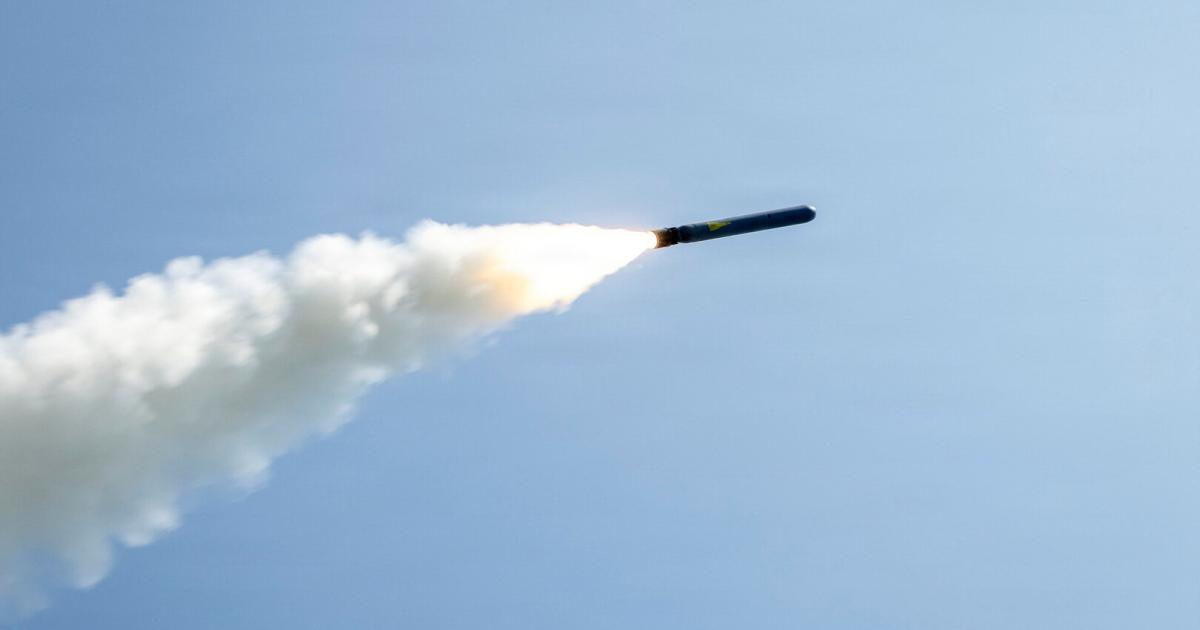
Be at the core of the debate two weapon systems: Tomahawk cruise missile with a range of up to 2,500 kilometers as well SM-6 missiles. The latter, together with the corresponding starting devices and a command unit, form the so-called mobile Typhon missile system. Both were developed by the USA.
At the NATO summit in 2024, the then German Chancellor Olaf Scholz (SPD) and the then US President Joe Biden agreed to station these systems on German soil from 2026. It would have been the first deployment of conventionally equipped medium-range weapons of this type since the Cold War – in response to of Russia military buildup in the enclave Kaliningrad. The medium-range missiles there can already reach large parts of Europe.
Now Trump seems to have canceled the project. The German Chancellor confirmed that the planned stationing of a US unit to operate, maintain and maintain the weapon systems is currently off the table Friedrich Merz (CDU) on Sunday.
Europe does not have these capabilities
This is a bitter setback for Berlin and Europe. After all, without the USA we currently have no comparable military capabilities. And this despite the fact that Russia’s war in Ukraine has shown that the ability to use long-range weapon systems – and to defend against them – is a necessity, as Reisner emphasizes. “We have very large defense deficiencies in Europe in the areas of short, medium and long range.”
Strategic missile defense within NATO is essentially carried out by the USA. With medium-range missiles like that Oreshnik systemwhich the Russians have already used twice, “it will be more difficult,” said Reisner. And Europe also faces challenges at short and long range, as most NATO countries dismantled numerous systems after the Cold War. “Initiatives like Sky Shield “We are now trying to build up our military capability,” said the colonel.
He warns that the current situation creates a dangerous risk of blackmail towards Russia. Because: “Despite the losses in Ukraine, Russia still has systems available, especially medium-range and long-range missiles, with which it can threaten Europe. If Europe is not able to counter this by having such systems or being able to neutralize them, that is a problem. That is the big question that now arises.”
New partners?
Basically there are only two options left. Reisner: “Either develop equivalent systems yourself or look for other partners.” Just those Ukraine I have made great progress in this area in recent years. Beyond that, however, things get complicated. “It probably won’t be in anyone’s interest to have such systems in place, for example China to buy – because then you may not have control over it, just as is now the case with American systems.”
Technologically, Europe would certainly be able to develop such systems itself, he says. “The problem is that the level of concern and seriousness is still too low to really implement this.” This was visible, for example, with the FCAS jets, which should have been Europe’s answer to America’s arms superiority. Ultimately, however, the project failed due to a dispute between Deutschland and Francewho should take over the chairmanship. “If we continue to lose ourselves in sensitivities and do not recognize the seriousness of the situation, then a project like this could take years. But if you recognize the urgency, then we are very much in a position to build such a system with our high-tech capabilities – within a few years.”
https://medium.com/@wi.m.itch0.4.9/a-comfortable-and-modern-online-gaming-experience-ec926ced9357
https://69d7a50bace5e.site123.me/
http://keepandshare.com/discuss4/39606/pin-up-casino
https://micro.blog/k3ekppk61j
https://able2know.org/user/k3ekppk61j/
https://backloggery.com/k3ekppk61j
https://etextpad.com/webkjmmox5
https://writexo.com/share/b048c3db2d13
https://idol.st/user/168875/k3ekppk61j/
http://divephotoguide.com/user/eggerosull
https://able2know.org/user/eggerosull/
https://osbot.org/forum/profile/442381-eggerosull/
http://vocal.media/authors/m5vrwid341
http://portfolium.com/m5vrwid341
https://vocal.media/authors/russellsim-pson
https://able2know.org/user/russellsim/
https://osbot.org/forum/profile/442380-russellsim/
https://findaspring.org/members/zuqo0ijamm/
https://www.notebook.ai/documents/2520704
https://www.producthunt.com/products/xpaid
https://coinmarketcap.com/community/profile/Xpaid/
https://www.f6s.com/xpaid-poland
https://startupxplore.com/en/startups/xpaid
https://www.g2.com/products/xpaid/reviews
https://www.smartcustomer.com/reviews/xpaid.org