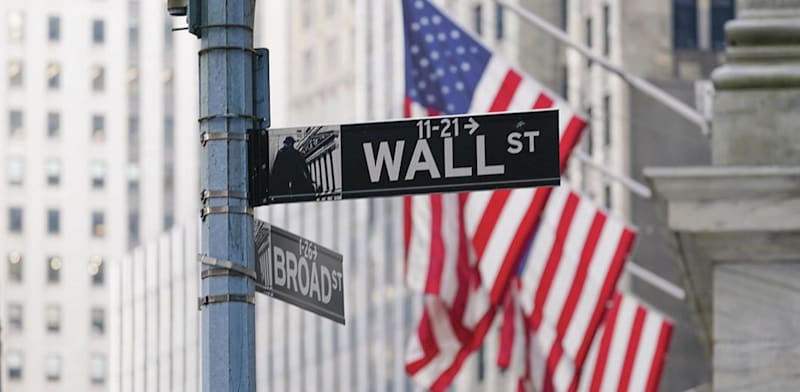
Trade overview: current reports, trends, indices, stock prices, bonds, foreign exchange and commodities and analyst recommendations
16:39
Intel Leaps after Bloomberg published today thatdark Conducts preliminary talks with Intel and Samsung regarding the possibility of manufacturing the main processors of its products in the USA, a move that could provide it with an alternative to its old partner TSMC.
According to sources familiar with the matter, the talks are only at an early stage: Apple tested a possible collaboration with Intel and even visited an advanced factory that Samsung is building in Texas, but so far no actual orders have been placed, and the company still refuses to use non-TSMC technology.
For more than a decade, Apple has been designing its processors (SoC) and relies on TSMC for production with the most advanced technologies, including the 3 nm process in the new models. Against the background of the reports, the Intel stock completes a sharp increase of over 100% in the month.
16:30
Trading on Wall Street opened higher, while oil prices retreated – traders mainly reacting to a series of stronger-than-expected financial reports. S&P 500 rises by 0.5%, Nasdaq-0.8%, Dow Jones by 0.4%.
Oil prices are falling – American oil contracts fell by about 2% to a level above $103 per barrel, and Brent contracts lost about 1% and traded above $112 per barrel.
Although the ceasefire between the US and Iran is still fragile due to new attacks in the Strait of Hormuz, the US Secretary of Defense said that two US merchant ships, along with US destroyers, have already safely passed through the strait, indicating that the route is open. This is after Trump stated earlier this week that the US would “escort” stranded ships through the strait.
Another wave of better-than-expected reports also contributed to the momentum: Pfizer’s stock is up about 2% in early trading after it beat forecasts for both profit and revenue and even reconfirmed the annual forecast. stock Anheuser-Busch traded in the US, jumps 6% after positive results.
On the other hand, Palantir is down about 2% even though its reports for the first quarter exceeded analysts’ forecasts and presented the fastest growth rate since the IPO in 2020, along with raising its annual forecast.
Yesterday’s trade closed down after the Emirates announced that Iran had launched drones and missiles at them, which exacerbated the instability surrounding the ceasefire. In addition, it was reported that the US sank Iranian vessels in the Strait of Hormuz, although Iranian media denied this. These developments led to a rise in oil prices on Monday and pressure on stocks.
Despite the recent escalation in the Middle East and the declines on Monday, there are still factors in the market that see room for optimism, against the background of strong economic data and positive reports.
16:05
you discovered announced today that it received a multi-million dollar order from Nelco, a satellite communications service provider in India. The delivery of the systems is expected to be spread over the next 12 months.
As part of the transaction, Nelco chose Gilat’s SkyEdgeIV platform for deploying the most advanced Kaband service network in India, on the HTS Ka band GSAT N2 satellite. The deployment will enable connectivity with high performance in a variety of applications, including in-flight internet, cellular satellite transmission and corporate connectivity services – even in very remote areas and will provide the level of performance and flexibility required for these applications.
15:35
The US trade deficit widened in March in monthly terms, but was 55% lower than the same period last year, just before Trump’s tariffs took effect.
The deficit in goods and services amounted to $60.3 billion for the month, an increase of $2.5 billion compared to February, but slightly below the Dow Jones consensus expectations of $60.9 billion, according to US Commerce Department data published today.
In annual terms, the deficit was reduced by 211.2 billion dollars compared to the corresponding period last year. Exports increased by 12%, while imports decreased by 9.1%. These are the latest figures before Trump’s “Emancipation Day” tariffs go into effect in April 2025.
15:58
stock Palantir declining despite reporting strong quarterly results for the first quarter. Revenues and profit exceeded analysts’ forecasts mainly thanks to a jump in sales to commercial customers and the US government sector.
The company’s revenues jumped by 85% in the first three months of the year and reached $1.63 billion, above the consensus forecast of $1.53 billion. Of this amount, about $1.28 billion came from the US alone. The company stated that its activity in the US more than doubled within 12 months, a figure that highlights the intensity of demand for its products, especially in the fields of AI, security and the government sector.
Benchmark Equity Research analysts warned that the market is pricing Palantir as if everything is perfect, so there is almost no room for error. According to them, if the company does not continue to show a revenue growth rate of over 70%, the stock may be damaged. At current price levels, about $146 per share, Palantir trades at a forward earnings multiple of about 98 over expected earnings for the next 12 months, a significantly higher level compared to most other software companies, which highlights its sensitivity to any disappointment in results.
12:15
The mixed trend in Europe continues. The DAX index adds about 0.8% to its value, the FTSE weakens by about 0.9% and the KAC climbs by about 0.6%.
The gains in Wall Street futures are getting stronger. For now, the Dow Jones is up about 0.3%, the S&P 500 is climbing about 0.4% and the Nasdaq is advancing about 0.6%.
Oil prices are now registering slight declines. Brent crude is down over 1% and is trading around $112 per barrel, while US crude (WTI) is down 2% and is trading around $104 per barrel.
10:10
The stock markets in Europe open the day with a mixed trend. The DAX index climbs by about 0.1%, the CAC advances by about 0.2% and the FTSE weakens by about 1%.
9:20
The trading day in foreign markets will open against the background of the sharp exchange of threats between the US and Iran and the renewal of its attacks on the Gulf countries, after yesterday Wall Street retreated from the highs it recorded at the end of last week.
In Asia, most major stock exchanges are closed today due to public holidays. The stock market in Hong Kong is currently down by 1.2%.
Last night on Wall Street, trading closed with price drops, with the S&P 500 index falling by about 0.4% and the Nasdaq falling by about 0.2%. The Dow Jones fell by about 1.1% and the fear index (VIX) jumped by 9%. All this, against the background of reports of an Iranian missile attack on the United Arab Emirates, the American “liberation” operation of ships stuck in the Strait of Hormuz and Iranian reports denied by the US about missile launches at an American ship in the area.
The chip maker’s declines stood out AMD which fell by almost 5%, following the downgrading of a recommendation by the HSBC bank on Friday. The bank changed the stock’s rating from “buy” to “hold”, amid concerns about limitations in semiconductor production capacity in 2026 – a factor that may limit the company’s growth potential. This Wednesday, the company will publish its financial statements for the first quarter of the year and it comes after a successful start to the year for the stock. The company has jumped more than 50% since the beginning of 2026 and even reached its peak on the eve of the publication of the pessimistic recommendation, which provided a target price of $340 per share (about 0.5% lower than Monday’s price).
Logistics shares also fell on Wall Street, following an announcement by Amazon Because it is expected to launch an independent system for transportation, distribution and logistics services. stock GXO Logistics decreased by 13% andFedEx by 8%
Also a share Ebay Coordinated interest yesterday. The stock climbed by about 5%, afterGamestop Last night (Sunday) submitted an offer to purchase it in a deal of about 56 billion dollars in cash and shares. The company’s CEO, Ryan Cohen, even indicated that he is ready to approach the shareholders directly if eBay’s board of directors does not cooperate. If the deal goes through, Cohen plans to head the merged company. According to the proposal, Gamestop is offering $125 per share, half in cash and half in stock, which reflects a premium of about 20% over eBay’s closing price on Friday. This is a relatively unusual move, especially considering that Gamestop was a witness. A relatively marginal stock that rose to prominence during the meme stock frenzy. Despite this, the company has already built up a 5% position in eBay through shares and derivatives. Cohen, who is GameStop’s largest shareholder, believes that the connection between the companies can produce significant synergy.
Companies in the crypto sector also stood out in their gains, which jumped following an update of emerging legislation on rewards for holders of stable cryptocurrencies (that is, pegged to the dollar or another traditional currency). According to the new wording, crypto trading platforms will be prohibited from paying interest on holding a stable currency (similar to a deposit in a bank), but they will be able to offer benefits on the platform such as discounts on trading activities and transactions conducted on it. In this way, the legislation to regulate the decentralized currencies actually progressed.
Following this, a share Circle Jumped by almost 20%, and the stock of the trading platform Coinbase increased by about 6%. Bitcoin climbed above the $80,000 mark for the currency, its highest level in three months.
US debt market
Government bond yields rose yesterday along almost the entire length of the curve, that is, for all investment ranges, and in the long ranges of over two years there were even sharp increases, which reflect an increase in the level of risk that the markets are pricing in for the US, apparently due to the fear of further escalation with Iran. The one-year bond traded at a yield of 3.76% and the 10-year bond at 4.4%. The 20- and 30-year yields both crossed the 5% mark.
In addition to the fear of escalation, New York Federal Reserve President John Williams said yesterday that he expects the tensions in the Middle East to create disruptions that will leave inflation at a high level, and cause the central bank to leave interest rates unchanged. According to him, the current interest rate policy leaves the Fed “well positioned” to balance the risks within its dual mandate – price stability and low unemployment. However, he noted that risks on both sides have increased, with inflation expected to remain around 3% this year, a full percentage point above the Fed’s target.
The commodity and currency markets
In the shadow of the escalation in the Strait of Hormuz, oil prices jumped sharply yesterday, but this morning they are registering slight decreases. Brent crude is trading around $113 per barrel, while US crude (WTI) is trading around $104 per barrel. Mike Worth, CEO of Chevron, warned during the Milken Institute conference in Los Angeles that it will likely be months before oil exports through the Strait of Hormuz return to normal. “I think when people look at the reality of the very limited supply, it’s not just a question of price,” he said. “It’s actually the question – can we even get the fuel? I estimate that over the next few weeks we will begin to see these effects permeating throughout the entire system.”
In the foreign exchange market, the shekel weakened yesterday against the dollar by about 0.6% to a rate of 2.95, possibly due to the declines on Wall Street, when the American stock market is known to have a positive correlation with the shekel. In addition, the weakening of the shekel is also due to the strengthening of the dollar in the world, due to the increase in oil prices around the security developments.
Recent data published by the Bank of Israel provide a glimpse of the forces behind the recent strengthening trend of the shekel against the dollar. The institutional entities – the pension funds, provident funds and insurance companies – net sold approximately $5.2 billion in the first quarter of 2026, continuing the trend of reducing foreign exchange exposure in savings portfolios.
The amount of foreign exchange sales in the last quarter moderated compared to the sales volume of 13.2 billion dollars recorded in the previous quarter. It joins a huge sales total of over 23 billion dollars in the second half of 2025 – as published yesterday in Globes.
The institutions, who have changed the perception regarding the proper foreign exchange exposure, are a major force behind the continued strengthening of the shekel. A new player joined the picture in the quarter: the business sector, which switched to net foreign exchange sales amounting to $1.4 billion, compared to net purchases of $5.6 billion in the previous quarter – a clear reversal of direction that also strengthens the appreciation. On the other hand, non-residents increased their purchases of foreign currency to approximately 6.6 billion dollars, several times more than the previous quarter.
The main point is that in the first quarter the dollar strengthened against most major currencies in the world – and yet, against the shekel it actually weakened by 0.8%. Another evidence that the local forces, mainly the institutional ones, are now dictating the direction of trade.
https://alabamalicenseplate.org/gifting-car
https://alaskalicenseplate.org/gifting-car
https://arizonalicenseplate.org/gifting-car
https://arkansaslicenseplate.org/gifting-car
https://californialicenseplate.org/gifting-car
https://coloradolicenseplate.org/gifting-car
https://connecticutlicenseplate.org/gifting-car
https://delawarelicenseplate.org/gifting-car
https://floridalicenseplate.org/gifting-car
https://georgialicenseplate.org/gifting-car
https://hawaiilicenseplate.org/gifting-car