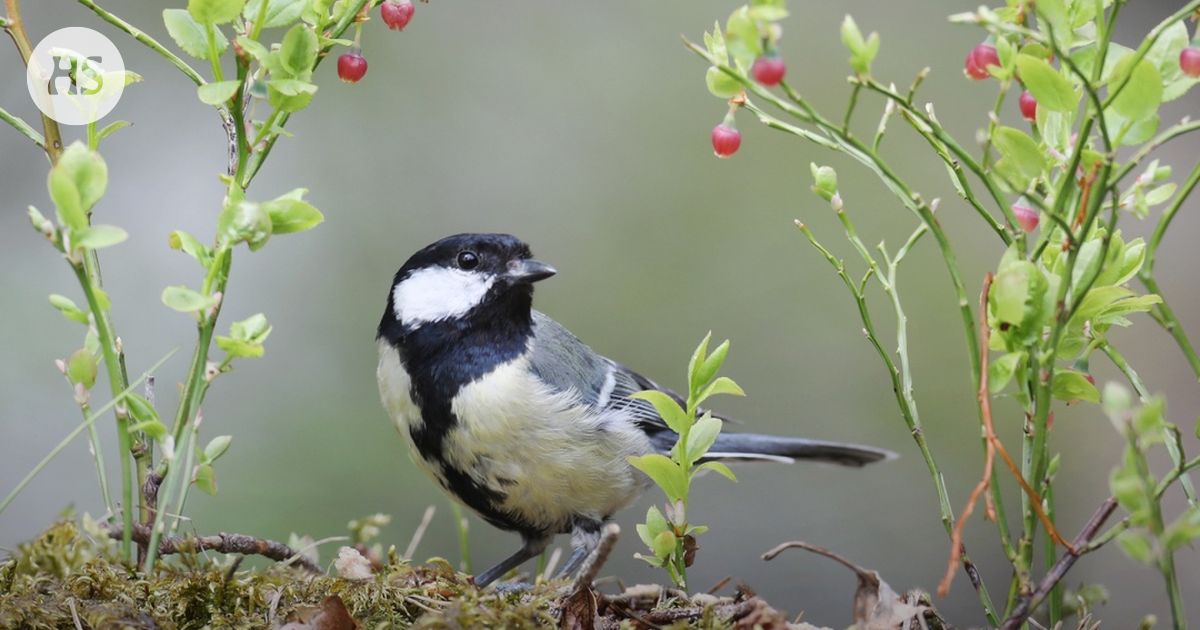
BirdsOne dog can know ten versions of ti-ti-ty.
The old ones dogs and new arrivals help to preserve the versatility of the spring song of the talismans.
The changing of the songs, on the other hand, is promoted by the change of generations. That’s what it says Current Biology -a three-year study of the tinkling population of a southern English forest published in the scientific journal.
The human ear talitiais do not seem like master singers when they repeat their verses like ti-ti-ty or ti-ta. However, each dog is known to know from one to ten slightly different versions, which researchers are able to distinguish by sound analysis.
Graphs drawn from sound flows have traditionally been drawn with human eyes. British and American researchers used learning artificial intelligence to delve into a collection of more than 100,000 vocalizations they recorded from more than 200 individuals.
A broad comparison was also made possible by the fact that all tints in the same forest have been tracked and marked individually for decades. In more than a thousand nests installed in the forest, records of their nesting are constantly kept.
In danger when you die, songs are forgotten. It was known that chicks do not learn their songs from their father but from other dogs. They encounter such when they move out of their home at the end of summer and during their first winter.
The song selection will be finalized by the time they start nesting themselves the following spring. After that, they stay in the same neighborhood and live only another year on average.
The researchers monitored the diversity of the song selection and the gradual change in the tiias neighborhoods of the forest by recording the morning songs of dogs nesting in different dens for three springs.
The song spectrum was most diverse where many dogs were left close to their birth home. In such places lived a lot of aging birds that remembered the old ways of singing.
The preservation of Kirjo was also promoted by newcomers, because they eagerly studied all the versions they heard. The change of the kirjo was promoted by the death of the ink wares.
Songs however, when changing, all former versions were not lost. Based on old observations, some had been preserved for more than four decades. It shows a strong preference for certain singing styles, the researchers concluded.
Published in Science in Nature 3/2026
https://board.if.ua/shkola-anglijskoyi-movy-my-english-world
https://catalog.ub.ua/firm/1125756/
https://otzovik.online/katalog/ostalnoe/shkola-angliyskoi-movi-my-english-world/
https://otzyv.media/kompanii/raznoe/shkola-angliyskoi-movi-my-english-world/
https://prospravu.com/user/jasegiv630/info/
https://mydnepr.info/?post_type=catalog&p=27936
https://kiev.link.ua/profile/19040/
http://www.qww.com.ua/312305/myenglishworld.pro/myenglishworld.html
https://multino.com.ua/7775-shkola-anglysyko-movi-my-english-world
https://vidguky.net/listing/shkola-anhlijskoi-movy-my-english-world/
https://seo-meta.top/cat/os/84-kharkiv-english-world.html
https://ua-top.org.ua/os/educ/1717
https://ukr-site.org.ua/osvita/264-myenglishworld-pro.html
https://alamancerecords.us/inmate-search
https://annearundelrecords.us/warrant-search
https://arlingtonrecords.us/court-records
https://atlanticrecords.org/arrest-records
https://atlanticrecords.org/court-records
https://atlanticrecords.org/criminal-records