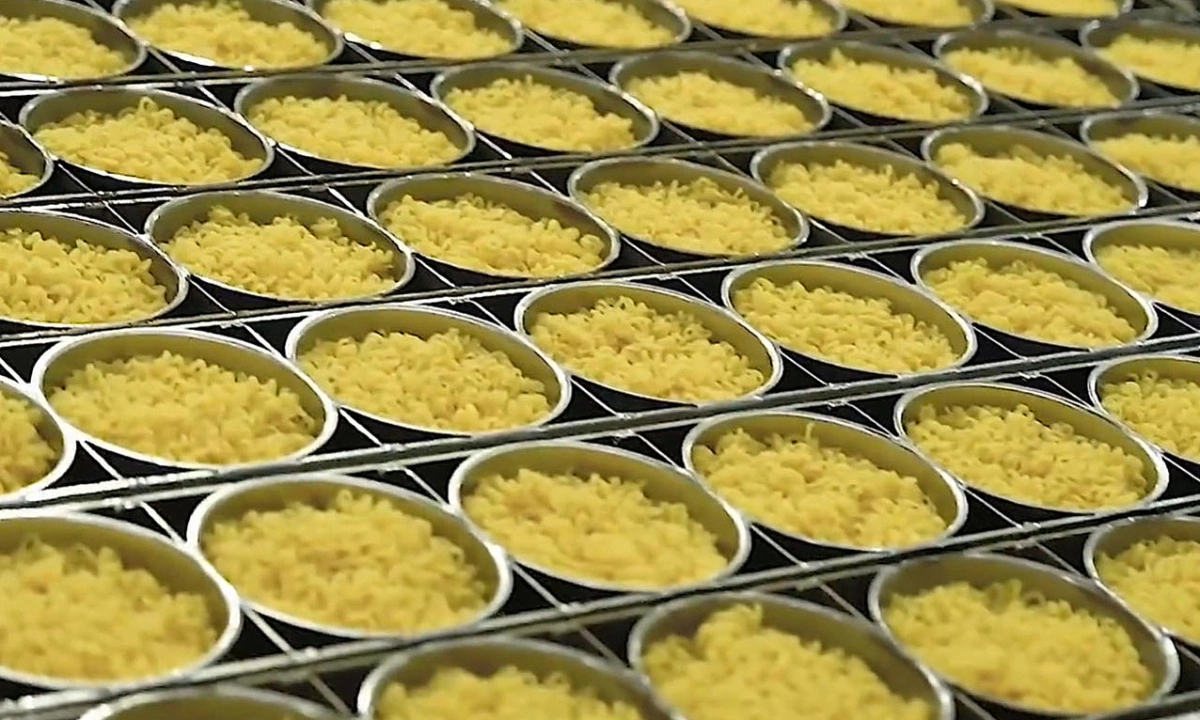
Nongshim, the largest instant noodle factory in Korea, produces 6 million packages every day, selling 1.23 billion packages of noodles to the market every year.
Noodles are one of the dishes that international tourists love and often order when visiting Korea thanks to the delicious flavor from the noodles to the broth. Therefore, many people are curious how a package of noodles in Korea is produced.
At the Nongshim noodle factory in Gumi city, an industrial symphony plays out continuously every day: the sound of grinding flour, the click of rollers and the rhythmic sizzle of dough-cutting blades. Fresh noodles are steamed with a hissing sound, quickly fried with a crackling sound, then sent on a non-stop conveyor belt and packed into plastic packaging.
Noodle production process at Nongshim. Video: CNN
Every minute, 600 packets of instant noodles (also known as ramyun and ramen) roll off the automated production line into cartons, which are transported by robots to the loading area.
This 42,000 square meter facility is the largest instant noodle factory in the country, producing 6 million packages per day. In 2025, it will sell 1.23 billion packages of noodles, worth 884 billion won ($598 million), according to factory director Sang Hoon Kim.
Gumi factory has 600 employees, producing 80% of Shin Ramyun noodles and 90% of Chapagetti noodles (thick and chewy spaghetti-like noodles, served with black soybean sauce) sold domestically. This place has few employees but still produces large volumes thanks to the automation system and smart cameras that monitor every stage of production, ensuring safety and quality.
But in Gumi, ramyeon is more than just a dish – the factory and products have become the city’s cultural anchor. Many people call Gumi with the nickname “ramyeon city”.
(Inside the Nongshim noodle factory. Photo: CNN
Located about 270 km southeast of Seoul, Gumi is a mid-sized city with about 400,000 residents, with a long history as an industrial center. Initially, the city was famous for its textile and electronics industries and today is the largest information and communication technology center in the country.
This city doesn’t attract tourists like Seoul or Busan, but that is changing.
In 2022, Gumi focused on promoting noodle products by organizing the first “ramyeon noodle festival”. The director of the festival that year, Jeong Tae Kim, also a senior city official, said the event’s goal was to turn Gumi from a dull industrial city into a fun destination for residents and tourists.
City Hall contacted Nongshim and the company cooperated with the city council on the festival. Year after year, the festival becomes an event that attracts major visitors to the city. In the first year, more than 10,000 visitors visited and until last year, this event reached a record number: welcoming 350,000 visitors, selling 54,000 bowls of noodles and 480,000 packages of noodles in three days.
The highlight of the festival is a 475-meter-long walking street with booths that organizers call “the world’s longest ramen restaurant.” Here, dozens of restaurants and chefs serve ramen and other noodle-inspired dishes, from ramen sandwiches to Asado bacon noodles.
Guests participating in the 2025 noodle festival buy noodles to take home. Image: CNN
The stalls are supplied with noodles from the Nongshim factory. “Freshly fried ramen noodles are delicious,” said factory manager Sang Hoon Kim, adding that tourists flocking to Gumi “have brought us great pride.”
On festival weekends, train tickets from the nearby city of Daegu sell out, and local merchants report a surge in sales, Jeong-tae Kim said. The challenge now, he said, is how to extend this benefit beyond the event.
Instant noodles were introduced to Korea in the 1960s, when the country was still recovering from the war: food was scarce, especially rice. So people started making noodles with flour provided by the US military, which was actively encouraged by the government in the 1960s.
Samyang Foods, the brand behind the spicy Buldak Ramen, became Korea’s first instant noodle maker in 1963, inspired by Japanese instant noodles.
Nongshim was born in 1965, along with other domestic brands such as Paldo and Ottogi in the 1980s. Mr. Sang Hoon Kim recalls when Shin Ramyun instant noodles launched in 1986, when he was still a student. This dish is filling and cheap, only 200 won (0.13 USD), making it a perfect meal for students.
The packer’s name is printed just below the expiration date. Image: CNN
Kim remembers that back then he bought a whole box to eat gradually, some days he ate up to 10 packs. After graduating, he worked for Nongshim Busan branch, then moved to Gumi in 1992 and promoted to his current position.
30 years have passed, Kim is still “not bored” of eating noodles, even though every day he tastes instant noodles produced at the factory. On holidays, he still cooks noodles at home to eat.
Sang Hoon Kim is not the only one who loves instant noodles. According to the World Instant Noodles Association, by 2025, Koreans will consume more than 4 billion servings of instant noodles, equivalent to about 77 bowls per person per year.
The popularity of Ramyeon instant noodles is also skyrocketing globally as South Korea’s instant noodle exports jumped 22% in 2025, reaching a record of $1.5 billion. This dish has also become a familiar image to international visitors through its popularity in Korean movies.
Nongshim is building the 191.8 billion won ($130 million) Noksan export factory in Busan, expected to produce 500 million instant noodle packages per year, nearly doubling the company’s current domestic exports when it comes into operation later this year.
Mr. Kim said that at Nongshim, behind the automation process, each product still retains its own human imprint. On the packaging of the noodle packages, below the expiration date is the name of the person who packaged the noodles.
“When I was a regional manager, my name was printed on the packaging. If 500 million packages of Shin Ramyun noodles were sold, it would feel like the whole country knew my name,” Kim said.
https://newgioco.org/casino/
https://newgioco.org/bonus/codice-promozionale/
https://newgioco.org/bonus/
https://newgioco.org/bonus/senza-deposito/
https://nv-casino.com.nl/inloggen/
https://nv-casino.com.nl/app/
https://nv-casino.com.nl/bonus/bonus-code/
https://nv-casino.com.nl/bonus/
https://nv-casino.com.nl/bonus/geen-storting/
https://nv-casino.com.nl/klantenservice/
https://nv-casino.com.nl/over-ons/
https://nv-casino.com.nl/privacybeleid/
https://nv-casino.com.nl/algemene-voorwaarden/
https://nv-casino.com.nl/verantwoord-spelen/
https://nvcasino.com.nl/bonus/geen-storting/
https://plinko-nl.nl/promo-code/
https://plinko-nl.nl/pond-of-plinko/
https://plinko-nl.nl/plinko-2/
https://plinko-nl.nl/chicken-plinko/
https://plinko-nl.nl/plinko-empire/
https://plinko-nl.nl/klantenservice/
https://plinko-nl.nl/privacybeleid/
https://plinko-nl.nl/algemene-voorwaarden/
https://plinko-nl.nl/verantwoord-spelen/
https://unibet-norge.com/casino/