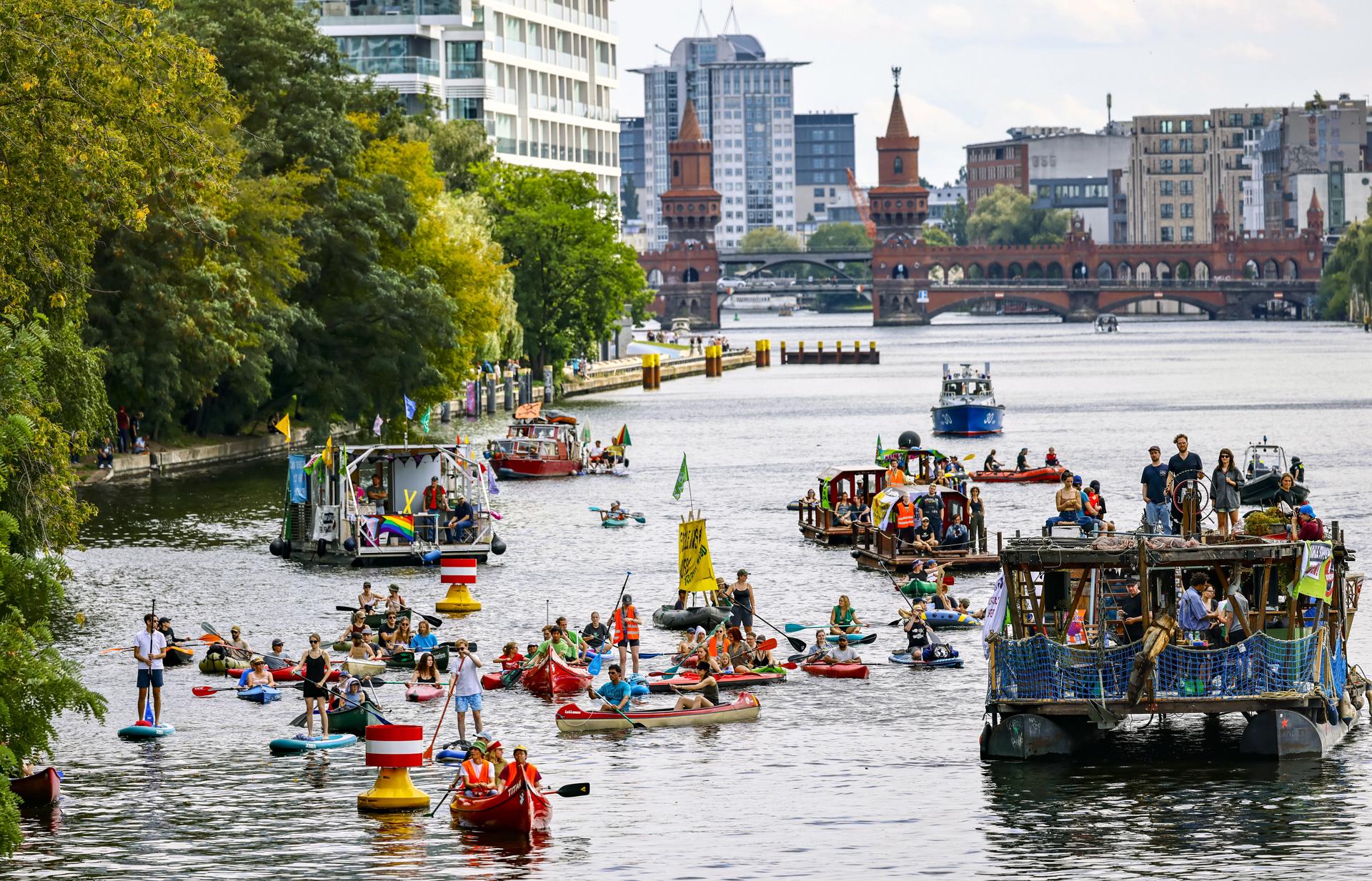
The new BerlinPay program, launched this Thursday (14) in Berlin, Germany, will reward tourists and residents who collect trash, plant flowers, water trees, use bicycles or participate in other sustainable actions in the German capital. Anyone who participates in one of these initiatives will be able to receive benefits such as free museum tickets, discounts at restaurants and canoe trips.
The pilot program will run until June 14th and has a special focus on the River Spree, which runs through the city, and sustainable water tourism. The proposal is to reduce the environmental impact left by visitors and residents in public areas, especially during the busiest tourist months.
Those interested can consult the approximately 5 thousand activities that will be rewarded directly on the visitBerlin website (click here). In addition to collecting trash, those who want to participate in the program can also carry out other simple urban care actions, such as planting flowers, watering trees or swapping their car for a bicycle.
In total, around 40 companies, associations and museums participate in the initiative. Rewards are offered directly by partners to those who demonstrate actions considered environmentally responsible – and can range from small benefits to special experiences in the city, such as kayak tours, free museum tickets or drinks at riverside bars.
Berlin’s deputy mayor, Franziska Giffey, stated that water tourism has become an important economic factor for the city, but it also leaves environmental impacts. Sabine Wendt, head of the German capital’s tourism board, said that the initiative invites Berliners and visitors to get to know the city “in a more conscious way”.
BerlinPay was inspired by CopenPay, a program launched in Copenhagen, Denmark, in 2024. In the Danish model, tourists who adopt sustainable practices, such as collecting trash or arriving in the city using less polluting transport, receive rewards such as coffee, ice cream, bicycle rental, meals and boat trips.
According to AFP75 thousand tourists participated in the first month of testing in Copenhagen. The program also led to a 29% increase in bicycle rentals and helped collect tons of trash.
Berlin tries to adapt this experience to a local problem. According to data cited by Euronewsthe removal of irregularly discarded garbage cost the city around R$13.1 million last year, up from the R$10.3 million recorded the previous year.
In addition to the incentives, the German capital also toughened punishments against those who litter public spaces. Since the end of 2025, throwing a cigarette butt on the ground can result in a fine of up to R$250. In serious cases, the punishment can reach R$3,000. Irregular disposal of bulky waste, such as furniture and appliances, can result in fines of up to R$11,000, or R$15,000 in the case of hazardous waste.
If the project has a good result, Berlin intends to turn BerlinPay into an annual event. The idea, according to local authorities, is to make tourists and residents not only enjoy the city, but also help preserve it.
https://papersowl.com/buy-assignment
https://papersowl.com/article-review-writing-service
https://papersowl.com/research-paper-editing
https://papersowl.com/write-my-book-report
https://papersowl.com/do-my-math-homework
https://papersowl.com/mba-essay-writing-service
https://papersowl.com/research-proposal-writing-service
https://papersowl.com/physics-homework-help
https://app.net/post/bcmNSEnS3Ue8UfbbjmBA
https://shu.com.ua/members/kalyancityy.57369/
https://amsterdamsmartcity.com/members/57648
https://luvly.co/users/KalyanCityy
https://www.goldposter.com/members/kalyancityy/profile/
https://forum.chemodan.com.ua/profile/280280-kalyancityy/?tab=field_core_pfield_13
https://dapp.orvium.io/profile/kalyan-city
https://devrant.com/users/KalyanCityy
https://community.wongcw.com/KalyanCityy
https://www.sideprojectors.com/user/profile/233264/projects
https://offcourse.co/users/profile/kalyancityy
https://log.concept2.com/profile/2945435