On a rocky headland on the North African coast, overlooking the waters of the Alboran Sea towards Southern Europe, lies Melilla. This little Spanish enclave, surrounded by Morocco on three sides and kissing the Mediterranean Sea on the other side, covers an area of just over twelve square kilometers. To an observer from the side, the magnificent city center from the beginning of the twentieth century, the wide sandy beaches and the fortifications from the end of the nineteenth century may seem like an Andalusian region that has been cut off from its place. But Malia eludes simple definitions: the city, known in its districts as the “city of four cultures”, is a complex human mosaic where Sephardic Christians, Amazigh Muslims (Berbers), Jews and Hindus have woven together, for generations, a common civil identity.
The delicate internal balance of this multicultural bastion was reaffirmed last week, when the local government, through the tourism office, awarded a grant of 40,000 euros to the local Jewish community. The funding, which corresponds to the same subsidy granted to the Islamic Committee of Maliya, is intended to ensure the preservation of the religious sites in the city and their accessibility to the general public as part of the “Route of the Temples” municipal initiative.
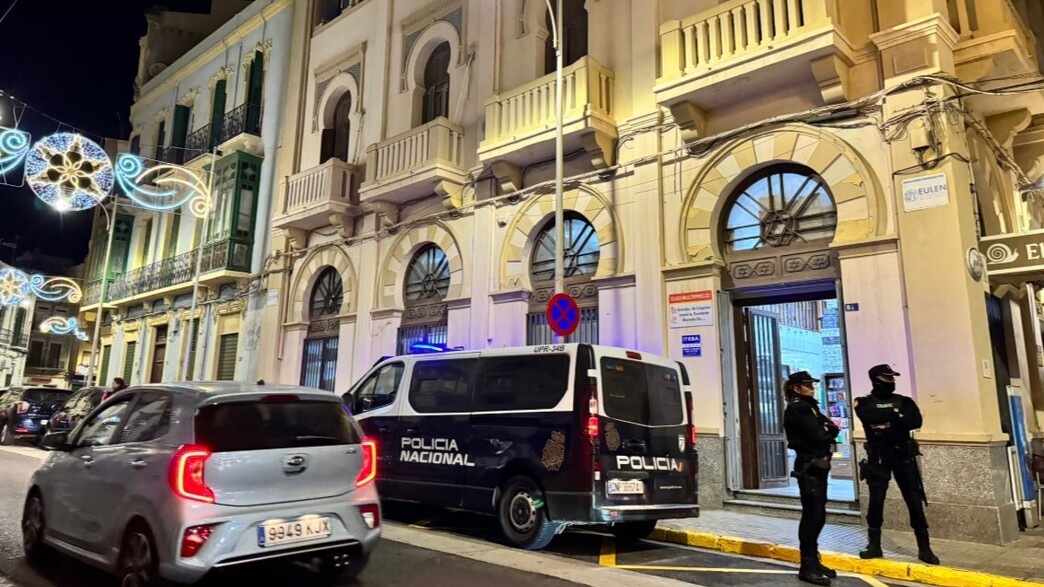
At the center of the grant awarded to the Jewish community is the historic synagogue “Or Zeru”. The building, designed by the renowned Catalan architect Enrique Nieto and erected at the beginning of the twentieth century, stands as a symbol of physical and cultural survival. Under the terms of the agreement, the funding will cover the employment of expert guides who will lead tourists and locals on tours of the structure, and illuminate the deep history of Judaism in Maliya. Crucially, the grant also reserves a budget for dedicated security personnel to be stationed on site to protect the structure, a clear reminder that even in a city known for its interfaith peace, global geopolitical shocks may also hit local shores.
Ancient anchors and the way back to Spain
Although Melilla officially became a Spanish territory in 1497 under the rule of the Catholic kings Fernando and Isabella, the roots of the Jewish presence there stretch deep into antiquity. Thousands of years before the borders of modern Europe and Morocco were drawn, the Phoenician trading enclave on this rocky headland was known as Rusadir, meaning “carried cape”. Historians locate evidence of a commercial-Hebrew presence in the Phoenician Rosadir as early as the seventh century BC, a connection that receives new validity thanks to a Jewish coin from the first century BC preserved in the Museum of Archeology and History in the medieval citadel of Malia.
The community expanded in waves of migration linked to changes in the Mediterranean basin. Following the Roman victory in the Jewish wars and the destruction of the Temple in Jerusalem in AD 70, thousands found refuge in enclaves in North Africa. A second mass migration occurred in 135 AD, when imperial divorces forced Jewish families to move west, and for many days they integrated into the local barbaric culture of the Maghreb. When Islam swept through North Africa centuries later, Arab chroniclers recorded fierce resistance from local independent kingdoms, including the legendary warrior queen Dahiya al-Kahina, a figure with Jewish roots whose story still resonates in regional folklore.
The paths of Hispanic and North African Jewry met dramatically in 1492 with the expulsion of Spain. Thousands of Spanish families fled to Morocco and united with the local Maghreb communities. For almost four centuries these populations navigated the political upheavals of the interior of Morocco, and were often confined to living in crowded and impoverished districts known as “Mellahs” (Mellahs).
The modern era of Melia as a place of refuge began in 1862, when in the same year three symbolic cannon shots fired from the Citadel of Victoria Grande using the “El Caminante” cannon established the new and expanded scope of the city, increasing it to approximately 12.5 square kilometers. A year later Melia was declared a free port to compete with French commercial influence in Algeria and Morocco. In urgent need of a civilian population to drive this new economy, a royal decree of 1864 officially authorized Jewish and Muslim merchants of Moroccan descent to settle within the city limits.
The first families to arrive were Sephardic Jews who fled the Spanish-Moroccan War and the ensuing persecution in the city of Titouan, and left their city in 1862 together with the retreating Spanish forces after the Treaty of Wad Ras. These immigrants, who had a strong cultural and economic status and spoke Haketia, an ancient Judeo-Spanish language that preserves traces of ancient Castilian, quickly boosted the economy of Malia. In 1871, they received Spanish citizenship, thereby effectively restoring to themselves the civil identity that had been denied to their ancestors hundreds of years earlier. This wave was called “deported” Jews, to distinguish them from the “residents”.
The second wave, the “residents”, arrived between 1903 and 1904. These refugees, Maghreb Jews, fled from the brutal fighting and disturbances carried out by the armies of Sultan Moulay Abd al-Aziz and the claimant to the crown, in Hamara (ar-Rogi), in the Jews of the city of Taza. In contrast to the Spanish-speaking urban Sephardic Jews, the “residents” came from a rural environment and did not possess a distinct Hispanic education. Although they were initially separate from each other due to their different cultural and social roots, the two sectors assimilated into each other over time, creating the united Jewish community that is an integral part of the modern Malia society.
“Little Jerusalem” and the Golden Triangle
When the city burst beyond the citadel walls at the beginning of the 20th century, the Jewish community became a central factor in its architectural and social change. Merchants and families funded a huge construction boom, turning the street network of the city center into a thriving urban space. The city center was nicknamed “Little Jerusalem”, “Zion” or the “Golden Triangle” (Triángulo de Oro).
A key figure in this change was Enrique Nieto, a Catalan architect who came to Melia in 1909 after studying under the tutelage of Antoni Gaudi and his arch-rival Luis Dominique y Montaner. Nieto and his contemporaries filled the city center with public, commercial and residential buildings in the style of “Modernisme”, the Catalan version of Art Nouveau, and later with geometric Art Deco buildings of the 1920s and 1930s. Today there are about 500 such buildings left in the city, and Melia has the highest concentration of Art Nouveau architecture outside of Barcelona. Buildings such as the “El Telegramma del Rif” building from 1912 (which now houses a branch of a clothing store) which includes unique apple-shaped windows, and Casa Melul from 1917, whose facade is decorated with white flower decorations, horseshoe arches and prominent windows, define the face of the city.
The Jewish community reached its peak size in the middle of the 20th century, when, following the granting of independence to Morocco in 1956, a mass flow of Jews seeking safety moved towards the Spanish borders, bringing the Jewish population to about 20 percent of all the inhabitants of Malia. The Jews played an active role in the development of the city: they opened grocery stores, established the first private burial company, the first theater company, the first photography studio, and even introduced a new sport to the city, tennis.
In the nineteenth century, the first synagogue was established by the Salama family (1866), and over the years, 26 synagogues were established in the city, along with institutions such as the Hebra Kadisha, mikveh tahara, yeshiva, and an oven for baking matzoh. In 1905 a designated Jewish quarter was established with streets bearing the names Tel Aviv, Haifa and Zion, which is today the only living Jewish quarter left in Spain. In 1908, the city’s Jewish community was officially founded, and prominent figures such as the Rabbi Avraham HaCohen and his son Rabbi David Shlomo HaCohen led the community. In 1924, the “Talmud Torah” school was established, which is currently the only private Jewish school in Spain that offers religious studies alongside studies of religion and Jewish history. Municipal tributes include a street dedicated to Yaakov Salama Hassan in 1933 and a monument in memory of Yamin Benaroosh erected in 1997.
Navigating geopolitical currents and modern tourism
Today the community is much smaller, and has about 1,200 members out of a total urban population of about 58 thousand residents. Despite the decrease in their numbers, the footprint of the Jewish heritage remains enormous. Malia holds the unique status of the city where the only active Jewish Arab practice in Spain takes place, established in 2004 under the supervision of the local rabbinate. On Shabbat and holidays, Jewish residents can be seen walking freely in the city squares wearing a kippah, a testament to the ongoing climate of mutual respect and coexistence.
However, Malia’s location as a European border post on the African continent makes it vulnerable to international political shocks. The necessity of the security clauses and the constant guarding of the synagogues, which are now financed as part of the 2026 municipal grant, has become clear in recent years. In October 2023, following the outbreak of war in Israel, external political tensions spilled over into the city when a pro-Palestinian demonstration degenerated into riots. A group of about thirty rioters gathered in front of the “Ur Zeru” synagogue in the historic center, burned Israeli flags, shouted insults and tried to break into the building.
The events, which also included the harassment of several Jewish business owners, were stopped thanks to the quick intervention of the police forces, who also doubled the security around the Spanish-Israeli school in the city. The president of Malia, Juan Jose Imbroda, then called for calm and requested that “external conflicts, however painful they may be, will not harm the exemplary coexistence” that characterizes the city. The Spanish judicial system backed up this position in March 2024, when the Supreme Court in Spain sentenced a man who incited violence against the Jewish community in Malia, participated in the attempted break-in to the synagogue, and collected lists of Jewish destinations and institutions in the city that he had marked on social media.
This security tension is an integral part of everyday life in the enclave. The significant presence of the army forces and the Spanish Border Guard (the Civil Guard) in Rehovot is intended to stem the flow of illegal immigration from Morocco, but it also indirectly gives the small Jewish community an extraordinary sense of security. In such a complex and explosive geopolitical environment, the local government’s recent decision to grant a special grant for the security and preservation of the historic synagogue is not only a cultural step, but a statement of Madrid’s political intentions: preserving at all costs the multicultural character of the enclave, and protecting the minorities living there in one of the most turbulent points of friction between Europe and the Third World.
The 2026 Houses of Prayer Route grant represents a deliberate and active effort on the part of the local authorities to preserve unity through education and advocacy. The opening of the “Or Zaru” synagogue and the local mosques for structured guided tours is intended to transform the religious spaces into cultural bridges. This cultural integration is also expressed in the activities of the cultural association “Mem Guímel”, which works to strengthen social integration and promote Jewish-Spanish culture through educational programs and the organization of the “Spanish Melia Route”.
Architecture, citadels and celebrations in the streets
For travelers, the city of Malia offers a rich cultural route. Beyond the architectural tours of the Golden Triangle, visitors can explore “Old Melilla” (Melilla la Vieja), the massive citadel built on a cliff above the sea. Among its steep alleys and walls lies the 17th century “La Purisima Concepcion” church, and old defense buildings and warehouses that are now used as museums, including the Museum of Archeology and History and the Ethnographic Museum. Below the surface are the “Caves of the Small Convent”, a three-level underground network originally dug by the Phoenicians and used as a shelter during sieges and as a food store. The guided tour in them includes historical displays and leads to an opening facing a small inlet.
Nearby stands the Santiago Chapel, built in 1551 and recognized as the only Gothic chapel on the African continent. In March 2025, this site became the official starting point of a new route in the Camino de Santiago pilgrimage network: “La Vía Rusadir”. This route, which stretches for about 970 kilometers to the cathedral in Santiago de Compostela in Spain, marks the first time that this Christian pilgrimage network has expanded to the African continent, and its starting point is marked on the ground by the seashell symbol that characterizes the Camino.
The city’s calendar presents a rotation of diverse cultural events throughout the year. The month of June brings with it the “Renaissance Fair”, which includes giant dolls in medieval clothing marching through the streets, stalls along the walls of the old city and fireworks shows. In the spring, Semana Santa processions are held in the streets of the city, and in September the “Feria de Melilla” is celebrated, where the residents wear flamenco clothes and gather in traditional tents (Casetas). In the fall, the small Hindu community of the city, which currently numbers about 100 residents whose families mostly came from Hyderabad after the partition of India in 1947, brings the Diwali celebrations to the streets of the city, accompanied by fireworks shows and mutual greetings between members of the different religions. In December, the city celebrates a public Hanukkah event accompanied by the serving of kosher food as a symbol of integration.
The history of Malia is not a story of isolation, but of an everyday cosmopolitan reality that is also motivated by the enclave’s status as an area exempt from value added tax (IVA). In the North African light, the spiers of the churches, the active synagogues, led by “Ur Zaru”, the mosques and the Hindu temple stand side by side as a vivid reminder that different cultures can share a common space on one small isthmus.
https://pmpaul.com/exploring-the-thrills-of-slot-a-travel-into-the-world-of-big-wins-and-haunting-spins/
https://mindbodyspiritacupuncture.com/mastering-the-art-of-slot-divulge-how-to-maximise-your-victorious-potential-in-every-spin/
https://wingdom.org/from-tyro-to-pro-a-comprehensive-examination-of-the-slot-and-its-surprising-features/
https://happybirthdaytext.com/slot-surprising-fusion-of-technology-entertainment-and-life-changing-rewards/
https://linkedinclassactionsettlement.com/slot-venture-search-a-world-occupied-with-vivacious-artwork-high-payouts-and-nonstop-flight-litigate/
https://www.theegreetingsportal.com/unveiling-the-secrets-of-slot-a-deep-dive-into-the-most-exciting-gaming-experience/
https://carolslistings.com/unlocking-the-mysteries-of-slot-from-reel-spins-to-solid-jackpots/
https://dargasonmusic.com/the-last-steer-to-victorious-at-slot-tips-tricks-and-strategies-for-utmost-payouts/
https://floridacarcoverage.com/slot-adventure-research-a-earthly-concern-occupied-with-vivacious-artwork-high-payouts-and-nonstop-flight-sue/
https://fitnesspowersports.com/unlocking-the-mysteries-of-slot-from-reel-spins-to-solid-jackpots/
https://texasbbqreview.com/slot-hazard-search-a-earth-filled-with-spirited-nontextual-matter-high-payouts-and-nonstop-sue/
https://unsplash.com/@ragtailors
https://disqus.com/by/ragtailors/about/
https://www.reverbnation.com/artist/ragtailors
https://www.4shared.com/u/DJT9g0vQ/metropolitandog.html
https://files.fm/ragtailors/info
https://www.pexels.com/@rag-tailors-2161366697/
https://www.intensedebate.com/people/ragtailors
https://www.ted.com/profiles/51545511
https://www.zazzle.com/mbr/238541491779835440
https://500px.com/p/ragtailors?view=photos
https://devpost.com/ragtailors?ref_content=user-portfolio&ref_feature=portfolio&ref_medium=global-nav
https://wakelet.com/@ragtailors
https://www.mixcloud.com/ragtailors/
https://opencollective.com/ragtailors