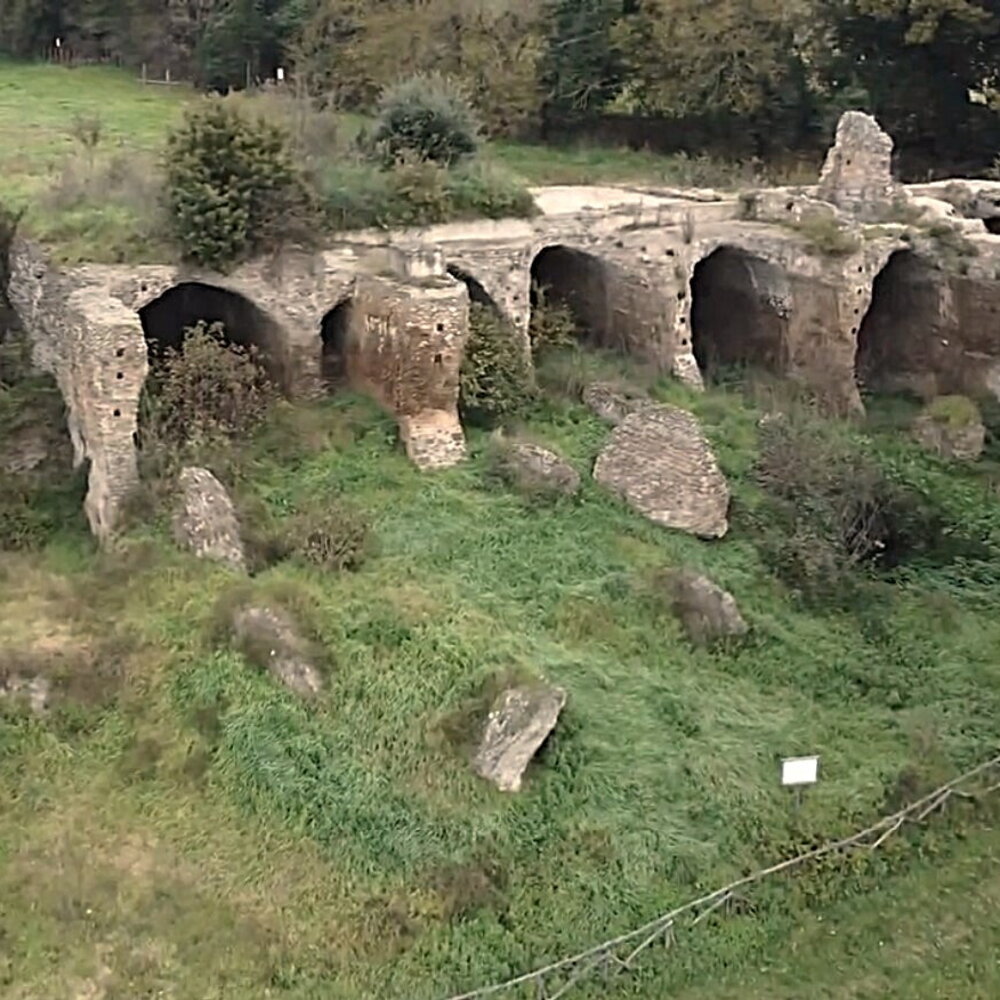
The Archaeological Park of Ocriculum36 hectares nestled on a bend of the Tiber near the town of Utriclesis considered the first roman municipality of Umbria. Rome incorporated it in 308 BC and in the following centuries made it one of the most important nodes in central Italy: river portobligatory station on Via Flaminiaa hub for trade and control of the Umbrian territory. A site already known, already excavated, already studied. Yet until a few weeks ago his civic center — the heart of the city, the place where the community recognized itself as such — was still buried.
Now it isn’t anymore. The recent one excavation campaignfinanced by Ministry of Culture and conducted by National Museums of Umbria together with Superintendency of Archaeologyintercepted for the first time a central area of the ancient city that was little known until now, where the principals were located public spacesincluding the forum. This is where the importance of the discovery is concentrated: not new peripheral fragments, but the very heart of the city.
A main road and a monumental base
There are three findings, and they can be read together. The first is a broad road layout perfectly preserved, paved with large Basoli in local stone which still bear the signs of the passage of the wagons. Not just any road: due to its location and construction, it is one of the main arteries of the municipalityprobably linked directly to the forum. Next to it emerges an imposing base in concrete e tuffdesigned to support buildings of great importance, probably with civic or religious functions. The land has returned column shaftsfragments of architectural terracottas and decorations marble of refined workmanship – the quality level of the materials indicates a client of high status, not a secondary building.
The octagonal public fountain
The most significant discovery, however, is the third. In the center of one open space surrounded by an elegant paved a big one emerged public fountain of shape octagonalwith internal lining in cocciopesto. It’s one very rare fountain in the panorama of the Roman cities of central Italy. The octagonal shape is not a decorative whim: it refers to one architectural tradition precise, linked to representation spaces. The fountains, in a Roman centre, are not furniture: they are infrastructure e symbol Together. Where there is a fountain like this, there is usually a center that can be recognized as such. Finding this element – rare, well preserved, located in an organized open space – means having confirmation that you are in the exact point where the city showed itself to itself and to travelers arriving from Flaminia.
A commercial weight in the heart of the city
To seal the reading, a small and precise detail: a commercial weight 30lb stone, found in the area. In its concreteness it tells better than any monument real life of the place: here we weighed, measured and negotiated. It was a square, in the full sense of the term.
Redrawing the Ocriculum map
Further investigations will be needed to fully understand the function of all building that surrounded the square, but the picture that emerges is already sufficient to redesign the Ocriculum map. What was once an important but incomplete site now becomes readable in its own right urban structure: a city with a recognisable, monumental centre, capable of competing with the most celebrated Roman municipia of central Italy. THE National Museums of Umbria they are already working to make the new areas emerged from the excavations accessible to the public. Those who don’t want to wait can visit the finds live from 29 to 31 May, during «Ocriculum AD 168», three days of Roman history, gladiatorial games and shows in the archaeological area.
https://someinterestingfacts.net/ford-kuga-2013-review/
https://someinterestingfacts.net/formula-1-vs-formula-2/
https://someinterestingfacts.net/frasassi-caves-facts/
https://someinterestingfacts.net/french-revolutionary-infantry/
https://someinterestingfacts.net/fun-facts-about-chicken-wings/
https://someinterestingfacts.net/fun-science-facts/
https://someinterestingfacts.net/genetically-engineered-crops-work/
https://someinterestingfacts.net/glass-ice-transparent/
https://someinterestingfacts.net/gmc-6×6-cargo-army-truck-in-ww2/
https://someinterestingfacts.net/honda-brio-1-2-review/
https://someinterestingfacts.net/hoover-dam-construction-facts/
https://someinterestingfacts.net/horse-armor-in-medieval-combat/
https://someinterestingfacts.net/how-a-trebuchet-works/
https://someinterestingfacts.net/how-a-vomit-comet-trains-astronauts/
https://someinterestingfacts.net/how-action-cameras-record-on-the-go/
https://someinterestingfacts.net/how-an-electric-guitar-produces-sound/
https://someinterestingfacts.net/how-ancient-chariots-worked/
https://someinterestingfacts.net/how-are-bronze-sculptures-made/
https://someinterestingfacts.net/how-are-caves-formed/
https://someinterestingfacts.net/how-are-comet-tails-formed/
https://someinterestingfacts.net/how-are-diseases-spread/
https://someinterestingfacts.net/how-are-impact-craters-formed/
https://someinterestingfacts.net/how-atomic-clocks-work/
https://someinterestingfacts.net/how-aurora-lights-are-formed/
https://someinterestingfacts.net/how-big-is-an-aircraft-carrier/