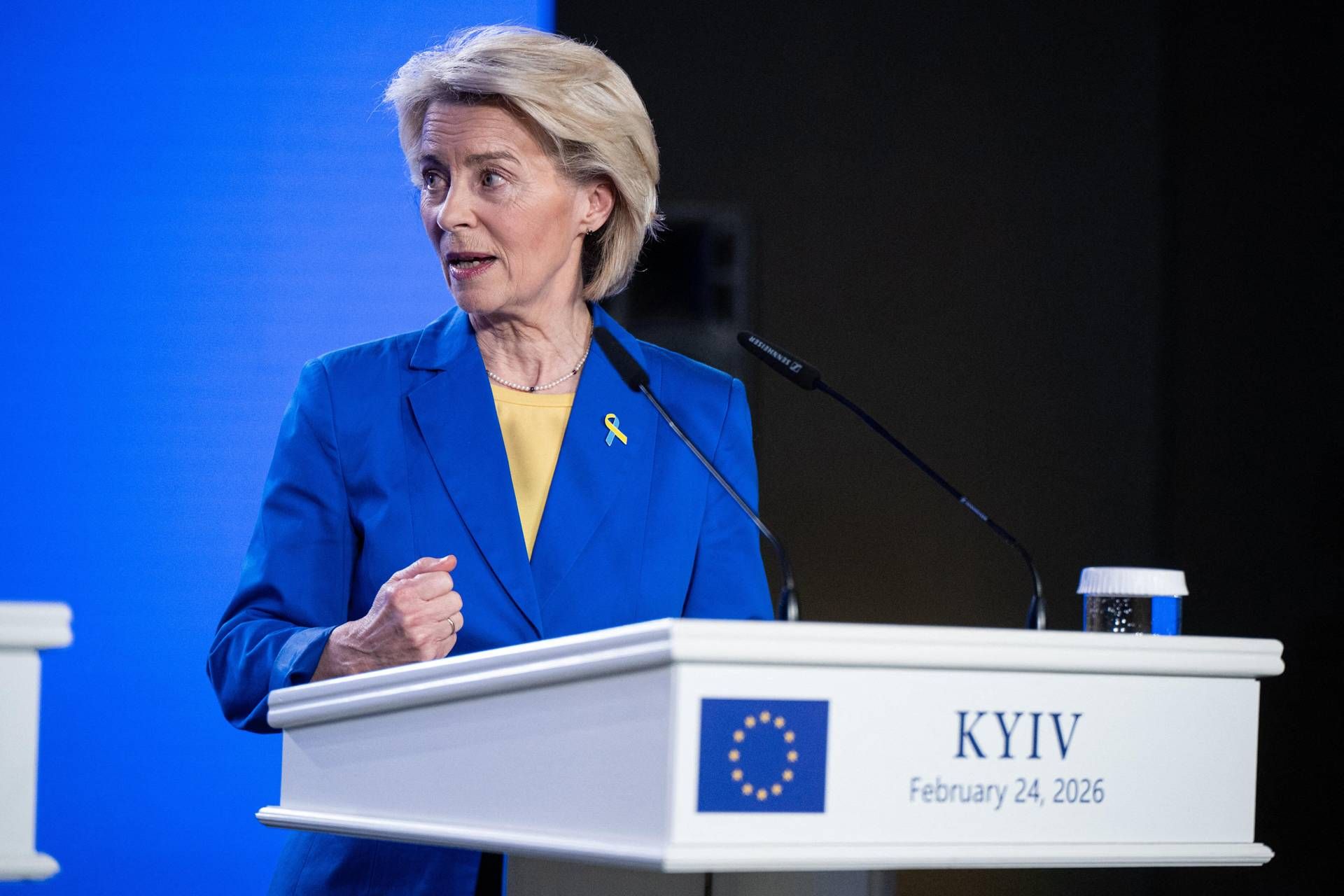
The European Commission proposes a new package of sanctions against Russiathe twenty-first since the large-scale invasion of Ukraine began, including one suspension of the price cap adjustment mechanism on Russian oil, which would have entailed a significant upward revision of the ceiling, due to the increases triggered by the closure of the Strait of Hormuz.
“Our consistency with the sanctions packages – says President Ursula von der Leyen in Brussels – is bearing fruit. Today we present the 21st sanctions package. We focus on the sectors with the greatest impact, namely energy, financial services and cryptocurrencies, trade and, for the first time, also fishing. Furthermore, we ban Russian ex-combatants from entering the European Union“.
For von der Leyen, “conflict in the Middle East and disruptions to global energy supply chains have eased some of the pressure on Russia. The objective of our package could not be clearer: we want to maintain the full intensity of our sanctions. And the way to do this is to ensure that Russia’s profits from oil sales remain contained.”
“Our oil price cap – recalls von der Leyen – has a built-in adjustment mechanism to follow the market trend. It was not designed for market shocks such as the one caused by the closure of the Strait of Hormuz. Therefore, we propose to simply suspend the adjustment until January next year.”
“This – continues von der Leyen – will give the oil markets time to stabilize, while maintaining pressure on Russia’s revenues. At the same time, we will continue to target the shadow fleet. Today we propose to add more 30 navi to the list of sanctions, in addition to the 632 already sanctioned. For the first time, we are also targeting ships that support the shadow fleet, for example those that provide bunkering and other services.”
“We also propose – he continues – to strike critical infrastructures, such as ports, airports or refineries that trade or process Russian oil. Finally, we propose to limit the sale of LNG tankers to Russia, as we have already done for oil tankers.”
The second point, continues von der Leyen, “concerns financial and cryptocurrency restrictions. We extend our transaction bans to other 31 Russian banks and 20 banks, cryptocurrency companies or platforms and oil operators from third countriesthat is, those who provided services to sanctioned Russian entities and individuals or who evaded our measures. For the first time, we will introduce the possibility of a total ban on cryptocurrency-related services provided by third countries. It will be a strong deterrent for countries hosting platforms that help Russia evade our sanctions.”
The third point “concerns trade. Let’s introduce new export restrictions of goods and technologies used by the Russian military industry. For example, we are targeting more metals and alloys used in the aerospace and defense sectors. Regarding drones, we are proposing new export bans for ground support equipment and jamming and launching systems, among other items.”
Also proposed, adds von der Leyen, are “new import bans for a series of goods worth 60 million euros. For example, this concerns some metalsmetal ores or car components, because we want to consolidate Europe’s diversification to reduce dependence on Russian imports.”
Finally, the president continues, “we deal with one of the last major non-sanctioned sectors, that is fishing. We propose substantial import restrictions of some fish products and a total ban on others, including cod. Furthermore, we will align trade restrictions for Belarus, so that it cannot serve as a gateway for Russian trade.”
Not only that. “We propose for the first time – announces the president – to ban entry into the European Union to anyone who has served in the Russian armed forces since the beginning of the war. Therefore Europe remains off-limits to anyone who participated in the invasion of Ukraine. It’s very simple.”
At the same time, adds von der Leyen, “we provide unrelenting support to our courageous neighbor, partner and future member of the European Union, Ukraine. Yesterday we disbursed almost 3 billion euros from the fund intended for Ukraine. And this month we will make the first tranche of our 90 billion euro loan to Ukraine. By the end of the month, therefore, we will provide Ukraine with 6 billion euros for drones and over 3 billion euros in macro-financial assistance. And of course, they will follow further disbursements soon.”
“In the next few days – continues the president – we will open the first cluster with Ukraine and Moldova. This, in essence, opens the door to the next stage of the accession process: the formal start of negotiations. And I don’t need to tell you that the Commission is fully ready to support Ukraine on its path towards the European Union,” he concludes.