Supply tensions have caused gasoline prices to rise, so it will take many months to restore energy flow to pre-war levels, according to experts.
The US and Iran have just announced an agreement to end more than three months of fighting. However, analysts say that gasoline prices and energy supply problems will not be resolved immediately. The reason is that businesses need time to be assured that traveling through the Strait of Hormuz – a maritime route through which about 20% of global oil and gas supplies circulate – is truly safe. Not to mention, the process of transporting and refining oil is inherently slow. Therefore, it may take many months for the energy flow to recover.
“It takes time for everyone to feel secure, restore insurance operations, and bring human resources back to the field to re-operate the infrastructure,” said Daniel Evans, director of fuel and refining research at S&P Global Energy.
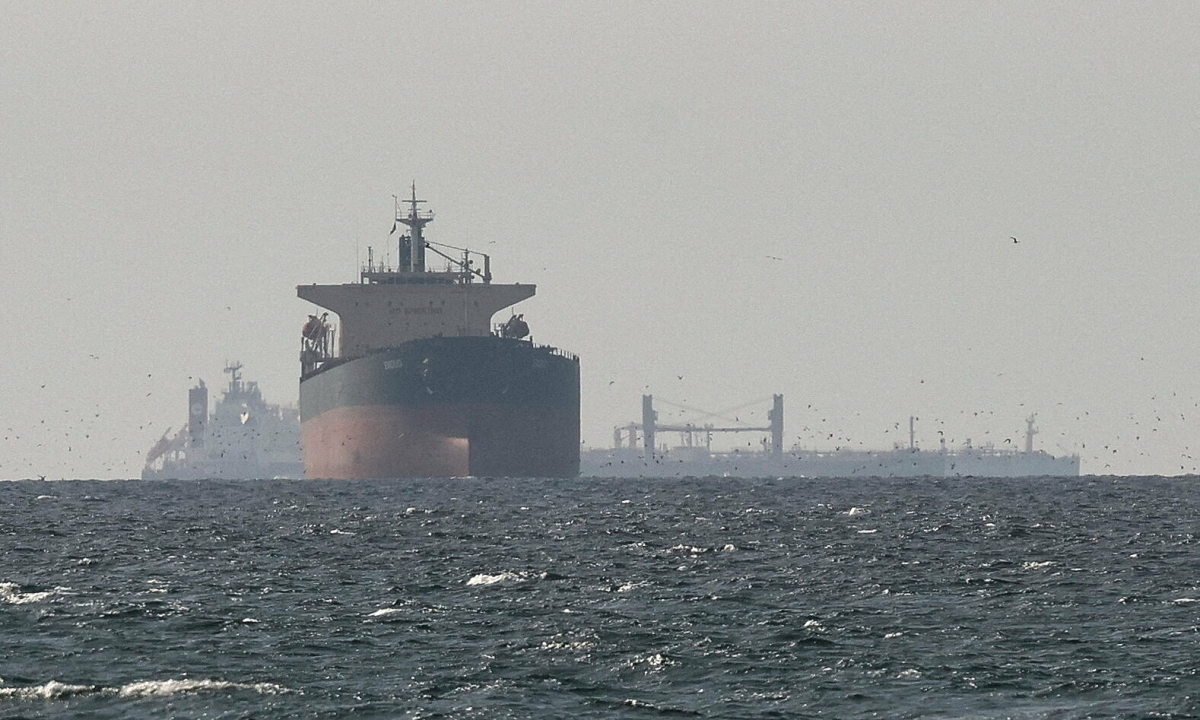
Cargo ships in the Persian Gulf, near the Strait of Hormuz, March 11. Image: Reuters
He also noted that the tanker moved quite slowly. It can take months to transport oil from Hormuz to distant markets, get it into refineries, and then distribute it to end consumers.
In addition, some oil producers in the Middle East have had to temporarily suspend exploitation due to running out of storage capacity. Restarting also takes time. Mr. Daniel Sternoff, senior expert at Columbia University’s Center for Global Energy Policy, said that countries that have stopped oil exploitation will not want to restore production until they are sure that the traffic situation through the Strait of Hormuz has stabilized and the ceasefire can last longer than 30 or 60 days.
“We still don’t know exactly what ‘opening’ means, nor how quickly the release of trapped goods will take place,” he said.
According to estimates by Mr. Tamas Varga, analyst at PVM Oil Associates, fully restoring circulation through Hormuz takes several weeks to several months. “A slow resumption could lead to supply shortages throughout 2026,” he said.
After the US-Iran agreement was announced, oil prices dropped more than 4 USD per barrel in the second session (June 15). Brent and WTI oil traded around 82.63 USD and 80 USD per barrel. But the price is still significantly higher than before the war, once only about 70 USD per barrel.
“Financial investors are simply borrowing future oil supplies, so oil prices are falling,” Mr. Tamas Varga explained.
Brent oil price movements from June 9 to June 15. Chart: OilPrice
According to Mr. Evans, when prices gradually cool down, stranded oil tankers will have to leave the Strait of Hormuz one by one, before new ships can enter to receive goods. “To bring a new ship, you must ensure there is a long enough period of time for the ship to safely dock, load and then leave,” he said.
Mr. Alan Gelder, Senior Vice President of Refining, Petrochemicals and Oil Markets at consulting firm Wood Mackenzie, said that Saudi Arabia and the UAE can restore output the fastest, thanks to pipelines and export routes that replace the Strait of Hormuz.
“But places like Iraq will face more difficulties because of large production cuts, while oil fields are more complex. It may take about a year for them to return to normal levels,” he said.
In addition, investments in the energy system have almost stagnated since the Hormuz blockade. Therefore, this capital flow also needs time to restart, according to Mr. Gelder.
Investors are also cautiously monitoring ship traffic entering the Strait of Hormuz, as well as the speed at which Middle Eastern oil producers restore production and exports, after losses caused by conflict.
“The losses that have occurred cannot be reversed overnight. This includes not only physical damage to oil and gas infrastructure, but also the economic pressures that oil-importing countries have suffered after months of facing high energy costs,” commented Ms. Priyanka Sachdeva, senior market analyst at Phillip Nova.
https://vox-se.com/promocode
https://vox-se.com/review
https://vox-se.com/slots
https://vox-no.com/apk
https://vox-no.com/app
https://vox-no.com/bonus
https://vox-no.com/casino
https://vox-no.com/deposit
https://vox-no.com/download
https://vox-no.com/faq
https://vox-no.com/legal
https://vox-no.com/login
https://vox-no.com/mirror
https://vox-no.com/mobile
https://vox-no.com/payments
https://vox-no.com/problems
https://vox-no.com/promocode
https://vox-no.com/review
https://vox-no.com/slots
https://vox-dk.com/apk
https://vox-dk.com/app
https://vox-dk.com/bonus
https://vox-dk.com/casino
https://vox-dk.com/deposit
https://vox-dk.com/download