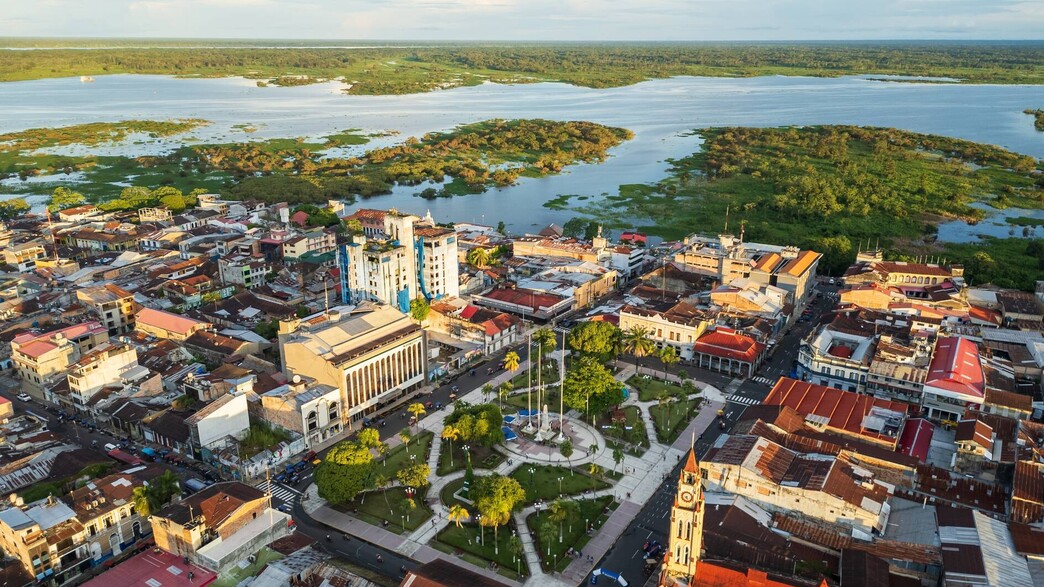
Deep within the largest rainforest in the world, where the dense green tree canopy meets the roaring waters of the Amazon River and its endless tributaries, one of the most fascinating chapters in the history of human migration is quietly taking place. Here, thousands of kilometers away from the historical centers of the Jewish diaspora, prayers in Hebrew and Jewish-Arabic dialects originating in North Africa echoed through the jungle fog.
This is the home of the Amazonian Jews, a community that was born out of displacement, prospered thanks to the golden age of rubber production at the end of the 19th century, and lasted thanks to a deep commitment to its identity, which managed to bridge two completely different worlds. Their story is not just another amusing historical curiosity, but a complex plot of economic ambition, cultural synthesis and spiritual survival against all geographical odds.
Experienced from the sailor to the “white gold”
The roots of this unique community reach across the Atlantic Ocean, to the “Malach”, the historic walled Jewish quarters in Moroccan cities such as Tangier, Tetouan, Rabat and Casablanca. At the beginning of the 19th century and through it, the Jews of Morocco faced a very volatile and restrictive reality. Overcrowding, heavy taxes, economic stagnation and a permanent status of second-class citizens imposed on the non-Muslim population caused many young Jews to look to the horizon in search of an origin and a livelihood.
At the same time, in the other half of the world, Latin America was freed from the shackles of colonialism. When Brazil became an independent empire and later a republic, its new constitution of 1824 offered a rare and powerful thing: religious tolerance. Although Catholicism remained the official religion of the country, Jews were allowed to worship privately, a possibility that was unthinkable under the previous Portuguese colonial rule. Combined with Brazil’s open ports and thriving trade, the wild and uncharted northern frontier began to look like a promising land.
As the industrialized world developed an insatiable appetite for textiles and rubber to make car tires and machine components, the discovery of the abundant rubber trees (Hevea brasiliensis) in the Amazon overnight transformed the region into a turbulent economic front. The promise of “white gold” became a tiding of hope for families in North Africa, who encouraged their sons to go out and look for the tropical “El Dorado”. Armed with a small suitcase, an uncompromising work ethic and sometimes an ancient Torah scroll, waves of young Jewish men and boys from Morocco boarded ships headed for northern Brazil. Historian Shmuel Benshimol, author of the book Eretz Amazonia, estimates that close to a thousand Jewish families left Morocco for the Amazon between 1819 and 1930. The first pioneer families, including Akris, Banjo and Saba, arrived in Belem as early as 1810, paving the way for the thousands who followed them.
The wandering hawkers of the rainforest
Upon their arrival, the young immigrants discovered a landscape that was as dangerous as it was lucrative. Yellow fever, malaria and the complete isolation of the tangled jungle claimed the lives of many. Since they could not immediately set up permanent stores in the wild parts of the interior, many of them adopted the traditional role of the regatão, river vendors.
The regatta was a vital economic artery in the Amazon ecosystem. Navigating in small boats and crossing narrow and winding canals (igraphs) and vast lakes, the Jewish merchants penetrated deep into virgin territories. They brought with them essential goods: clothes, medicine, cloth, grain and tools, to remote stations of rubber producers and native villages. In return, they bartered for raw rubber, hides, Brazil nuts, and berries destined for international export markets. Their boats bore names with historical resonance such as Ray David (King David) and Princesse de Tangier (Princess of Tangier), floating reminders of where they came from and what they hoped to build.
Thanks to their resourcefulness and the ability to control the river’s currents, many merchants prospered, and as they became economically established, a regular pattern of chain migration developed: successful merchants would temporarily return to Morocco to marry Jewish women and bring them into the jungle to start permanent families. Others would send money for cruise tickets for their brothers and cousins to join them. This process gradually transformed a scattered network of single bachelors into structured and thriving communities along the distant riverbanks.
The growth of the “Kabokulu Judaism”
What makes the Jewish community in the Amazon truly exceptional is not just the way they survived economically, but the way they maintained their religious uniqueness while fully integrating into the fabric of life in the rainforest. This synthesis gave birth to what scholars and locals call “Caboclo Judaism”, a beautiful local adaptation of the tradition of Spanish Judaism to the reality of life in the Amazon.
In a region that was completely devoid of kosher rhythms, traditional European ingredients or institutionalized rabbinic authority, compromises and creativity were necessary for survival. When Passover arrived, flour for making matzah was not a commodity that was easy to obtain, so the community adapted and used local cassava and tapioca flour to bake the matzah. Traditional Shabbat dishes, slow-cooked in Morocco with beef, have been reinvented using regional river fish and tropical berries. Even the iconic Amazonian soup known as tacacá, originally based on shrimp, was carefully modified by the Jewish families, who replaced the seafood with kosher fish to maintain kosher laws without giving up the local culinary heritage.
Language has also become a fascinating repository of this cultural encounter. The immigrants brought with them Haketia, a unique Jewish-Moroccan dialect that combines medieval Spanish, Hebrew and Arabic. For decades on the banks of the Amazon, Hachitia picked up expressions in Portuguese and indigenous languages, and made a linguistic combination that was used by family members in their home to maintain a sense of partnership and a private heritage.
During the main holidays, some members of the community had to sail hundreds of kilometers in boats to reach the main synagogues in Belem or Manaus, arduous journeys along winding rivers that lasted weeks. Regional folklore is rich in stories from that time: in the village of Cametá, a violent storm washed away the local synagogue, but the community’s Torah book was later found undamaged floating across the river. He was rescued by a local resident who lived on the river bank, and according to legend, his family prospered from that day on.
Integration and intermarriage
Since the first waves of immigration were composed almost exclusively of young men, many traders who lived in outlying stations fell in love with and married local women of mixed (European and native) descent, known as Caboclos. In these isolated environments, formal conversion was not possible, and according to traditional Jewish law, which identifies Judaism by the mother, the children of these marriages were not Jewish.
However, the Moroccan pioneers instilled in their descendants a deep connection to Judaism and taught them not to forget their origin. Generation after generation, the mixed-race descendants proudly maintained a connection to their Jewish lineage, bearing traditional surnames such as Levi, Samuel, Cohen, Ben-Zakan or Ben-Shimon, even when their outward appearance did not differ from the rest of the local population. A common sight in many homes in the interior of the Amazon was the combination of a statue of the Virgin Mary next to a kosher mezuzah on the doorpost, or a family lighting candles on Saturday evening before going to Catholic church on Sunday.
Despite this, their lives were not without friction, and in remote villages such as Mauá, the Jewish traders often encountered entrenched anti-Semitism. In one tragic historical testimony from 1907, a pogrom occurred in the city of Parintins after an Easter sermon by a local Catholic priest incited a mob to attack and murder Jewish merchants. In addition, since there were no official religious frameworks in those places, the assimilation took a heavy toll. Many families completely severed ties with religion a generation or two after the death of the patriarch, with Jewish names remaining the only sign of their origin in church baptismal records.
On the other hand, the relations between the Jewish minority and the wider Amazonian population were also characterized by moments of religious integration and mutual respect. A clear example of this is the legacy of Rabbi Shalom Emanuel Moyal. The rabbi, who was sent from Morocco to the jungle in 1908 to act as a butcher and spiritual leader and strengthen the scattered communities, wandered for two years before tragically succumbing to yellow fever in 1910. Since Manaus had no Jewish cemetery at the time, it was decided to bury him in the city’s Christian cemetery, alongside ninety other Moroccan Jews who perished in the area. After his death the non-Jewish inhabitants of the Amazon began to see his grave as a site of healing and miracles. Today his grave remains a major pilgrimage site where Catholics and local believers light candles, place small stones and marble tablets with requests and thanks, treating the Moroccan rabbi as a local saint for all intents and purposes.
The cultural renaissance of Amazonian Judaism
The rubber rush ended around 1910 and shook the regional economy. The British successfully established competing rubber plantations in Malaysia, rendering the manual and wild production methods of the Amazon obsolete and causing prices to plummet. This economic ruin led to a mass exodus of Jewish families from the villages along the river to the growing urban centers of Belém and Manaus, as well as to southeastern cities such as Rio de Janeiro and São Paulo.
Today, fully organized Jewish communities, totaling about 3,000 people, continue to be an anchor in the large urban centers in northern Brazil. The city of Belem is home to the historic “Heaven’s Gate” synagogue, which was founded in the 1820s and stands as the oldest continuously active synagogue in Brazil (except for those dating back to the Dutch occupation of the north in the 17th century). In Manaus, the religious life of the community, which currently numbers about 600 people, is managed in the “Beit Yaakov” synagogue. For decades, the prayers and readings of the Torah were preserved thanks to leaders such as Cantor Yitzhak Dahan, who learned Hebrew and the Moroccan form of the prayer from his father in the remote village of Alencar on the banks of the river. Inside the ark of the synagogue is an object that embodies this deep historical bridge: a Torah book over four hundred years old, which was smuggled from Spain to Portugal during the deportation, arrived in Tangier, and in the 19th century was transported along the Amazon River.
At the same time, a fascinating cultural renaissance has taken place in recent decades across the border, in the Peruvian Amazon, mainly in the isolated city of Iquitos. Hundreds of descendants of Jewish-Moroccan rubber traders, who had lived for generations while maintaining an isolated and oral version of Judaism, sought to formally reconnect with the religion of their ancestors. With the help of rabbis who came from Israel and the United States, hundreds of the “Israelites of the Amazon” went through formal and strict conversion processes, and many of them fulfilled their vision, immigrated to the State of Israel and built their lives there.
The history of Amazonian Jews is most tangibly engraved in more than twenty historic Jewish cemeteries scattered along the winding banks of the Amazon tributaries, in cities and towns such as Óbidos, Itacoatiara and Santarém. These gravestones, covered with moss and bearing inscriptions in Hebrew in the heart of wild nature, continue to stand among the calls of the tropical jungle birds.
8554711.Htm
8559189.Htm
8560589.Htm
What’s a good online gaming platform for players in the US?
Do regular players receive automatic cash returns if their p
Where can I have fun on the Internet while I have free time?
Recommend an entertainment site for relaxing after work
Fans Crm
Has anyone from Canada tried Ruby? Looking for some opinions
Je constate que certaines plateformes sportives en ligne ont
Welche Online-Plattformen für Spiele kann man in Deutschland
Recommend an entertainment site for relaxing after work
I’m trying to find a good online gaming platform with a dece
+⑴-⑻0⑷-⑼⑻⑸-⑴00⑵ How Do I Reset Access Via Quickbooks Payroll Support Helpline Live Chat?
Recommend an entertainment site for relaxing after work
Sorry, aber die Seite konnte nicht gefunden werden | Karteikarten online lernen | CoboCards
Recommend an entertainment site for relaxing after work
¿Qué plataforma de juego online es fácil de usar?
Grupo | Centro De Convencion
¿Qué plataforma de juego online es fácil de usar?
Recommend an entertainment site for relaxing after work
Where can I have fun on the Internet while I have free time?
Where can I have fun on the Internet while I have free time?
Wie kann ein schnell erkennen, ob ein bestimmtes sofortige A
Der Selfie-Spiegel als Blickfang auf modernen Veranstaltunge