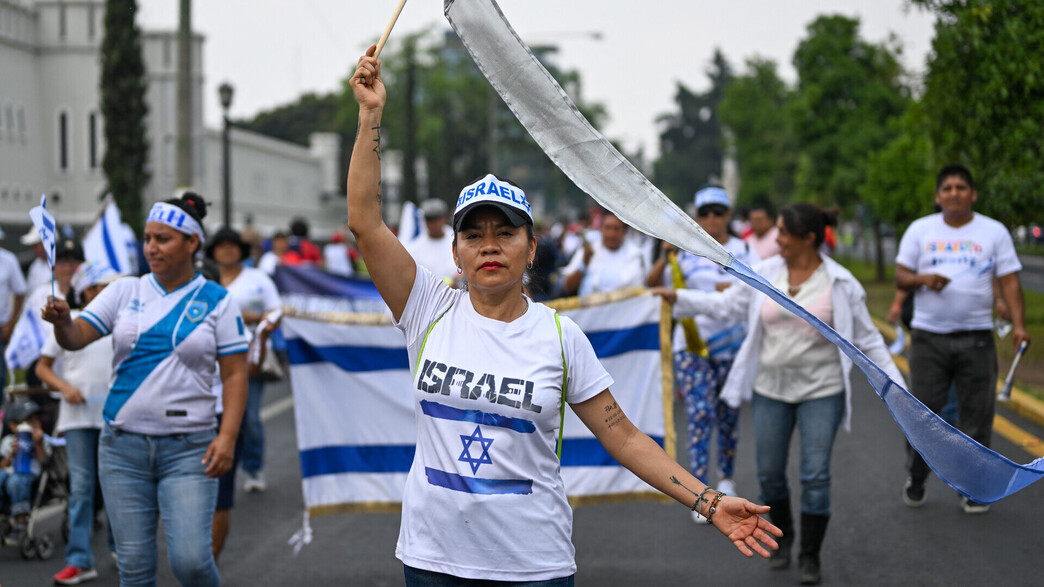
In the international arena, where diplomatic alliances tend to change according to political transformations and changing balances of power, the bilateral relationship between the State of Israel and the Republic of Guatemala is a unique case study of long-standing political loyalty.
While in recent years there have been sharp fluctuations in the attitudes of countries in Latin America towards Israel, starting with the severing of diplomatic relations by the government of Gustavo Petro in Colombia in 2024, to statements about tightening ties and moving embassies by the president of Argentina Javier Millay and the president-elect of Colombia Abelardo de la Esperria, Guatemala has maintained a consistent line of political support even before the establishment of the state. The relations between the countries, with very few parallels in the world apart from Israel’s historic and deep relations with the Czech Republic, are based on a historical, institutional and civil infrastructure built over almost eight decades.
The roots of this special relationship predate the establishment of the State of Israel itself. The infrastructure for the relationship was laid during the deliberations of the United Nations Special Commission on the Land of Israel (UNSCOP) in 1947, after the international community was required to determine the future of government in the Land of Israel following the end of the British Mandate and the Holocaust. Guatemala’s representative on the commission, Ambassador Jorge García Grandos, who was a jurist and liberal intellectual who spent years in political exile due to his struggle against the dictatorship in his country, grasped the ambition The Zionist for independence as seeking to exercise the right to self-determination and to be freed from British colonial rule.
Grandos worked vigorously among delegations of Latin American countries to gather the necessary support to obtain a two-thirds majority in the United Nations General Assembly. With the adoption of Resolution 181 on November 29, 1947, Guatemala was the first country in Latin America to vote in favor of the partition of the country and the establishment of an independent Jewish state and an independent Arab state. Following the declaration of independence in May 1948, Guatemala granted diplomatic recognition Officially in Israel, a tribute commemorated in the names of streets in various cities in Israel, including Jerusalem and Tel Aviv.
The bilateral system deepened during the 1950s and 1960s, when in 1956, under the administration of President Carlos Castillo Armas, Guatemala was the first country in the world to open an official embassy in Jerusalem, and appointed García Grandos as the first ambassador to Israel. Israel, for its part, opened an embassy in Guatemala City a short time later. In 1959, Foreign Minister Golda Meir signed official cooperation agreements during a diplomatic visit to Guatemala City, within the framework of which Guatemala became one of the first beneficiaries of the national aid agency Mashab (the National Agency for International Cooperation). Already in the early 1960s, agricultural experts from Guatemala came to Israel for training in the fields of advanced irrigation, agriculture in arid areas and buildings. Cooperative farmers. Over the decades thousands of professionals from Guatemala have participated in MSHB scholarship programs in the fields of health, education, water purification and rural development. These ties were strengthened through cultural agreements in 1961, visa exemption agreements in 1972 and economic cooperation agreements in the early 1980s.
The Cold War and Defense Diplomacy
A complex and challenging period in relations was recorded in the late 1970s and 1980s, against the background of the Cold War and the internal civil war in Guatemala. In 1977, following allegations of serious human rights violations by the Guatemalan army during the fight against left-wing guerrilla organizations, the American administration headed by Jimmy Carter imposed a military embargo and stopped security aid and arms transfers to the country.
Cut off from its traditional arms supplier, Guatemala turned to Israel for the supply of defense equipment. Israel, which itself faced diplomatic isolation in the international arena and sought to expand its security exports while maintaining allies, entered the strategic vacuum that had been created. Throughout the 1970s and 1980s, Israel provided the Guatemalan military with communications equipment, surveillance systems, small arms, and Arab transport aircraft, along with operational advice and intelligence assistance. Israel also provided aid to resettlement projects in rural areas, aimed at tightening state control. This cooperation, which provoked criticism from international human rights organizations who claimed that the aid was used by the military regime, on the other hand strengthened the institutional ties between the security and intelligence levels of the two countries.
International diplomatic pressure again had an effect in 1980. Following Resolution 478 of the UN Security Council, which called on countries to remove their embassies from Jerusalem, Guatemala was forced to move its embassy to Tel Aviv. Despite the embassy move, diplomatic contacts and civil, economic and political cooperation continued as normal throughout the four decades.
A dramatic turning point in relations was recorded at the end of the previous decade, when after the United States announced in December 2017 the recognition of Jerusalem as the capital of Israel, the president of Guatemala, Jimmy Morales, announced that his country would act in a similar manner. On May 16, 2018, just two days after the opening of the American embassy, Guatemala officially inaugurated its new embassy in Jerusalem, becoming the second country in the current era to do so. The move reflected historical memory alongside the growing political influence of the Christian-evangelical community in the country, which expresses a deep religious and emotional attachment to Israel. The Parliament of Guatemala defined May 14 as the “National Day of Friendship between Guatemala and Israel”, and in dozens of local authorities public spaces, parks and streets were named “Jerusalem, the capital of Israel”, while Guatemala City is actually the only capital in the world where there is a street bearing this name.
Humanitarian aid continued to be a central pillar of the alliance between the countries, and after the eruption of the Fuego volcano in Guatemala in June 2018, Israel dispatched rescue teams, medical experts and water purification units, and later even funded construction projects for evacuees. During the Corona epidemic, Israel transferred thousands of vaccine doses as primary aid, and in addition to this, technical cooperation programs opened agricultural technology centers in Guatemala to train local farmers. On the economic level, a record was recorded with the entry into force of a comprehensive free trade agreement (FTA) in March 2024, after it was signed in September 2022. The agreement reduced and removed tariffs on industrial and agricultural products, and led to the expansion of the activities of the Israel-Guatemala Joint Chamber of Commerce in the fields of agro-tech, renewable energies and water technologies.
Leadership with a personal connection to the local Jewish community
The bilateral relations also reflect unique personal aspects at the political level. The president of Guatemala, Bernardo Arvalo, who took office in January 2024, has a deep personal history with Israel. Arvalo is the son of former president Juan José Arvalo, whose government voted in favor of the partition plan in 1947. Arvalo Jr. lived in Israel in his youth, completed a bachelor’s degree in sociology at the Hebrew University of Jerusalem, served as a diplomatic staff member at his country’s embassy in Israel during the 1980s, and even speaks Hebrew.
At the same time, the Jewish community in Guatemala, numbering about a thousand members, is a central pillar of the country’s civil and cultural life. The community includes descendants of Ashkenazi immigrants who arrived at the end of the 19th century and integrated themselves into the coffee industry, alongside Spanish immigrants who came from the Ottoman Empire and founded the “Magan David” company in 1923, and there is even evidence of the presence of Martyrs from the colonial period. The community currently operates in a unified and diverse complex in District 9 in Guatemala City, which was inaugurated in the 1960s and its concrete structure is designed in the shape of a huge Star of David visible from the air. The first Holocaust museum in Latin America also operates in the capital, which serves as a regional study and education center.
The strength of these relations is particularly evident against the background of political upheavals in the region. A single unusual event that occupied the media in 2013-2024 was the presence of a “Pure Heart” sect in the country, which was subject to legal investigations for suspicions of abuse. The leaders of the official Jewish community in Guatemala made sure to make a complete separation between the organization and the community, and provided full support to the country’s law enforcement authorities when they intervened in 2024 to put an end to the sect’s activities.
The close diplomatic relations and the deep sympathy for Israel on the Guatemalan street are also well reflected in the tourism industry. For decades, Guatemala has been considered one of the favorite and most popular destinations for Israeli travelers in Central America, from backpackers after military service to independent travelers and families. The Israeli tourist receives a particularly warm welcome in the country, which is often expressed in open expressions of sympathy from the locals. The main destinations include the colonial city of Antigua, which serves as a point of departure for trekking and climbing the active volcano Pacaya, Lake Atitlan surrounded by picturesque villages and volcanoes, and the resort town of Lanquin near the Smok Champei nature reserve, famous for its natural turquoise pools. In the north of the country, the Tikal Reserve attracts archeology and history enthusiasts, who come to witness the remains of the ancient pyramids of the Mayan civilization in the heart of the jungle.
A major factor that continues to strengthen the tourist movement from Israel is the security situation for tourists and the absence of special travel warnings from the National Security Headquarters (NSH) for the country. While certain areas in Latin America suffer from security fluctuations or serious warnings due to political tensions, Guatemala maintains a normal and inviting level of risk for the Israeli traveler. The reciprocal exemption from visas, which has existed since 1972, along with the developed tourist infrastructure and the friendly atmosphere, guarantee that Guatemala will continue to be a major and sought-after destination for travelers from Israel who wish to combine wild nature, dozens of heritage sites and rich culture, with a sense of security and local sympathy.
Dallas, GA Professional Lawn Mowing Services | DallasLandscaping.us
Dallas, GA Professional Lawn Renovation Services | DallasLandscaping.us
Dallas, GA Professional Lawn Seeding Services | DallasLandscaping.us
Dallas, GA Professional Sod Installation Services | DallasLandscaping.us
Dallas, GA Professional Weed Control Services | DallasLandscaping.us
Dallas, GA Professional Yard Clean Up Services | GADallasLandscaping.us
Dallas, GA Professional Green Waste Disposal Services | DallasLandscaping.us
Dallas, GA Professional Gutter Cleaning Services | DallasLandscaping.us
Dallas, GA Professional Junk Removal Services | DallasLandscaping.us
Dallas, GA Professional Leaf Removal Services | DallasLandscaping.us
Dallas, GA Professional Tree Removal Services | DallasLandscaping.us
Conyers, GA Landscaping Services | GAConyersLandscaping.us
Conyers, GA Professional Gardening Services | GAConyersLandscaping.us
Conyers, GA Professional Brush Removal Services | ConyersLandscaping.us
Conyers, GA Professional Flower Bed Maintenance Services | ConyersLandscaping.us
Conyers, GA Professional Flower Planting Services | ConyersLandscaping.us
Conyers, GA Professional Hedging Services | ConyersLandscaping.us
Conyers, GA Professional Mulching Services | ConyersLandscaping.us
Conyers, GA Professional Plant Removal Services | ConyersLandscaping.us
Conyers, GA Professional Pruning Services | ConyersLandscaping.us
Conyers, GA Professional Weeding Services | ConyersLandscaping.us
Conyers, GA Professional Lawn Care Services | GAConyersLandscaping.us
Conyers, GA Professional Artificial Grass Installation Services | ConyersLandscaping.us
Conyers, GA Professional Dethatching Lawn Services | ConyersLandscaping.us
Conyers, GA Professional Fertilizing Lawn Services | ConyersLandscaping.us