Building rain gardens along streets and residential areas can help reduce the amount of water flowing into sewer pipes during heavy rains, thereby limiting the risk of flooding.
Theo Conversationin a context where climate change is predicted to increase short, intense rains that flood drainage systems, rain gardens can become an effective solution to help prevent flooding in the city. A rain garden or bioretention cell is a shallow, sloped area filled with plants and soil. Water from the roof or street flows into it instead of into the tank. Part of the water seeps into the ground, part drains out after a few hours, and the rest flows into the sewer system.
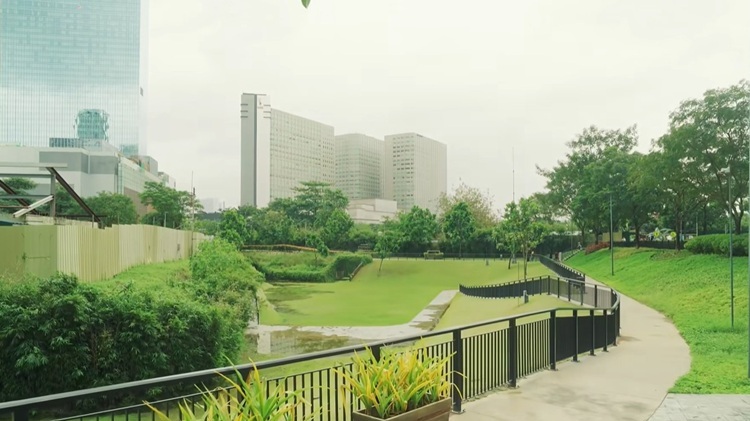
An outstanding example of integrated rain garden design is the Vertis North township in Quezon City on the island of Luzon, Philippines, developed by real estate company Ayala Land in partnership with the National Housing Authority (NHA). The area has a 1-hectare rain garden that acts as a natural flood tank during days of heavy rain. Pavements are designed with high permeability to allow water to seep into the soil. Runoff water is piped through perforated pipes to a reservoir for temporary storage, then gradually released into area streams when rains subside. According to It inhabitsthe above system is designed with natural elements as the main elements, helping to prevent flooding while supporting a living environment for animals.
Associate Professor Jennifer Drake and doctoral student in Environmental Engineering Ali Zoghi at Carleton University spent three years building a computer model of the Crystal Beach neighborhood west of Canada’s capital Ottawa to test the effectiveness of rain gardens. Instead of testing with a hypothetical storm, they ran data from July 1 when Ottawa received 167 mm of rain in just 5 hours. At the peak of the storm, when there was no rain garden, standing water covered 8.4 hectares (about 12% of the area). The threshold to confirm flooding is a water level 15 cm above the ground, equivalent to the height of the door step.
A corner of the rain garden in the Vertis North urban area. Image: Ayala Land
The research team’s modeling shows that rain gardens on private plots help reduce the flooded area by 6.2 hectares. The rain garden is located along the street, causing the flooded area to narrow to 2 hectares. When combining rain gardens in both locations, the flooded area is reduced to 1.2 hectares and the deepest water level is reduced from about 1.5 meters to more than 1 meter. Gardens located along streets prevent flooding more effectively because they are located on water routes.
The most obvious impact of a rain garden is to prevent dangerous flooding when water flows so fast that it knocks people down or causes vehicles to float. Rain gardens also help reduce the total amount of water runoff by 80% and reduce peak flow by nearly half (the strongest and largest amount of water flowing at one time in the pipe), thereby reducing pressure on the downstream area.
Rain gardens are a testament to the role green infrastructure plays in water management. Pipes can carry water faster after flooding, but the initial amount of water poured in cannot be changed. Rain gardens operate earlier, intercepting rainwater before it reaches the sewer system, so less water passes through the pipes. Both sewer systems and rain gardens support each other in urban flood prevention.