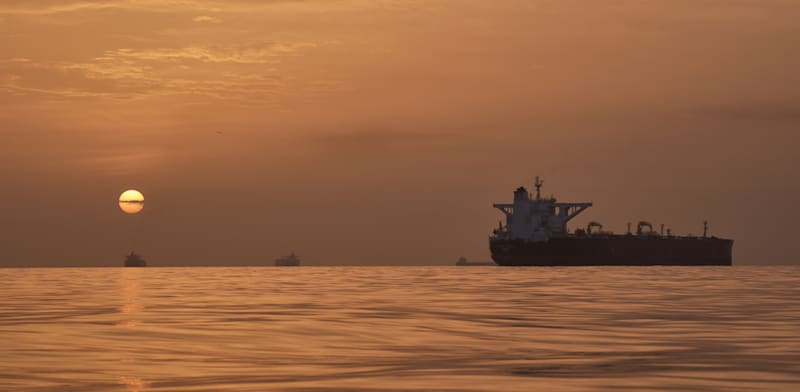
While the ceasefire apparently continues, and parallel to the talks between the US and the divided Iranian leadership in Islamabad, the maritime arena in the Strait of Hormuz is turbulent. After a short period of partial recovery in the movement of ships in the passage, which is responsible for about 20% of the world’s oil and gas exports, a return to military activity on the part of both Iran and the US is evident.
Iran fired at an increasing number of merchant ships, which led to an almost complete paralysis of traffic in the strait, except for a few vessels that turned off their transmitters and tried to cross quickly. At the same time, the US took over two ships with ties to Iran: one that transported goods suspected of being raw materials for rocket fuel on its way to Iran, and one that transported oil from Iran out. Despite this, at least 26 ships belonging to the Iranian “shadow fleet” managed to cross the strait despite the American blockade. The price of a barrel of Brent oil rose to $99.
The complete Lloyd’s List data. Note that despite the ceasefire and the American blockade, most of the ships that pass through Hormuz still belong to the Iranian shadow fleet. Iran is unable to agree on its own position in the negotiations, and the price of oil rises to $99 per Brent barrel.
The article: https://t.co/amRvW52DUE pic.twitter.com/SifSVIhJVZ
– Idan Eretz (@Idaneretz) April 22, 2026
The index through which the USA evaluates the success of the closure
The British Maritime Trade Agency UKMTO reported three incidents during the day (Wednesday), during which merchant ships came under fire, apparently from vessels of the Revolutionary Guards. Despite the American actions against them, the naval force of the Revolutionary Guards still possesses fast and armed boats, capable of disrupting traffic in the strategic passage. These events apparently constitute a violation of the ceasefire, when Iran claims that it was the US that violated it first through the naval blockade it imposed. As of now, no casualties have been reported.
At the same time, the US expanded maritime enforcement operations. One of the seized ships tried to cross the Strait of Hormuz on Monday on its way to Iran. According to a statement from the US Central Command (CENTCOM), on Sunday, April 19, the destroyer USS Spruance stopped the tanker Touska, which carried the Iranian flag and was on its way to the port of Bandar Abbas.
The announcement stated that the American forces issued several warnings and made it clear to the ship that it was violating the maritime blockade. After the crew refused to comply with instructions for about six hours, the ship was ordered to evacuate its engine room. The destroyer disabled the ship’s propulsion by firing shells from a 5-inch cannon at the engine room, after which the fighters of the 31st Expeditionary Unit of the US Marine Corps took control of it. The ship has since remained under American control.
According to Sanctum, “US forces have acted in a deliberate, professional and proportionate manner to ensure compliance. Since the beginning of the blockade, US forces have instructed 25 commercial ships to turn around or return to Iranian ports.”
The second ship, “Tiffany”, was seized in the Indian Ocean, between Sri Lanka and Sumatra (Indonesia), while transporting crude oil from Kharg Island (Iran’s central oil terminal) towards China. The US Department of Defense stated: “As we have made clear, we will continue to pursue global maritime enforcement efforts to disrupt illegal networks and seize ships under sanctions that provide material support to Iran – wherever they operate. International waters are not a place of refuge for ships under sanctions.”
Since the announcement of the American blockade on April 13, 12 legitimate commercial ships have crossed the Strait of Hormuz as part of the ceasefire, and another 26 ships identified with the Iranian “shadow fleet”, according to data from the Maritime Intelligence Company and the Lloyd’s List news agency. However, an American security source told Lloyd’s List that the US “evaluates the effectiveness of the blockade by the impact on the Iranian economy, and not just by the number of ships linked to Iran that cross the blockade line.”
It seems that, at least for the time being, the situation in Hormuz is very far from a hermetic closure, from either side. In any case, the traffic in the strait is orders of magnitude less than in the old days, when over 100 ships crossed it a day.
The code of ethics that appears in the trust report according to which we operate. Expressions of violence, racism, incitement or any other inappropriate speech are filtered in the form automatically and will not be published on the site.
https://telegra.ph/httpsorasidecom-04-20-2
https://www.tumblr.com/resonantsiegeprotector/814403546725416960/unlock-the-mysteries-of-life-with-oraside-your?source=share
https://dev.to/nwstrfjclr
https://wallhaven.cc/user/nwstrfjclr
https://www.rcuniverse.com/forum/members/nwstrfjclr.html
https://www.dibiz.com/ddzkqncebp
https://disqus.com/by/nwstrfjclr/about/
https://groover.co/en/band/profile/73a835.nwstrfjclr/
http://www.biblesupport.com/user/830128-charlesgonzalez65/
https://lipscosme.com/users/n/@twinkle_perfume_8bri
https://topsitenet.com/profile/josephgonzalez42/1622941/
https://files.fm/nwstrfjclr
https://jobs.suncommunitynews.com/profiles/8140600-isaac-wilson
https://www.hoaxbuster.com/redacteur/JulianDavis52
https://www.gta5-mods.com/users/OwenThompson37
https://reactormag.com/members/hunterking88/
https://www.brownbook.net/business/55027096/oraside
https://www.longisland.com/profile/nwstrfjclr
https://skitterphoto.com/photographers/2661840/nwstrfjclr
https://forum.ct8.pl/member.php?action=profile&uid=121625
https://spinninrecords.com/profile/ChristopherCampbell67
https://makerworld.com/ru/@user_2378627155
https://imageevent.com/ltnnbuscye/httpsorasidecom
https://bbsradio.com/users/xavierwright93
https://500px.com/p/nwstrfjclr?view=photos