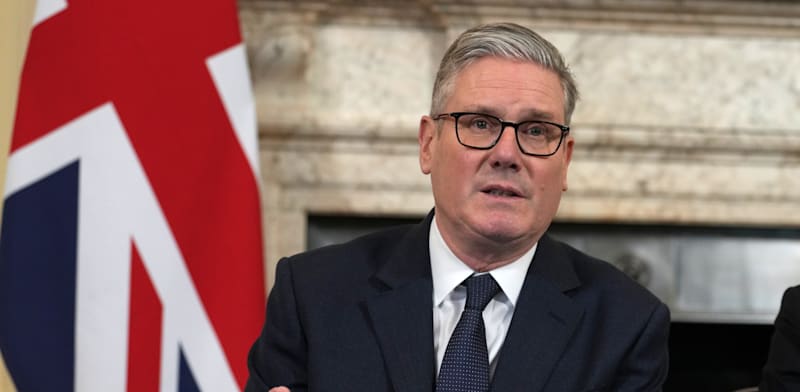
According to estimates, the ruling Labor party in Great Britain suffered a significant defeat in the local elections held yesterday in the United Kingdom, while Nigel Farage’s right-wing “Reform” party was crowned the big winner.
“This is a historic change in British politics,” declared Farage, who apparently managed to bring in hundreds of local representatives across the UK, enjoying public support that is also reflected in the general polls. The media in the kingdom wrote this morning that “Starmer’s nightmare has come true”, called the result “Starmageddon” and estimated that the pressure is increasing on him within the party to vacate his seat.
Farage founded the “British Reform Party” in January 2021, as a continuation of the “Brexit” party. He himself, a politician, media person and publicist, was the living spirit behind the campaign for Britain to leave the European Union. The party formulated strong positions against illegal immigration to Britain, which continues despite leaving the Union, regarding the priorities of public finances and the health system, on taxation policy and a host of issues that turned it into a “protest party” that promises to “fix Britain” for those who are dissatisfied with the current situation.
In the last three years, public support for the party increased from a rate of 5% in May 2023 to a rate of approximately 25% according to the latest polls. It is the most popular party in Britain according to the polls, but the complex voting system in the United Kingdom, based on local races, makes predictions difficult. The current election has shown that the party enjoys a lot of public support – especially in areas outside London and especially in the north of England – and has the potential to become the largest party in the election in three years’ time. “These elections are the bridgehead through which we will reach our goal,” Farage said this morning, while the media estimated that the results “pave the way” for the possibility that he will reach the Prime Minister’s office in Downing 10.
“These are very difficult results”
The one who lost hundreds of local seats – and maybe even over 1,500 of them according to “Sky News” estimates this morning – is the Labor Party led by Keir Starmer. The British Prime Minister recorded a historic achievement in the December 2024 elections, but since he disappointed the electorate, he has low support rates and there are calls within the party to replace him. “These are very difficult results,” Starmer said this morning, “and I’m not embellishing the reality.” He said that “voters have sent a message about their dissatisfaction with the pace of change that we have promised, but I am not going to abandon my mission to deliver that change.”
Starmer tried to convey that he does not intend to step down and allow the Labor party to choose another prime minister. “We were given a five-year mandate to change the country… the current international context is very difficult… but we need to convince the people that the situation will be better.” Within the party there are a number of camps that may take advantage of the apparent discrimination to vote for his removal. The next general election is scheduled to take place in three years, and it is hard to imagine Labor disbanding parliament and going to a new election when the state of the polls is so dismal for them (only 18% support).
The one who apparently managed to win seats at the expense of Labor is the “Greens” party on the left, which made the Gaza issue and the Israeli-Palestinian conflict part of its agenda. Muslim and Islamist candidates of the party, including those documented with anti-Semitic statements, indirect support for the actions of Hamas on October 7, 2023 and calls for a global intifada have been included in the race in recent months. Party leader Zak Polanski used his Jewishness to turn criticism of Israel into a legitimate electoral tool.
Political commentators have pointed to the fact that the Conservatives, until recently the main opposition party to Labor governments, failed to pick up the seats that Labor lost, and that this signifies a “profound change” in the (mostly) two-party political system in the UK until now. Although most of the results will be announced by this evening, the fact that Labor and the Conservatives together lost thousands of seats, according to estimates, which went to reform and the Greens, signifies a new split in the British electorate, the trend towards extremism, and may redraw the political map in the upcoming elections.
For your attention: The Globes system strives for a diverse, relevant and respectful discourse in accordance with the code of ethics that appears in the trust report according to which we operate. Expressions of violence, racism, incitement or any other inappropriate discourse are filtered out automatically and will not be published on the site.