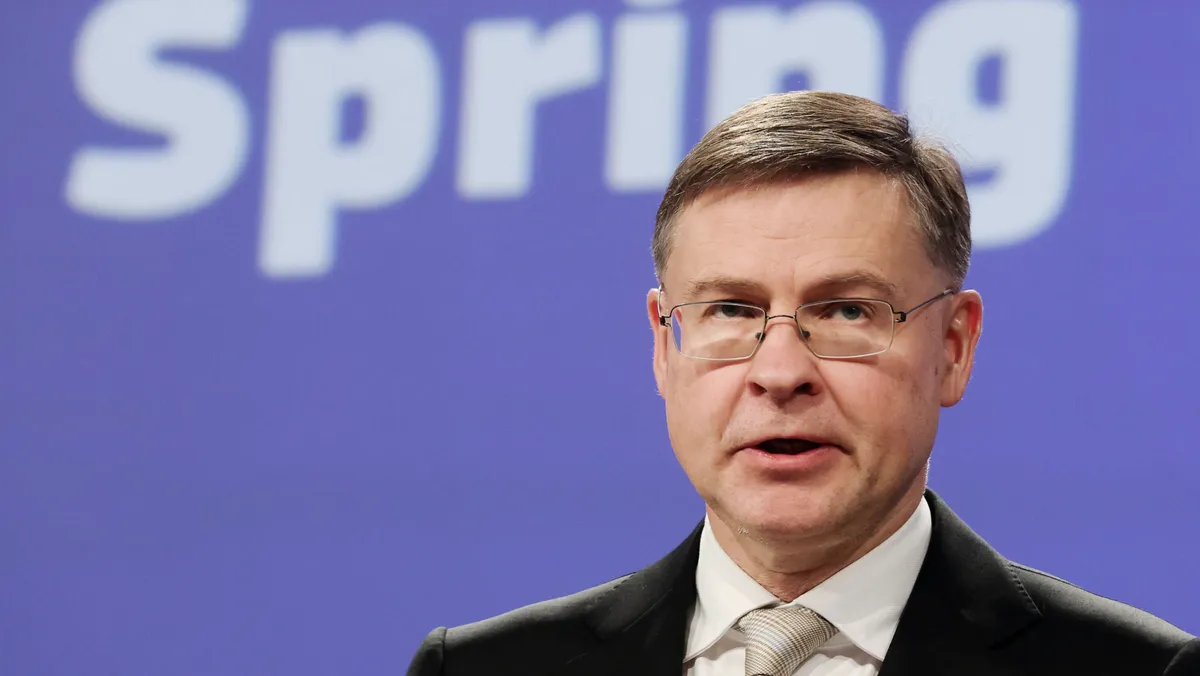
According to the Commission, the European economy is still weighed down by the tightened world political situation, security risks, climate change and fluctuating energy prices. In the spring package of the economic policy semester, the Commission promises that these concerns will be addressed by removing barriers to the internal market, bridging the innovation gap and speeding up the green transition. Attention is also paid to ensuring a competent workforce.
According to the Commission, the EU Recovery and Recovery Support Facility (RRF) and cohesion policy funds continue to support reforms and investments.
Additional flexibility for energy investments
As a new way, the Commission presents the possibility of additional flexibility for the public finances in terms of energy. According to the Commission’s proposal, member states can apply for limited flexibility in the budget rules if they invest in the energy transition and reduce dependence on fossil fuels.
The Commission proposes that Member States be given the opportunity to request the extension of the scope of the current National Exemption Clause (NEC) not only to defense spending, but also to energy sustainability measures on a temporary and limited basis. A possible extension would cover actions implemented from February 2026.
Within the current cap on additional spending under the NEC for defense expenditure (1.5% of GDP), a specific annual cap for 2026-2028 (0.3% of GDP) and a cumulative cap (0.6% of GDP) apply. The same is also proposed for energy sustainability measures.
To ensure equal treatment, those Member States that have already fully used the NEC flexibility to increase defense spending could receive additional flexibility on a temporary and limited basis under the same conditions as other Member States. In these cases, the Commission must reassess that the deviations do not jeopardize fiscal sustainability.
Finland survived
In its report, the Commission evaluates the fiscal policy followed by 27 member states in relation to EU rules.
For Finland, Austria, Belgium, France, Hungary, Italy, Poland, Romania and Slovakia, the Commission considered that the countries have taken effective measures to correct their deficits. At this stage, there is therefore no need for further measures in the deficit procedure for these countries. On the other hand, with regard to Bulgaria, the Commission considers that the initiation of a new deficit procedure is justified.
The commission also examined structural imbalances in the economy. The situation in Greece, the Netherlands and Sweden has improved so much that they no longer have significant imbalances.
On the other hand, there are still vulnerabilities in the economies of Italy, Hungary and Slovakia. The situation in Romania was assessed as the most serious, and the country’s economic imbalances are still considered excessive.
Public finances are a concern
According to the Commission’s separate assessment for Finland, the economy is returning to cautious growth, but the sustainability of the public finances is still weak and requires significant additional measures.
According to the Commission, Finland’s public expenditures are the highest in the EU in relation to the size of the economy, and therefore the efficiency of public finances must be improved. According to the Commission, Finland’s social security system is extensive but complex, which weakens its cost-effectiveness. In addition, high unemployment was seen as a problem: last year the unemployment rate was 9.7 percent and youth unemployment was as high as 21.8 percent.
The Commission presents Finland with an extensive package of measures for the years 2026–2027. The most central recommendation is the adjustment of the public finances in such a way that the excessive deficit can be brought under control. Finland must comply with the spending ceilings defined by the EU and use the flexibility offered by the exemption clause to increase defense spending. At the same time, it is emphasized that the growing defense expenditures must be integrated in a sustainable way as part of the public finances.
In addition to expenditure management, the commission requires systematic expenditure reviews to identify areas for savings and efficiency gains. Special attention is directed to social security, the reform of which is central to securing long-term sustainability. Regarding energy subsidies, the Commission emphasizes that they must be temporary, precisely targeted and managed in terms of public finances.
Financing for growth companies
According to the Commission, the prerequisites for growth must be strengthened in Finland, especially with the help of innovations. The Commission calls for more cooperation between companies and universities, to improve the commercialization of research results, and to increase the availability of financing for growth companies. At the same time, there is an emphasis on strengthening economic security, including critical infrastructure and cyber security.
In climate policy, Finland is required to accelerate emission reductions, especially in industry and transport. In addition, the commission considers that Finland needs more investments in electrification, green technologies and the circular economy, as well as measures to strengthen carbon sinks in agriculture and forestry.
In the labor market, the commission emphasizes better targeting of active labor policy measures and alleviating the skills shortage. This requires extensive investments in retraining and continuing education, as well as directing higher education to fields that are in demand. In addition, social and health care reform must be continued to improve efficiency and secure the availability of services.
Next, the Eurogroup and the EU Council will process the documents of the Commission’s spring package and approve the given recommendations. The Commission also continues the dialogue with the European Parliament on the progress of the semester.
THE FACTS
Finland’s economic outlook
- GDP growth:
- 2025: +0.2% 2026 (forecast): +0.8% 2027 (forecast): +1.4%
- Growth risks:
- Geopolitical uncertainty and energy market instability
- General government deficit:
- 2024: −4.4% of GDP 2025: −3.4% 2026 (forecast): −4.5% 2027 (forecast): −4.6%
- Public debt:
- 2025: 88.5% of GDP (up from 82.4%) Forecast: will continue to grow in the next few years
- Fiscal policy:
- 2025: tightening, in 2026 becoming revitalizing
- Defense spending:
- 2025: 1.7% of GDP 2026: around 2.6% of GDP
https://www.musicinafrica.net/users/el-enfoque-de-golisimo-espana
https://www.kingmods.net/en/profile/teresa-m-paschal
https://www.kingmods.net/en/profile/dolly-d-hill
https://app.cal.com/brettodom
https://myearthcam.com/davidkidd
https://www.musicinafrica.net/users/la-evolucion-del-entretenimiento-digital
https://www.kingmods.net/en/profile/freddie-j-flores
https://www.scener.com/@michaelwaller
https://pinterest.com/nerinef5/_profile/
https://www.kingmods.net/en/profile/ramon-e-allen
https://app.cal.com/dianachester
https://www.kingmods.net/en/profile/delisa-j-malik
https://www.newreleasetoday.com/lyricsdetail.php?lyrics_id=106109
https://www.scener.com/@jenniegross
https://myearthcam.com/laurenhatcher
https://openlibrary.org/people/donnaevans/lists
https://pinterest.com/nakyia3/_profile/
https://myearthcam.com/johnrathburn
https://www.newreleasetoday.com/lyricsdetail.php?lyrics_id=35974
https://pinterest.com/sven2482/_profile/
https://myearthcam.com/rafaelamcclain
https://www.newreleasetoday.com/lyricsdetail.php?lyrics_id=97200
https://www.scener.com/@phyllisbeaubien
https://myearthcam.com/williamblack
https://www.newreleasetoday.com/lyricsdetail.php?lyrics_id=65242