Airlines expect to spend an additional $100 billion on fuel this year due to the Middle East conflict pushing up prices, according to IATA.
Director General of the International Air Transport Association (IATA) Willie Walsh on June 7 predicted that the average price of jet fuel this year will be 70% higher than 2025. “This causes fuel costs for the entire industry to increase by about 100 billion USD,” he said.
IATA represents more than 370 airlines, accounting for 85% of global air traffic. The association has just lowered the industry’s net profit forecast for this year to 23 billion USD, a sharp decrease compared to the previous forecast (41 billion USD), profit margin shrinking from 4.2% to 2%.
Compared to profits of 45 billion USD in 2025, the latest estimate is also halved. “Jet fuel prices increased much more sharply than most people expected, combined with disruptions to airlines in the Gulf forcing us to lower our forecast,” explained Mr. Willie Walsh.
The Middle East conflict pushed oil prices past $100 per barrel in March, while jet fuel prices increased 103% compared to the previous month, according to IATA. As of the week ending June 5, jet fuel prices increased 62.4% over the same period in 2025.
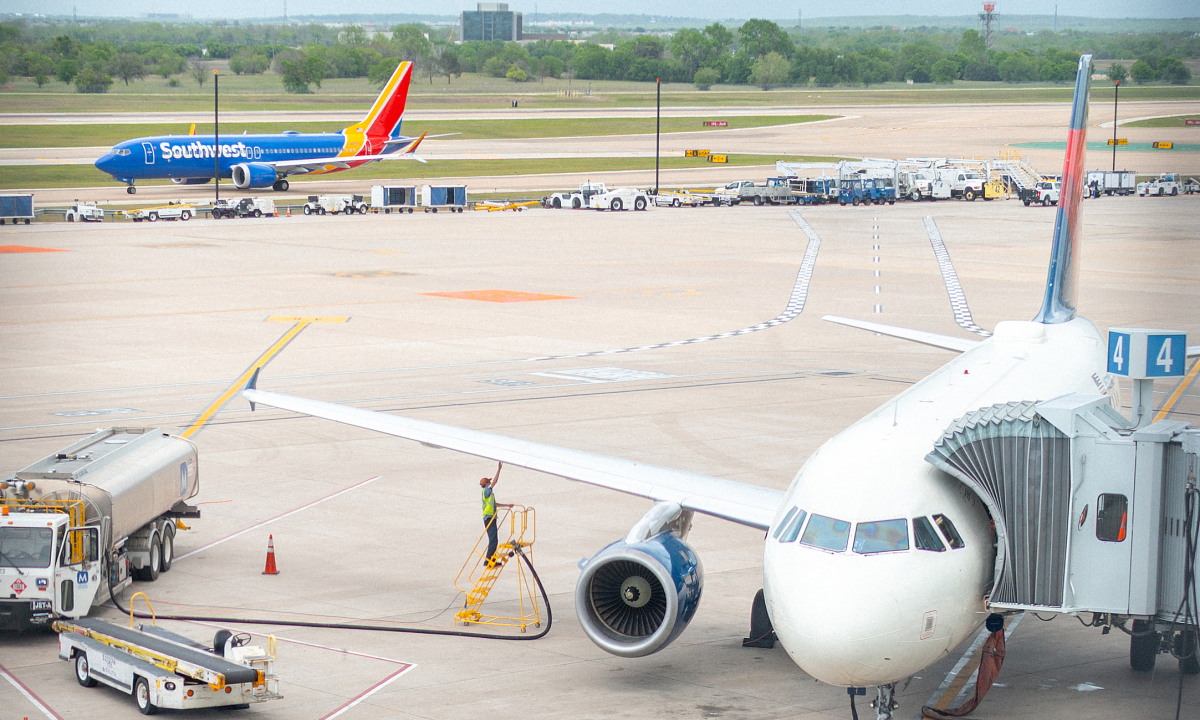
A technician prepares to refuel a Delta Airlines plane at Austin-Bergrstrom International Airport in Austin, Texas, USA on April 10. Image: AFP
According to Mr. Walsh, airlines that have not fully recovered from the pandemic and operating in the Gulf will be most affected.
The US Department of Transportation said that the fuel costs of this country’s airlines in March increased by more than 56.4% compared to February. By April, fuel costs exceeded the 5 billion USD mark, an increase of 30% compared to March.
In Europe, low-cost airline EasyJet had a pre-tax loss of 552 million pounds (about 735 million USD) in the first half of the fiscal year ending March 31 and incurred an additional 25 million pounds in fuel costs in March alone. The airline said customers are increasingly booking tickets closer to the departure date, making revenue forecasting difficult. EasyJet has hedged 72% of its summer fuel demand.
Lufthansa (Germany) is expected to incur an additional 1.7 billion euros ($1.96 billion) in fuel costs this year, describing the war in the Middle East as a “huge” challenge.
The General Director of IATA believes that this year and next year, a number of small airlines may go bankrupt or be acquired, due to pressure on rising fuel costs. For example, Spirit Airlines (USA), which ceased operations last month, became the first “victim” of the Iran war, according to Mr. Walsh.
Mr. Michael O’Leary, General Director of Ryanair (Ireland) also warned that many European airlines would face difficulties if fuel prices remained high this summer. “I think some airlines will go bankrupt. If oil prices remain around 150 USD per barrel in July, August and September, some European airlines may collapse,” he said.