Three years have passed since Ondas – a holding company traded on Nasdaq – entered the Israeli defense arena, with the purchase of Airobotics, the Israeli drone manufacturer that collapsed on the Tel Aviv Stock Exchange, for only 15 million dollars.
Today, Ondes stands out as one of the most intriguing security companies in the industry. It merges an Israeli company into it on average once a month, recruits top executives from the Rafael and defense industries to its ranks, and its market value is approaching 5 billion dollars.
Despite its status as a public company, the mystery surrounding it has only deepened in the past year; Its executives refuse to be interviewed and explain where the company is headed and what is behind the 25 purchases it has made so far. However, the trade figures speak for themselves: Undes It is one of the fastest growing Israeli stocks on the Nasdaq in the last year, with a 488% jump in value, despite a 6% drop recorded in the last month.
● “If a project is not brought to maturity within a year-year and a half, new threats are already discovered”
● The US is tired of expensive missiles. This is its new plan
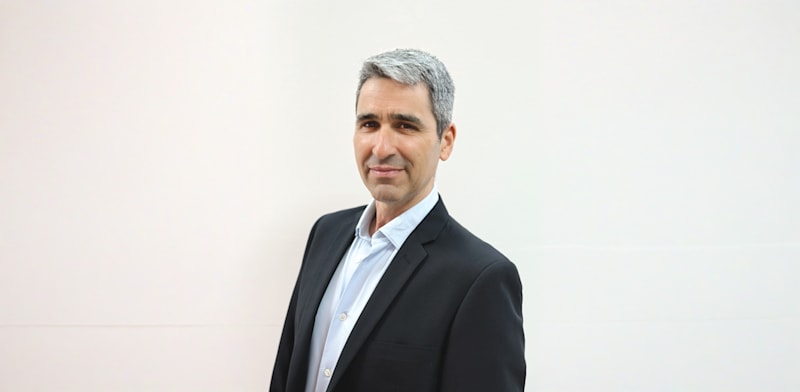
Brigadier General (retd.) Oshri Logsi, another senior officer who moved from Rafael to the joint management of Ondes and manages the company’s defense activities, tries to dispel the fog around him in his first interview with Globes, which was broadcast at the TECH IL conference. Logsi (54), former chief engineering officer and engineering officer of the Northern Command, served for seven years as Rafael’s representative to the IDF and the Ministry of Defense, and was responsible for huge deals in the supply of systems such as “Iron Dome” and “Windbreaker”.
Last year he was recruited to his current position at Ondes, which aims to make systems accessible to the defense system in Israel and the West at accessible prices and at a speed that exceeds that of the giants of the defense industry – including Rafael, IAI and Elbit.
Undes
Field of occupation: An American holding company operating in the field of the arms industry, and in particular in the field of the defense industry in Israel
history: The company was established in 2018 as a holding company, after acquiring the communications company Zev and turning it into Ondes
Employees: About 1000 people in 15 offices around the world
Purchases: 25 companies at least $1 billion in total, according to PitchBook
“We want to provide a quick response to emerging threats,” Logsi says in an interview. “This does not happen in the classic defense industries, neither in Israel nor in the world. The ‘prime’ companies are not cheap and operate very slowly. The price that Israel pays today for its security is not normal by any standards. Our goal is to introduce the elements of speed and economy into the system, and to build robotic production plants here that will reduce the dependence on manpower on the production lines – which will make it possible to supply equipment at much more reasonable prices.”
The race to stop the explosive drones
Unlike giants such as Rafael or Elbit, Ondes – which was established in 2018 as a holding company, after acquiring the communications company Zev – focuses from the beginning on robotic solutions only, including drones, unmanned aerial vehicles and autonomous ground platforms such as cars, trucks and tractors. According to Logsi, after a series of mergers and acquisitions, the company has already received permission from the land arm to equip forces in Lebanon with operational robots for the missions of detecting the enemy, locating charges and destroying them.
According to Logsi, the threat of Hezbollah’s explosive drones has increased in Lebanon since March and is a solvable problem in the near term: “In order to deal with it, we will not have to wait the period of time that was required in the past to solve the anti-tank threats or the steep runway. I estimate that within a few months the security system will have a very good response.”
According to Logsi, Ondes is developing a multi-layered solution to the threat of drones, based on a combination of acoustic, optical and electromagnetic sensors, alongside systems for launching interceptor drones capable of neutralizing the fiber optic drones of the terrorist organization Hezbollah by dropping nets or firing guided missiles. This ability is the fruit of the company’s “binge” of purchases: besides the purchase of Aerobotics, Ondes brought to its ranks “Iron Drone” – which develops an attack drone that throws nets on suicide drones; the sensor company Insight (Insight); and the Sentrycs company, which specializes in radio frequency jamming systems.
“For the past few weeks, we have been integrating our systems in Lebanon together with MPAAT (the Directorate for Research and Development of Weapons and Technological Infrastructure), while integrating Aerobotics and Ondes teams in the field,” he says. “Within a few weeks – two months at the most – we will provide an effective response to these threats.”
A decade after the state defined the threat of drones in a cabinet decision, how did we get to the current situation where we do not have sufficient means of defense?
“The big challenge in cyber drones is their detection ability; the existing radars are not adapted to detect this type of technology. For over two and a half years, the country has been under attack by ballistic missiles, cruise missiles, thousands of drones launched at us from all arenas, and of course the threats from the underground. I think that the country, led by the Ministry of Defense, is doing everything in its power to provide a response, and in my estimation we will see the first solutions operating on the ground within a few weeks. in the industry”.
A stock that fascinates Wall Street
Ondes was established in the United States as a holding company under the management of investor Eric Brock – a former banker at Bear Stearns and the founder of the hedge fund Clough Capital, which holds, among other things, shares of technology giants such as Google and Nvidia. After the acquisition of Aerobotics in 2023, the company began to trade dually in Tel Aviv, but in May 2024 it was deleted from the local stock exchange. Then its market value was only 50 million dollars; Today, after 25 acquisitions, Ondes is traded on the Nasdaq stock exchange at a value of approximately 4.75 billion dollars.
The company is characterized by particularly high trading cycles, which average about 70 million shares per day. Logsi derives encouragement from this: “The investors in Nasdaq express a lot of trust in us. In the last six months, our trading volumes do not fall short of those of shares such as Nvidia or Tesla, with volumes of over a billion dollars per trading day. Also, in recent times we have also maintained a high level of 700-800 million dollars a day – this is fuel that allows us to run much faster.”
Despite your impressive growth, claims are being made that Ondes, as an American company, is concentrating talent from Rafael and purchasing Israeli defense companies – which raises concerns about a dangerous dependence on a foreign entity.
“There is no fundamental difference between Ondes and other international companies operating here in Israel, such as Elbit, Motorola, or companies that have recently acquired operations in Israel, such as RADA or D-Fend. The security market is conservative, and security regulation – whether in Israel, the US or Europe – is rigid and uniform everywhere. In practice, I do not have access to classified projects in the US, and my colleagues in the American management do not have access to sensitive content in the Israeli companies. We established the activity in Israel as an independent company, subject to full Israeli regulation. No product will be exported from Israel without express approval from the Ministry of Defense.”
Another issue that hovers over the company is the identity of the company’s shareholders. Today, after busy trading cycles, about 40% of the company’s shares are held by American institutional entities, including Vanguard (about 3.5%), Defiance, VanEck, BlackRock and JP Morgan. The rest of the shares (about 56%) are held by private investors and small funds. “There have been a lot of stories surrounding this issue, but the facts are actually simple,” Logsi dismissed the claims. “A simple check of our list of investors shows that these are American funds from the Nasdaq – in fact, we raised $1.8 billion from American institutional investors alone. All our investors, end to end, are Americans.”
“Not all intelligence is with us”
Ondes’ acquisition strategy does not stop in the world of drones. Through a list of 25 acquisitions, the young company was built as a heterogeneous array of technologies, with no unambiguous coherent connection between them: from autonomous engineering tools and satellite technology, through unmanned aircraft to mine clearance systems – alongside reports in the media about acquisition intentions of companies such as Aeronautics Defense Systems and the operating system for the “M-First” iron dome.
What is behind Ondes’ buying binge, which is not characteristic of the other traditional defense equipment companies in Israel?
“This is the core of our strategy – we understand that not all the intelligence is with us,” explains Logsi. “If you have done something better or faster than us, we will be happy to cooperate with you. If you wish, we will be happy to come and purchase the product; and if not – it is also possible to sign a cooperation agreement. We bring our system to the battlefield and make it possible to integrate your technology into it with complete exclusivity, without touching your intellectual property. The goal is to create an ecosystem of cooperation with Israeli defense companies – large and small – alongside the largest defense companies in the world.”
On the other hand, the history of many mergers in a short time shows that most of them fail due to cultural and management differences – and you have built an entire strategy on the rapid integration of many companies.
“The investors in NASDAQ believe in us, and the high trading volumes give us the opportunity to run forward, acquire companies and merge them into our operational segments. Our approach is clear: neither I nor Eric Brock (joint CEO of Ondes USA – AG) manage dozens of companies. Our structure is based on the management of several CEOs, each of whom is responsible for a separate activity segment under him. This is how we continue with the core of our strategy – to continue acquiring, synchronizing and building super systems that respond to relevant applications on the battlefield.”
From drones, through robots to engineering equipment. Ondes’ procurement / photo: company presentation
Are wars good for business?
Against the background of the West’s efforts to promote ceasefire agreements – in Iran, Ukraine and other arenas in the world – a decline in the indices of defense companies is evident. Ondes shares also completed a 10% drop in the last month.
“I believe that the global security challenges are among the most complex we have seen. We are witnessing the growing tensions between the West and the East, a never-ending war in Europe and instability in the entire Middle East – it must be remembered that not only Israel is under attack, Iran has attacked no less than 15 countries in recent months. At the same time, the demand for national security solutions in the civilian markets is also on a tremendous rise, while the defense budgets in the various Western countries have doubled and tripled.
Thus, in the last three years we have seen great volatility in the multipliers and markets of the defense companies, but alongside this in other cases we have also seen hundreds of percent growth in leading companies. The world is currently hungry for fast, cheap and large-scale solutions, while the traditional defense industries take a few years to many years to develop and complete the delivery of the systems.”
What is the extent of your ability to grow – and really challenge the giant defense companies?
“I think that today’s big companies are expensive and operate very slowly, and these are exactly the two challenges we intend to solve. We will build robotic factories in Israel for production on a huge scale, with an emphasis on reducing manpower on the production lines – which will make our systems significantly cheaper compared to the giant’s products. By the end of the year, we will employ thousands of workers here.”.
https://winairlines-albania.com/legal
https://winairlines-albania.com/login
https://winairlines-albania.com/mirror
https://winairlines-albania.com/mobile
https://winairlines-albania.com/payments
https://winairlines-albania.com/problems
https://winairlines-albania.com/promocode
https://winairlines-albania.com/review
https://winairlines-albania.com/slots
https://winairlines-me.com/apk
https://winairlines-me.com/app
https://winairlines-me.com/bonus
https://winairlines-me.com/casino
https://winairlines-me.com/deposit
https://winairlines-me.com/download
https://winairlines-me.com/faq
https://winairlines-me.com/legal
https://winairlines-me.com/login
https://winairlines-me.com/mirror
https://winairlines-me.com/mobile
https://winairlines-me.com/payments
https://winairlines-me.com/problems
https://winairlines-me.com/promocode
https://winairlines-me.com/review
https://winairlines-me.com/slots