At the beginning of July, the European Commission will implement the previously decided new steel protection measure. Its goal is to protect the EU’s steel industry from market disruptions caused by global overproduction and to secure the sector’s competitiveness in the long term.
According to the Commission, global overcapacity in steel has grown to an unsustainable level. Currently, it is estimated to exceed 620 million tons, and is predicted to grow to 721 million tons in the next few years. The amount corresponds to more than five times the EU’s annual steel consumption.
At the same time, many countries have tightened their own import restrictions, for example through customs. According to the Commission, this increases the risk that excess steel flows will be diverted to the European market at a time when the share of imports in the EU steel market is still historically high.
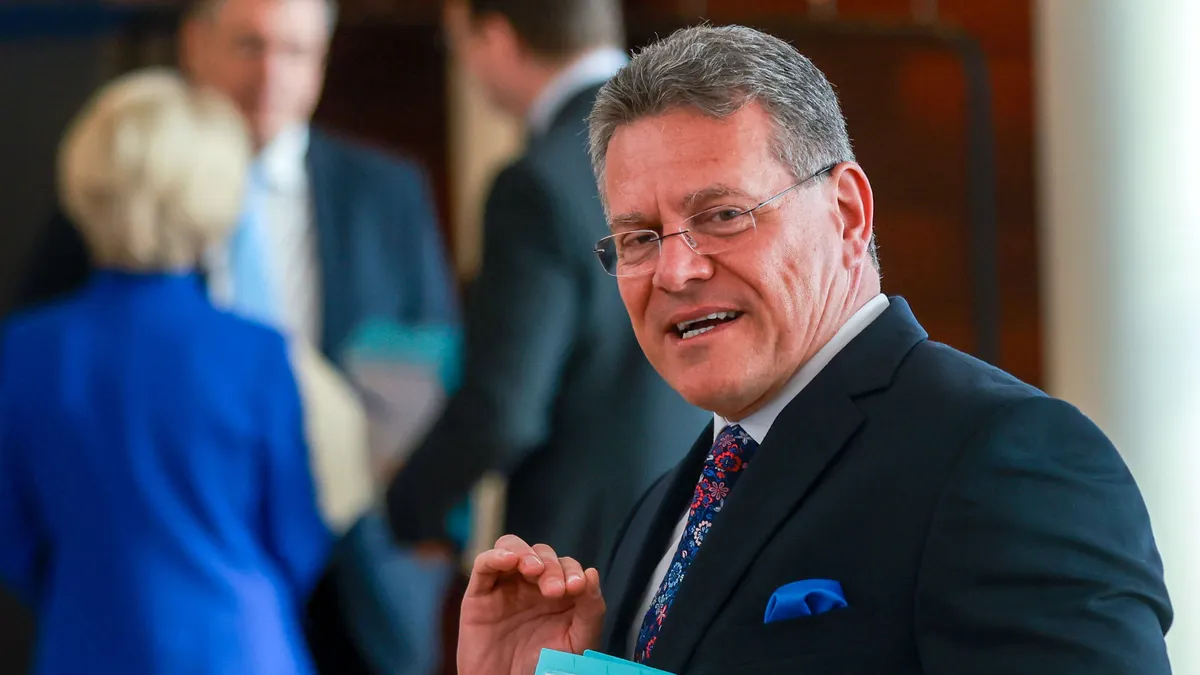
EU Trade Commissioner Maroš Šefčovicin according to the new implementing regulation creates clear rules of the game for the market in a situation where the international steel trade is undergoing strong changes. The new measures aim to ensure fairer competition conditions, secure jobs and create conditions for investments in low-emission and innovative steel production.
Partners are considered
The implementation regulation published by the Commission on Tuesday defines the distribution of new tariff quotas among the EU’s trading partners.
The EU will also allow duty-free steel imports in the future, but within the framework of smaller quotas than before. According to the new rules, a total of 18.3 million tons of steel can be imported into the EU annually without duty. Imports exceeding the quota are subject to a 50 percent customs duty.
The measure applies to 26 different steel product categories.
According to the Commission’s estimate, market access will be reduced by an average of 47 percent due to the new rules compared to the previous system.
According to Commissioner Šefčovič, the new quotas and their distribution criteria are designed in such a way that they ensure effective implementation, comply with the EU’s free trade agreement obligations and take into account the negotiations in the WTO.
In the new system, half of the duty-free import quota is reserved for the EU’s free trade agreement partners. The second half is open to all steel exporting countries on non-discriminatory terms.
According to the Commission, the solution ensures two goals: protecting the European steel industry and securing the availability of raw materials needed by the industry. Around 80 percent of the EU’s steel imports currently come from countries with which the Union has a free trade agreement.
Although the market access of free trade partners is also restricted, their treatment is more favorable than other exporting countries.
New origin requirement
The regulation also brings with it a new requirement regarding the authentication of origin. In the future, importers must indicate where the so-called melt and pour phase of the steel has taken place.
According to the commission, the requirement improves the transparency of supply chains and facilitates control of the true origin of steel. At the same time, the purpose is to prevent circumvention of the rules through third countries.
The EU has prepared the system in cooperation with its trading partners within the framework of the World Trade Organization (WTO). According to the Commission, several countries have already preliminarily accepted the quotas proposed for them.
Since the new system must be in place as soon as July 1, the regulation will be implemented under an urgent procedure. Member States are to vote on it within 14 days of the Commission’s approval.
The implementing regulation will be valid for a maximum of six months, after which it will be reviewed under the normal comitology procedure before the end of 2026.
The Commission continues to emphasize that it is seeking a global solution to the steel overcapacity problem. Until then, however, the EU considers that it needs temporary protective measures to safeguard the competitiveness of its own steel industry.