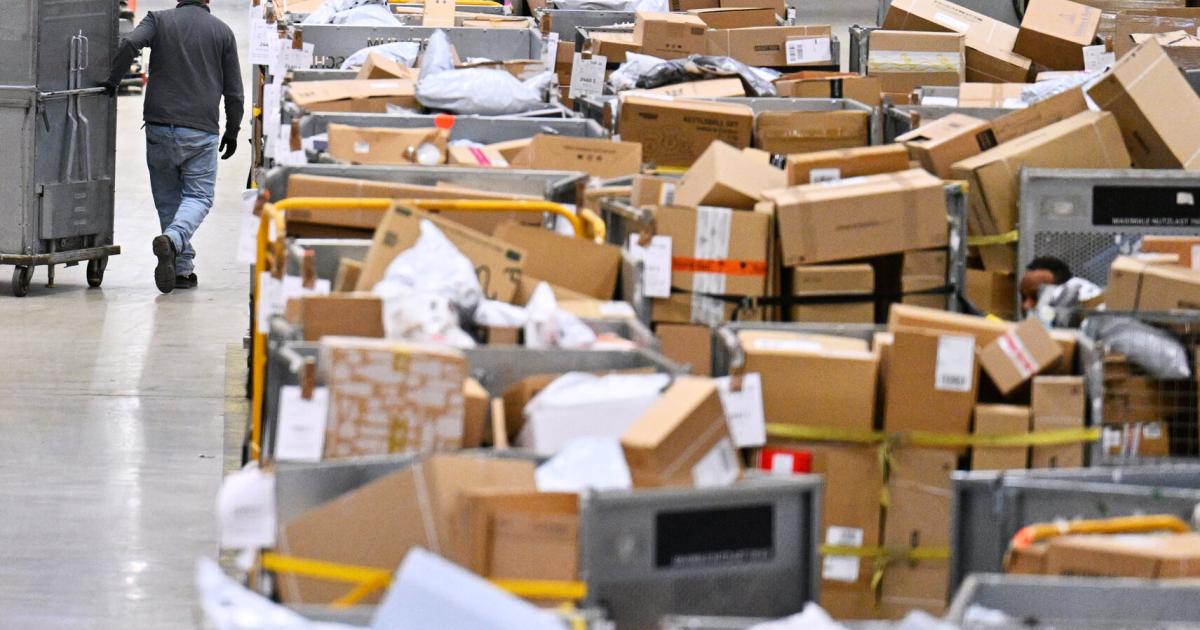
Three euros here, two euros there: eager parcel orderers, but also the local authorities, will incur a whole series of fees in the near future. But some of these fees could quickly get in the way.
After first Brussels and then the government in Vienna decided to stem the flood of packages with cheap goods from China, or at least to make money from them, the first of these taxes will start on July 1st. Brussels collects three euros – in practice it is the Austrian customs authorities – for each type of goods contained in a package. A T-shirt, a stuffed animal and a scented water from a cheap delivery company like Temu are then included a total of nine euros in taxes documented – and they will probably end up on the bill.
With this tax, Brussels is finally putting an end to a historical curiosity: the 150 euro duty-free limit for goods from China. It dates back to the 1950s, a time when China was a poor developing country. Today, around 16 million parcels arrive in the EU from there every day, around a million in Austria alone.
Toxic and dangerous
At least 60 percent of the goods in it do not meet EU standards for health and product safety. In Brussels they finally want to react: from 2028, a generously upgraded and centrally coordinated EU customs authority will firstly inspect the goods and, secondly, properly declare them. The three euros collected from now on are a temporary solution until the customs authorities are ready for their new tasks.
But in November, another tax from Brussels will be added to the package bill: two euros per package as a processing fee. This is priced in as so-called “own funds” for the next EU budget.
From October onwards, the Austrian government also wants to collect a tax of two euros per pack. Since almost 90 percent of these packages come from China, a third tax would be due on them. While the plans have been causing excitement and strong opposition in Austria for days, high-ranking representatives of the EU Commission in Brussels are also clearly expressing concerns. It is understood that individual EU states – in addition to Austria, France and Italy – would try to get the flood of parcels under control on their own, “but in a common European market that is not ideal.” From an EU perspective, the Austrian tax is also considered a type of processing fee. An EU state cannot collect tariffs on its own. Only the EU headquarters, which shares the revenue with the respective state, has the right.
“Set fees”
The planned two euros that Austria wants to collect threaten to run counter to the EU Commission’s plans. This is made quite clear there. So if the EU processing fee is actually collected from November, it is expected that “the countries will stop charging them”. If Austria does not comply, there is a risk of a warning from Brussels and then proceedings before the European Court of Justice. The tug of war over parcel fees between Vienna and Brussels has now begun.