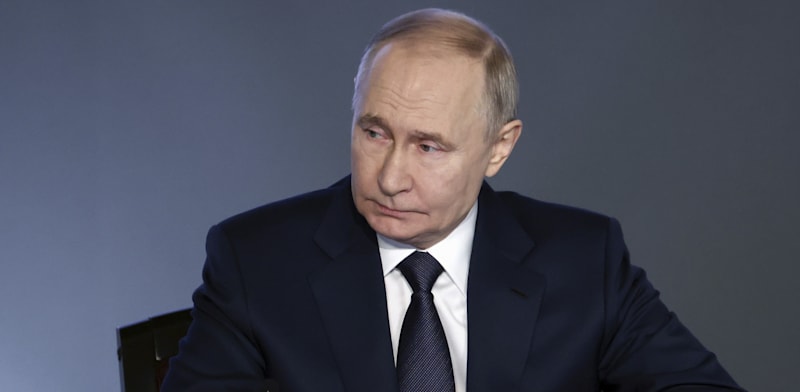
Fuel shortages across Russia have posed a new political challenge to President Vladimir Putin, after Ukraine’s relentless campaign of drone strikes against the country’s refineries brought war into the lives of most ordinary Russians.
Although Ukraine has been attacking energy facilities in Russia for years, the number of Ukrainian drones and missiles and the power of their fire have increased. This allowed Kiev to hit remote refineries such as the one in Tyumen, about 1,930 kilometers away, in Siberia, as well as to carry out the extraordinary attack that broke through the thick layers of air defense and destroyed Moscow’s central refinery on June 18, the turning point in the current crisis.
● Iran announces: since the lifting of the blockade there has been a jump in oil exports at a 20% premium
● The heat wave breaks records. Why don’t the Europeans install air conditioners
About 28% of Russia’s refining capacity was shut down as of June 20, according to the estimation of Sergey Vakolenko, former head of the strategy department at the major Russian oil company Gazprom Neft, and currently a senior fellow at the Carnegie Russia-Eurasia Center in Berlin.
“All of this is due to the sharp increase in the number of UAVs that Ukraine is able to launch,” he said. And Kolenko added that the problem no longer lies in logistical difficulties or an imbalance in the market, “but in a physical lack of fuel.”
For the first time in decades, Russia plans to start importing fuel, Kremlin spokesman Dmitry Peskov said on Tuesday. He added that Moscow is negotiating with several countries, whose names he refused to reveal. Only remote refineries, such as those in India, could help fill the huge gap. Such fuel shipments will arrive by sea only after weeks, and will further burden Russia’s budget, which is already depleted due to war expenses.
Russia, once one of the world’s largest exporters of petroleum products, banned gasoline and jet fuel exports for months as the Ukrainian attacks intensified. On Sunday, Putin said that he is considering banning the export of diesel as well.
Tensions are rising
The fuel shortage is felt all over Russia, but its severity varies from region to region in the vast country. In Moscow, which is generally insulated from the effects of the war that Putin started in 2022, many gas stations have been closed in recent days. In those that are still operating, drivers sometimes have to wait hours in line.
In some districts, mainly in certain areas of Siberia and the North Caucasus, residents reported that they had to wait a whole night, and sometimes even more, to refuel. In the Irkutsk region of Siberia, the government began placing mobile toilets next to fuel queues that stretched for miles.
In most parts of Russia, it is forbidden to fill gasoline in jerry cans, and the amount of fuel for vehicles is limited to 19 liters at a time. The diesel shortage is still not as severe, because Russia’s diesel refining capacity was higher to begin with.
Tensions are rising. The administration of the Oryol region in western Russia plans to allow the sale of fuel only to vehicles registered in the region, and at one refueling per week. Clashes broke out at gas stations in the Krasnodar region between local residents and drivers who came to refuel from the neighboring Crimea, where all fuel sales were stopped following the Ukrainian blockade by drones. One of the main refineries of Krasnodar was destroyed on Sunday.
Makeshift rationing systems began popping up across Russia, from QR codes to hand-compiled lists, a reminder of the severe shortages that characterized the days of the Soviet Union.
“It is absolutely clear that there is a social crisis surrounding the issue of fuel, and it may turn into a political crisis as well, but at this stage there are still no serious consequences,” said Andrei Kolesnikov, a commentator from Moscow in the Novaya Gazeta and New Times newspapers. “This situation deepens the feeling of fatigue, which turns into frustration. But since people have no tools to change the situation, all they have left is to complain about the authorities and that the war is not ending.”
The lack of fuel has already become a common phenomenon, precisely at a time when the election campaign for the Russian parliamentary elections, scheduled for September, is entering high gear. While no one expects free or fair elections, they provide Russians with something to quietly express their displeasure, and Putin is under pressure to ensure that the festivities surrounding the vote are not compromised.
One of the residents of Moscow said that his wife had to wait more than two hours in line to get gas, and estimated that this would affect their attitudes towards the authorities ahead of the elections.
Putin addressed the crisis personally
In his remarks over the weekend, Putin expressed no intention of pursuing a ceasefire with Ukraine, and rejected the idea of limiting Russia’s long-term attacks. Although such an agreement would have put an end to the Ukrainian attacks on the refineries, Putin has said that it does not serve Moscow’s interests, because Russia has a decisive advantage in firepower.
While Russian officials initially blamed the fuel shortage on speculators and panic buying, Putin admitted for the first time on Sunday that the shortage does exist.
“The problems of the drivers and of the businesses still continue. Unfortunately, there are queues at the gas stations, and sometimes it is impossible to find the type of gasoline needed,” he said. “We also understand the difficulties that agricultural businesses and farmers face during the summer season… the harvest depends on that.”
The very fact that Putin addressed the fuel issue himself and not junior officials indicates how challenging the crisis has become, said Janis Kluge, an economist at the German Institute for International Affairs and Security.
“The crisis had already spread to such an extent that it was dangerous for Putin not to address it,” Kluge said. “Otherwise it would seem as if he is disconnected from reality. This shows that this is a serious problem and that they are worried.”
To ease the situation a little, the Russian authorities allowed the sale of lower quality fuel, and canceled the restrictions that had been in place until now. The Kommersant newspaper reported on Tuesday that Russia is also considering allowing refineries to resume producing low-quality Euro 2 gasoline, which was banned in 2013. Euro 2 gasoline can damage modern engines, but is suitable for older vehicles.
Overall, fuel prices in Russia are still relatively low on a global scale. At gas stations in Moscow operated by government corporations, gasoline is sold for less than 80 rubles per liter (equivalent to about $3.88 per gallon). Private gas stations have already started raising prices in the last week, as have taxi drivers and delivery companies, who have to take into account the time wasted waiting in lines to fill up.
The response of the Russian authorities to all this was to limit the publication of fuel price data to the consumer, and to start arresting those who they claim are speculators and fuel hoarders.
“People are trying to save gas”
“This crisis is also worsening due to behavioral factors. People understand that the situation will probably only get worse, so they are trying to stockpile fuel,” said Alexandra Prokopenko, a former adviser to the Russian Central Bank and now a fellow at the Carnegie Russia-Eurasia Center. “When the authorities respond to events by hiding information, people begin to think that maybe the situation is more serious than they are being told.”
In the black market in the Crimea, where the authorities initially urged residents not to purchase fuel beyond their needs, but later completely banned the sale of gasoline to the general public, it was reported that speculators are already selling gasoline for more than 500 rubles per liter, which is about $25 per gallon. According to reports on social networks in Russia, in the Chita district of Siberia, speculators are offering for sale a place in a gas station queue, which lasts up to 48 hours, for 35 thousand rubles, which is about 454 dollars.
Ukraine has been attacking refineries in Russia for more than three years, and last year even caused a series of local fuel shortages. At the time, Russia was able to repair the damage quickly enough to avoid system shutdowns.
This year the pace of Ukrainian attacks has outstripped Russia’s ability to maintain its refineries, a task that is also limited by international sanctions that prohibit the import of the necessary equipment. Irina Trech, CEO and Chief Technology Officer of Fire Point, one of Ukraine’s main manufacturers of long-range attack UAVs, said that two years ago she never imagined that she would see a fuel shortage in Moscow.
“I have a feeling that we are on the way to victory,” she said. “We keep poking at them, poking, poking, and I’m starting to see light at the end of the tunnel.”
This article was translated by Globes exclusively from The Wall Street Journal. Link to the original article in English.
For your attention: The Globes system strives for a diverse, relevant and respectful discourse in accordance with the code of ethics that appears in the trust report according to which we operate. Expressions of violence, racism, incitement or any other inappropriate discourse are filtered out automatically and will not be published on the site.
Buy High-quality Alloy Steel Wp5 Pipe Fittings | Eckhardt Steel
Advantages of Using High Tensile Plates in Harsh Environments
Advantages of Using High Tensile Plates in Harsh Environments
Introduction to High Tensile Steel Plates: Properties & Applications
Boiler Steel Plates in Modern Boilers
The Advantages of Using Carbon Steel Seamless Pipes in High Temperature Applications
HIC Resistant Steel Plates: Benefits & Industrial Uses
High Strength Low Alloy Steel Plate: A Comprehensive Guide
How to Select the Right High-Tensile Steel Plate for Your Project
Industrial Applications of High-Strength Steel Plates
Industries that Commonly Use Wear Resistant Steel Plates
P1 vs. P5 Alloy Pipes: Which One Should You Choose?
Stainless Steel Flanges and Their Applications Explained
The Future of ABS Steel Plates: Emerging Trends and Innovations
Top 7 Benefits of Using Carbon Steel Seamless Pipes in Industrial Projects
Types of Alloy Steel Plates: A Comprehensive Guide
Why Use Carbon Steel Seamless Pipes for Tunnels? –
Carbon Steel A694 Forged Fittings Supplier in Mumbai, India
Top-rated Cupro Nickel Sheets, Plates Suppliers | Eckhardt Steel
Hastelloy C276 Welded Tubes, Hastelloy C22/B2 Seamless Pipe Exporter
SS 304H Seamless Tube, Stainless Steel 304H Welded Tubes Supplier
Stainless Steel 304L Forged Fittings At Best Price | Eckhardt
SS 304L Seamless Pipe, Stainless Steel 304L Welded Pipes Supplier
310S Stainless Steel Forged Fitting Exporter & Supplier in India
SS 310S Welded Pipe, Stainless Steel 310S Seamless Pipes Supplier