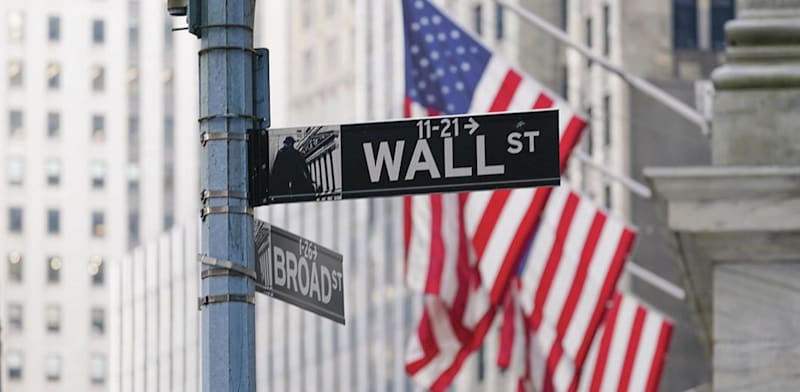
Trade overview: current reports, trends, indices, stock prices, bonds, foreign exchange and commodities and analyst recommendations
12:30
Trading in the futures contracts on Wall Street continues to be conducted with notable declines. The Nasdaq contracts lose about 1.6%, the S&P 500 contracts fall about 1.1% and the Dow Jones contracts fall about 1.3%.
Chip stocks continue their negative momentum from yesterday. The SOXX hedge fund, which tracks the sector, is down about 3% in early trading. The DRAM basket fund, which specifically tracks memory chip stocks, is weakening at a sharper rate of over 6%. Micron, Marvell, SanDisk and Intel shares are especially negative with declines of between 5% and 6%.
11:50
The declines in Wall Street futures are intensifying. As of now, the contracts on the Nasdaq are down about 1.3%, the contracts on the S&P 500 are losing about 0.9% and the contracts on the Dow Jones are weakening by about 1.2%.
Following Trump’s words regarding the memorandum of understanding with Iran, US government bond yields are climbing. The ten-year yield climbs by about 4.5 basis points to a level of 4.57%, the two-year yield jumps by about 5 basis points to a level of 4.21%.
Trading in interest rate contracts in the US also indicates an increase in the probability that the markets are pricing in an interest rate hike in the near term. The chance of an interest rate hike in September according to market pricing has risen from about 62% yesterday to about 68% now, according to CME Group data.
11:25
President Trump said a little while ago at the NATO conference in Turkey that for him the memorandum of understanding with Iran is off the table. “As far as I’m concerned, I think it’s over. I don’t want to do business with them anymore. They are scum. And if they get nuclear weapons, they are liars. In my opinion, it’s a waste of time to keep talking to them. They are crazy, as far as I’m concerned it’s over,” he said.
Further on, the declines recorded at the beginning of the trading day in the futures contracts on Wall Street strengthened. Currently, the contracts on the Nasdaq are down by about 1%, the contracts on the S&P 500 are losing their value by about 0.7% and the contracts on the Dow Jones are weakening by about 0.9%.
At the same time, oil prices are climbing at a rate between 4% and 5%, with Brent oil trading around $77 per barrel and American WTI oil trading around $74 per barrel.
In addition to the report about Iran, President Trump also said that he wants to cut all trade ties with Spain. “Spain is a terrible partner in NATO. They do not participate. They don’t pay. I don’t want anything to do with Spain. Cut off all ties with Spain please, including visits. Don’t even talk to them. They are bad and hopeless people,” Trump said.
11:06
Apple has begun testing DRAM chips made by ChangXin Memory Technologies (CXMT), a manufacturer of memory chips supported by the Chinese government, for devices it sells in the Chinese market – according to a report by the Financial Times.
At the same time, Apple is working with the US government to obtain approval for a wider use of CXMT chips, a move that highlights the tension between the technology giants’ desire to diversify supply chains and lower costs, and American efforts to limit the progress of the Chinese chip industry.
CXMT is expected to become a major player in Beijing’s effort to build technological independence, especially in the field of artificial intelligence infrastructure. The company is planning an IPO on the Shanghai Stock Exchange in which it may raise at least 29.5 billion yuan (about 4.3 billion dollars).
According to the report, about 15 government shareholders together own about 36% of CXMT, and some of the private investment funds in the company are also supported by government entities.
CXMT is currently the fourth largest DRAM manufacturer in the world, after Samsung, SK Hynix and Micron. Its market share is expected to increase to about 15% by 2028, compared to about 11% last year, with the expansion of its production lines in China.
However, analysts estimate that CXMT is not expected to immediately flood the market with cheap chips, because a large part of its future production is already reserved for existing customers.
The main concern in the industry is a scenario similar to that seen in areas such as solar panels and electric vehicles: massive government investments that increase production capacity, lower prices and harm the profitability of Western manufacturers.
In the bottom line, Apple is torn between the need to ensure a cheap and stable supply of chips and the American geopolitical pressure to reduce dependence on Chinese technology.
10:25
Europe follows the stock markets in the world this morning – Frankfurt falls by 1%, Paris and London by 0.8%.
Easy Jet announced that it had reached an agreement in principle on its acquisition by Castlelake, an American private credit fund that specializes, among other things, in financing airlines.
The deal is valued at £5.5 billion (about $7.3 billion) and shareholders are expected to receive £6.90 per share in cash, a 73% premium to the stock’s closing price on May 29, the day Castlelake first disclosed its interest in the acquisition.
Last month easyJet rejected a lower offer, worth 4.93 billion pounds, but the company’s board said that the new offer was at a level where it would be ready to recommend to shareholders for approval.
To comply with EU rules requiring a European airline to be controlled by European shareholders, Castlelake previously proposed a structure where it would own only 49% of the acquiring company, while 51% would be held by European investors. However, the final structure has not yet been confirmed.
easyJet operates 355 aircraft, flies over 1,200 routes in 38 European countries, and holds valuable take-off and landing rights (slots) at major airports such as Gatwick, Paris and Geneva.
If the deal goes through, easyJet will be delisted from the London Stock Exchange, amid a growing wave of acquisitions of British companies by private funds, which take advantage of the relatively low pricing of London shares.
Castlelake have until August 3 to submit a binding bid or withdraw from the move. Meanwhile, the company’s founder, Stelios Haji-Ioannou, who owns about 15% of the shares, has not yet announced whether he will support the deal.
08:50
In Asia this morning the trend is mixed with a tendency to declines. The Nikkei index in Japan loses 0.55% and the Topix index decreases by 0.7%. In South Korea, the Kospi index weakened, falling by another 4%. The Korean index jumped 220% in a year and a half “thanks” to abnormal concentration: two stocks from the memory chip sector, Samsung and SK Hynix, make up more than half of its value, but recently the picture has reversed.
On the other hand, the Hang Seng index in Hong Kong is up 1.2%, while the CSI 300 index in China is down 0.47%.
● Volatility is the name of the game: Two stocks soar and crash the red-hot Asian stock market
Futures contracts on Wall Street are trading relatively stable this morning (Wed), as investors balance between the security escalation in the Middle East and waiting for the publication of the minutes of the Fed’s latest interest rate meeting. Dow Jones slightly down, S&P 500 and Nasdaq 100 now up 0.1% and 0.3% respectively.
Yesterday, Wall Street closed lower on the back of weakness in chip stocks, when it seems that investors are returning to rotate out of stocks associated with artificial intelligence. Nasdaq fell 1.2%, S&P 500 0.4%, Dow Jones 0.3%.
Chip stocks led the declines, as did the ETF SOXX fell and shares in it Micron Technology , Marvel Technology , Broadcom and-AMD .
The pressure on chip stocks started already yesterday morning in Asia, after the South Korean stock market fell by almost 5%, following a fall of nearly 7% in the Samsung Electronics stock. A Reuters report also clouded the sentiment, after according to sources the Chinese company Dipsic is developing its own artificial intelligence chip. Such a move may reduce its dependence on chips from companies such as Nvidia and Samsung.
Just yesterday – a cool reception for the stock Spice X which entered the index today Nasdaq 100 . The result disappoints those who thought that automatic purchases of the index funds would push the stock up. Although the company was also added to the FTSE Russell, CRSP and MSCI indices – which are followed by assets amounting to hundreds of billions of dollars. See expansion below.
In the US, the eyes are on the bonds of the technology giants.
Yesterday, another day, another huge bond raising by a company that increases debt to finance investments in artificial intelligence infrastructure. Amazon is expected to issue bonds today in the amount of at least 25 billion dollars – only four months after raising another huge debt in the amount of 37 billion dollars in the American market.
The story is not only the size of the recruitment – but the fact that the leading AI companies are starting to rely more and more on the debt market to finance huge investments in data centers, chips and computing infrastructure. This raises again the question of whether the AI investment wave will be funded primarily from future cash flow or through increased leverage.
In addition, the online commerce and cloud computing giant raised more than 20 billion additional dollars in recent months through bond issues in euros and Canadian dollars.
Amazon joins the ranks of technology giants that are taking advantage of the bond market to finance the investment race in artificial intelligence. Among the companies that have already raised large debt this year are Nvidia, Alphabet, Meta and Oracle.
Oil prices are rising this morning: US crude (WTI) contracts for August delivery rose 2.1% to $72 a barrel, while Brent crude contracts for September delivery strengthened 1.9% to $75.5 a barrel.
Iran attacked a Qatari oil tanker near the Strait of Hormuz. As a result, the US announced that it was revoking the general license that allowed the sale of Iranian oil, an American official said now, warning that Iran’s actions in the Strait of Hormuz are “unacceptable” and that they would respond with countermeasures.
The move comes after three oil tankers reported in recent days that they were hit by projectiles or unidentified weapons in and near the Strait of Hormuz, according to United Kingdom Maritime Trade Operations, the body affiliated with the British Navy that monitors threats to vessels in the area. the attacks
If indeed the US cancels the permit to sell Iranian oil, this is a significant tightening of the sanctions policy, which could increase tensions in the region and support the rise in oil prices.
Those expecting an interest rate cut may be disappointed. The increase in short- and medium-term inflation expectations may reinforce the Fed’s caution regarding interest rate cuts, but the fact that five-year expectations remain stable may soften the fear that inflation will get out of control.
US consumer inflation expectations rose in June to the highest level in almost three years, according to the Fed’s monthly expectations survey.
The survey shows that expectations for inflation in the coming year have risen to their highest level since almost three years. Expectations for the three-year term also climbed to the highest level since June 2022.
However, in the longer term, a more reassuring picture was recorded: inflation expectations for five years remained unchanged at 3%, a figure that is considered the least worrisome from the Fed’s point of view, as it indicates that the public still does not expect a sustained acceleration of inflation over time.
Listingdisplay.Aspx
Minnesota Warrant Search – Addonbiz
Social Bookmarking Sites List 2023
Minnesota Warrant Search
Social Bookmarking Sites List 2023
Mississippi Warrant Search on http://mississippiwarrantsearch.org/
Mississippi Warrant Search – Insertbiz
Mississippi Warrant Search
Mississippi Warrant Search on Brownbook.net
Mississippi Warrant Search
Missouri Warrant Search 227 Madison St, Jefferson City, MO 65101, United States | Local business
Missouri Warrant Search
Missouri Warrant Search 280386
Missouri Warrant Search on Local Home Service Pros
Missouri Warrant Search Missouriwarrantsearch Org
Missouri Warrant Search on Brownbook.net
Montana%20Warrant%20Search
Montana Warrant Search 825 Great Northern Blvd, Helena, MT 59601, USA | Local business
Montana Warrant Search – Pastelink.net
359163.Aspx
Montana Warrant Search on Local Contractors Near Me – Local Contractors Directory – Contractors and Suppliers
Montana Warrant Search Montanawarrantsearch Org
Nebraska Warrant Search – Addonbiz
Listingdisplay.Aspx
116758926472560704