What can happen if the electricity grids cannot keep up with the rapidly increasing renewable electricity production and electricity consumption?
In recent years, the Netherlands has become a horror example of a country where the electricity grid has suffered from ever-worsening overloads and a lack of transmission capacity. At the same time, congestion in the electricity grid has become a significant bottleneck for the energy transition in the Netherlands.
The situation has become so bad that households and electricity producers now have to wait in line for access to the electricity distribution network.
International Energy Agency IEA already said in the spring of 2025 that around 10,000 large customers were queuing to connect to the Dutch electricity grid.
A lot of renewable electricity production has been built in the Netherlands in recent years. For example, the country’s solar power capacity increased fivefold between 2018 and 2023. In a short time, the Netherlands has become one of the world’s leading countries in the field of solar energy.
At the same time, the capacity of the country’s electricity grid has not been able to be expanded sufficiently to cover all the new electricity demand and decentralized supply.
The network is running out of capacity.
In the Netherlands, electricity grids have become the bottleneck of the green transition, as the number of solar and wind power, as well as heat pumps and electric cars, has grown enormously.
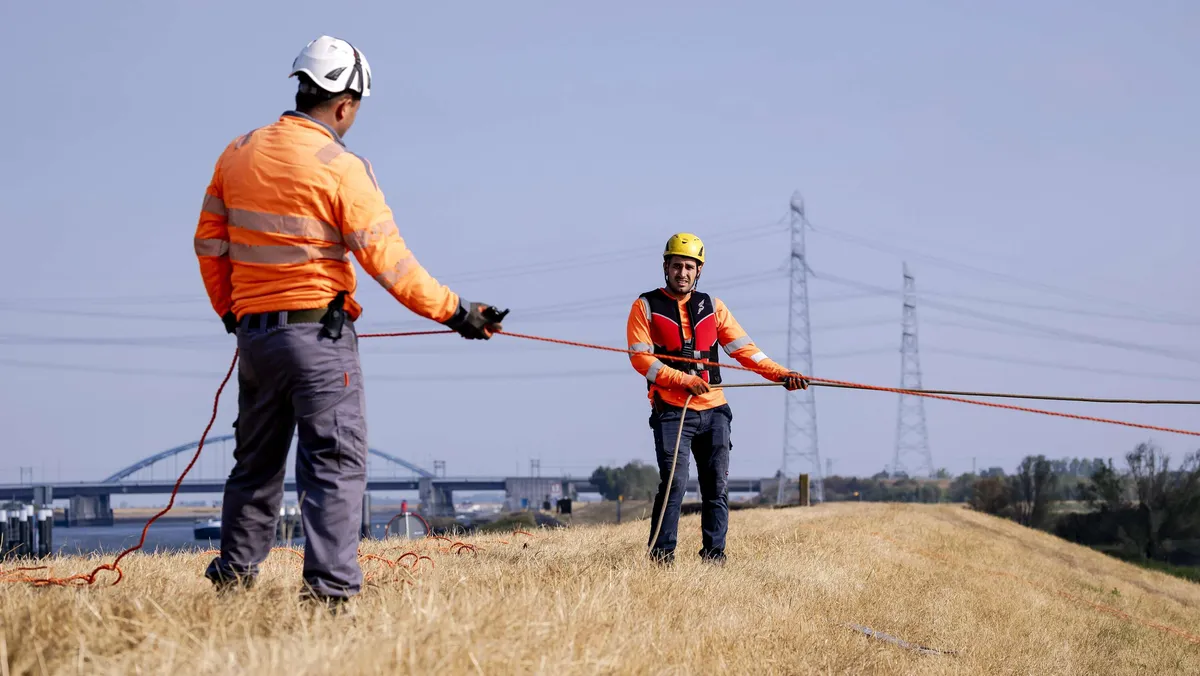
PHOTO: Robin van Lonkhuijsen
The Dutch grid company TenneT estimated in June that in the coming years the so-called expected electricity shortage hours could increase to 37–46 hours per year, while up to now only a maximum of four hours has been allowed.
In Denmark, too, the capacity of the electricity networks is starting to increase. In March, the Danish grid company announced that it would temporarily halt all new connection contracts altogether, and this pause was announced at the time for three months.
There is still time to invest in Finland
Energy Industry Association leading expert Ina Lehto says that the crisis situation in the Netherlands was caused by the combined effect of several different factors, which in the end was a pleasant surprise.
First of all, thinking about cost efficiency had led to the fact that there was not enough investment in the development of the network. The licensing procedure for networks has also been slow in the Netherlands.
“However, one significant reason has been that the Netherlands has been very dependent on gas and is now strongly trying to reduce its dependence on fossil energy sources,” says Lehto.
A grid company in Finland Fingrid warned on Tuesday that Finland’s electricity consumption could increase by almost 40 percent in the next five years due to new data center and electric boiler projects.
Could a crisis like the Netherlands arise in Finland as well?
“It wouldn’t be possible in exactly the same way. In Finland, electricity networks are built to withstand higher outputs. We have been heating apartments with electricity for a long time.”
“In Finland, even after the long power outages of 2010 and 2011, a lot of weather security investments have been made and electricity networks have been strengthened. Now these measures are serving us in this electrification of society,” says Lehto.
According to Lehto, there is still time in Finland to invest in the proactive development of electricity networks and building the necessary flexibility solutions as wind energy continues to increase.
“However, the necessary investments require that network companies have sufficient incentives to invest in their own electricity networks,” Lehto reminds.