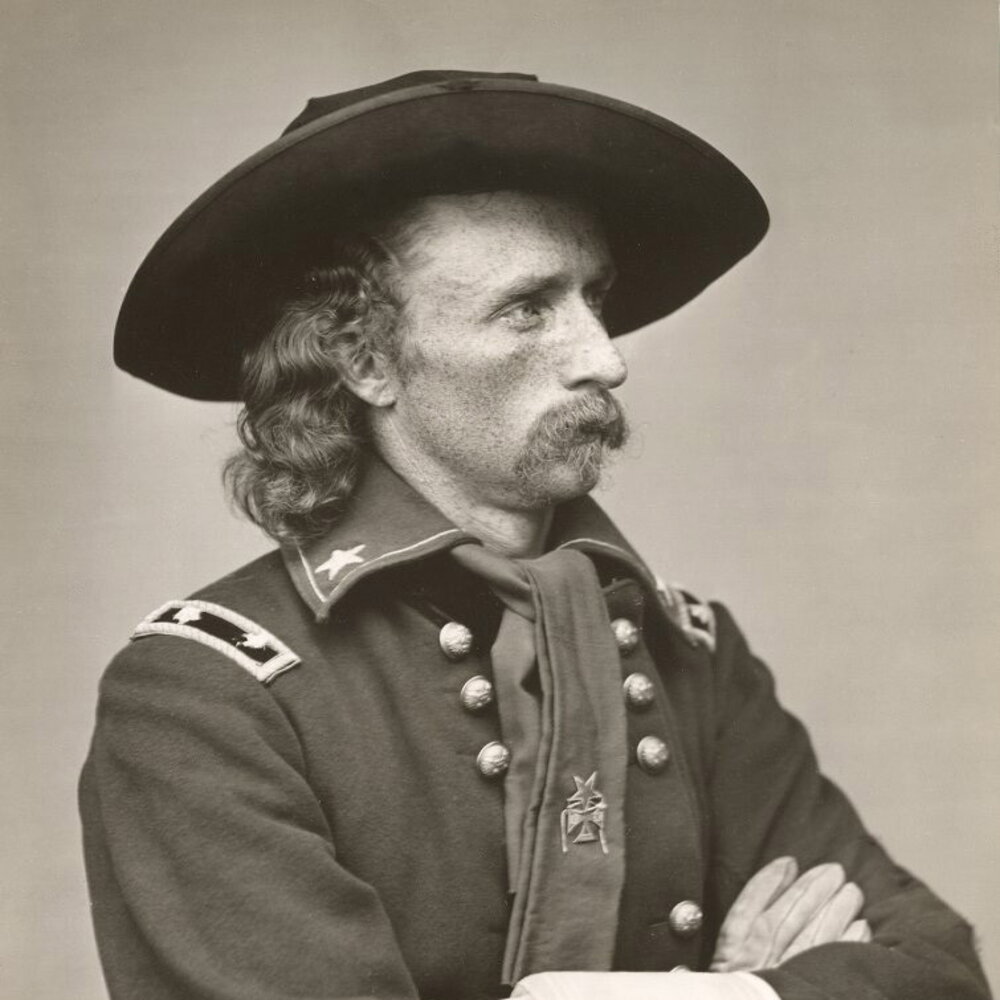
The strongest image of the epic of Far West it is in the defeat of the American cavalry in the battle won by the redskins in a place that has become the symbol of an era, Little Bighorn, in Montana. There was everything to enter the collective imagination, well beyond the episode: from the military skill in the field of the coalesced tribes to the arrogance of superiority of the whites, from the clash of two incompatible lifestyles to the fictional and iconic figure of George Armstrong Custer. Along the Grass River, as the natives called that place, the 7th United States Cavalry Regiment made history with the most serious American defeat of all the Indian Wars.
An army to chase away the natives who did not accept the Great Reservation
In 1874 the discovery of gold in the Black Hills, the sacred mountains of the Lakota (Sioux) determined not to allow thousands and thousands of prospectors to invade their territories, had turned the 1868 treaty with the Indians into waste paper. Washington had then imposed a deadline of February 1876 for the redskins to gather in a large reserve assigned by the American government, otherwise the cavalry would have intervened to forcefully evict the “hostiles”.
It was the war, yet another in the expansion to the west, with an obvious outcome but with some variables that the US civil and military authorities had not well evaluated. THESioux chief Hunkpapa Sitting Bull he had promoted a coalition of redskins which the Cheyenne oglala of the already famous warrior had also joined Crazy Horseand who had been joined by other tribes in moving north in the hunting season. Despite the myths created to tell the epic of the Wild West, the Indians were considered the best cavalry in the world, for what they were capable of doing on those animals both in hunting and in war. Just eight days before the clash at Little Bighorn, Crazy Horse had inflicted a heavy defeat on General George Crook’s bluecoats (cavalry and infantry) near the Rosebud waterway, effectively ousting him from the military campaign. The Indians had indulged in celebrations on the occasion of the ritual Dance of the Sun. According to the stories, however, it was not yet the great victory that Sitting Bull believed the Great Spirit had sent him in vision.
The 7th Cavalry meets the fate written by Sitting Bull and Crazy Horse
Against the redskins the American Government had sent not only General Crook, but also Generals John Gibbon and Alfred Terry, who should have converged on the site of the great gathering for the Sun Dance, and forcibly settled that uncomfortable issue once and for all, believing that the presence of native warriors did not reach a thousand and that they were only rebel bands: the first great mistake. The 7th Cavalry, divided into 12 squadrons, was part of Terry’s troops. Custer had been a general on special duty during the Civil War and with the subsequent downsizing of the army had been brought back to the effective rank of lieutenant colonel, but he was eager to demonstrate that he was no less than his commanders and that he had the right to the stripes. His undisciplined character was well known in Washington, where he had also clashed with the president Ulysses Grant. He also distinguished himself from the troops by the informal clothing he wore instead of the uniform, with the characteristic fringed leather jacket. With his cavalrymen he broke away from Terry’s column on June 22nd to find the large Indian village on the plateau which he had finally managed to locate on the morning of the 25th. From a distance of about twenty kilometers he was not able to evaluate its size (there were about 1,200 tents) nor the nature of the terrain of the Little Bighorn and the possible moves of the Indian leaders and warriors whose number he did not know. There were thousands of them, overwhelmingly preponderant, but through the lenses of his binoculars he had only glimpsed the possibility of personal glory and redemption, and had decided to do everything alone: he had then divided the 7th cavalry into four detachments (of five squadrons, two groups of three and one of equipment, ammunition and baggage) and had begun the approach maneuvers by going up the river. He thought that, upon sighting the cloud of smoke from the cavalry, the Indians who had spent a night of celebrations would flee, leaving the field open to him.
The mistakes of the blue jackets and the trap of the Sioux and Cheyenne
It was terribly hot that day. When the major’s column Marcus Reno came into contact with the Indians, the battle broke out and would last until the next day. Crazy Horse made himself immediately recognizable with his ostentatious war colors, regardless of the shooting of the cavalrymen of the three squadrons who were unable to focus on the warrior who was leading his Cheyenne. Reno’s men were immediately surrounded and trapped on a hill, with no possibility of escaping from that siege and subjected to a barrage of rifle fire and archery from convenient protected positions. When Custer took his approximately two hundred soldiers downstream, as they were crossing the river they were attacked near the Cheyenne camp: the Sioux had not missed that maneuver and fell on the cavalrymen from above. The blue jackets, dismounted and locked in square defense, fell one after another before an overwhelming number of Indian warriors.
The only survivor is the trumpeter, the former Garibaldi member Giovanni Martini
Custer’s desperate move was to send bugler John Martin with the order to Captain Frederick Benteen to immediately send his three reinforcement squadrons, but in the meantime Crazy Horse had closed the escape route to the soldiers by attacking them by surprise from behind after an outflanking maneuver. No soldier from Custer’s five companies escaped annihilation, except the trumpeter who, despite his name Martin, was an Italian, the former Garibaldino Giovanni Martini: due to his poor knowledge of English he had been provided with a written order which he will then show to the commission of inquiry. It all ended in half an hour, in Little Bighgorn, on the afternoon of June 25, 1876. “Long hair” Custer, as the Indians called him, had had himself shaved that very morning due to the great heat. For this reason he was not scalped, otherwise that trophy would have adorned the bison skin tepee of Sitting Bull or Crazy Horse. The day after the triumph over Custer and the annihilation of his cavalrymen, Sitting Bull lifted the siege of the troops of Reno and Benteen so that the survivors could report the great victory of the Indian nation. In the USA, shocked by his Waterloo, which would soon be avenged, Little Bighorn became a legend.
美国ID购买_苹果id购买平台_苹果id批发网 – 如何在 Apple ID 上更改国家/地区
Duston Gel Precio Cruz Verde by amzis on DeviantArt
Пин Ап казино в Казахстане: Официальный сайт Pin Up KZ
Как играть безопасно в Pin Up? Ответственный гемблинг в Казахстане
Политика конфиденциальности и условия обработки данных в PIN UP
О нас и нашей миссии! Почему нам доверяют игроки Пин Ап?
Политика AML и KYC – Противодействие отмыванию денег в Казахстане
Пользовательское соглашение PIN UP – Правила игры и выплат
Пин Ап казино в Казахстане: Официальный сайт Pin Up KZ
Как играть безопасно в Pin Up? Ответственный гемблинг в Казахстане
О нас и нашей миссии! Почему нам доверяют игроки Пин Ап?
Пользовательское соглашение PIN UP – Правила игры и выплат
Политика AML и KYC – Противодействие отмыванию денег в Казахстане
Политика конфиденциальности и условия обработки данных в PIN UP
Пин Ап казино в Казахстане: Официальный сайт Pin Up KZ
Как играть безопасно в Pin Up? Ответственный гемблинг в Казахстане
О нас и нашей миссии! Почему нам доверяют игроки Пин Ап?
Пользовательское соглашение PIN UP – Правила игры и выплат
Политика AML и KYC – Противодействие отмыванию денег в Казахстане
Политика конфиденциальности и условия обработки данных в PIN UP
Duston Gel Precio Cruz Verde
Hijridatenet
What To Know Before Moving To Sacramento Cost Of Living Pros And Cons
Local Move Checklist Best Tips For Moving Locally
Best San Diego To Los Angeles Movers Cost Per Hour And Reviews