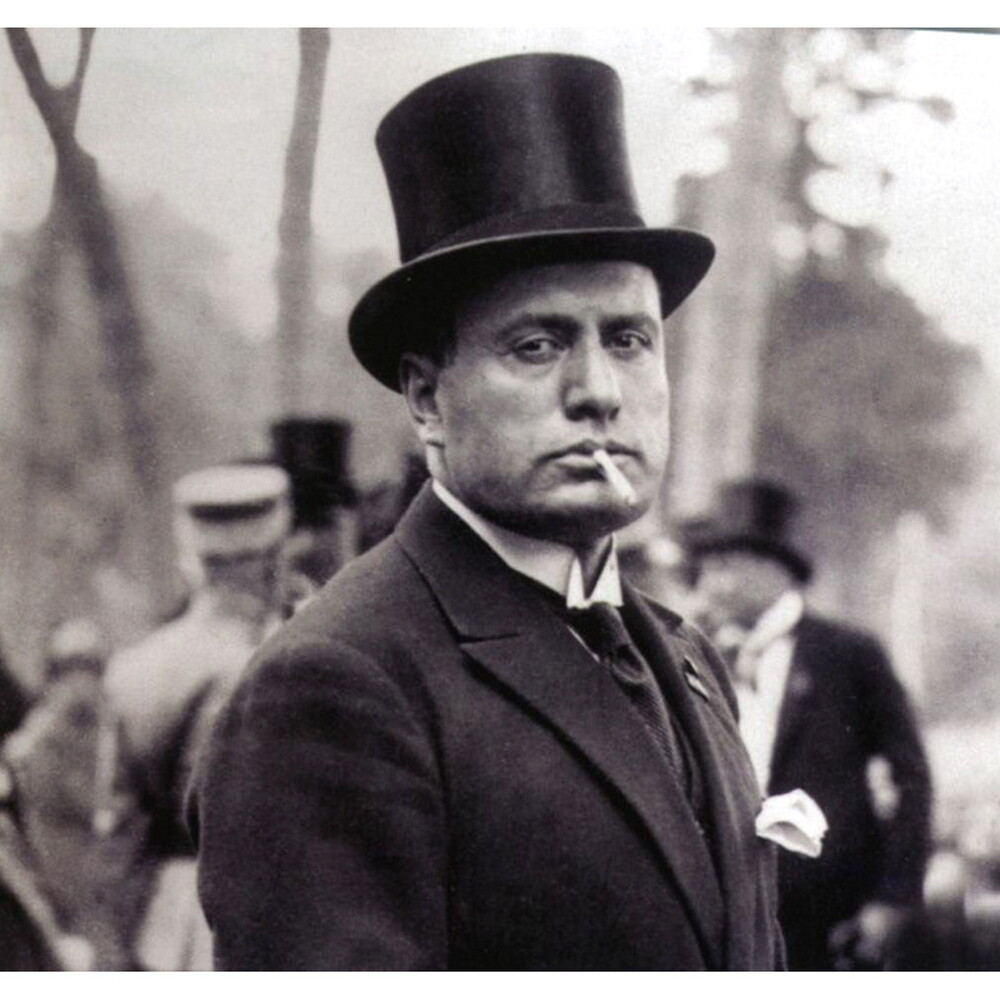
There is a red thread that links the arrest of Benito Mussolini of 25 July 1943 – eighty-three years ago – al Focolarini religious movement. It passes through three figures: the lieutenant colonel of the carabinieri Giovanni Frignani, who organized the sensational arrest; the German Elena Hoehnwho then gave refuge to the officer hunted by the Nazi-fascists; the Catholic activist Chiara Lubichwhich finally hosted the woman pursued by the suspicion of having been a Berlin spy.
On July 25, 1943, many destinies changed. The Duce’s collapse occurred within twenty-four hours. As the historian Emilio Gentile writes in the book “25 July 1943”, “at 5pm on the 24th the Grand Council, the supreme body of the fascist regime, met at Palazzo Venezia. At 2.30am on the 25th, the majority of the hierarchs […] expressed distrust towards the Duce. And “at 5.30pm on the same day – he continues – […] Mussolini was arrested by the Carabinieri”. His capture was organized by the high officer Giovanni Frignani, born in Ravenna in 1897, already a bronze medal for military valor in the First World War. He planned a safe, rapid and silent action. He himself took part in it in civilian clothes.
The details
The details of the operation are explained by the journalist and historian Mario Avagliano in his recent work “The man who arrested Mussolini” (Marlin Editore, 2025). On the afternoon of 25 July the Duce was summoned by the king (to be dismissed, ed.) to Villa Savoia, in the Parioli district of Rome. The escort remained outside the residence, surrounded by about fifty well-hidden soldiers. Frignani chose trusted men to face the former dictator of Italy. That is, “his direct collaborators – continues Avagliano – the captains Paolo Vigneri and Raffaele Aversa”: the first Sicilian, born in 1907; the second born in Labico (Rome) a year earlier.
According to the scholar’s documented reconstruction, at the end of the conversation with Vittorio Emanuele III, “Ercole Boratto, faithful driver (of Mussolini, ed.), with an excuse was introduced into a service room and locked in. At the foot of the stairs – he further describes – the Duce comes across Captain Vigneri and his colleague Aversa. Captain Vigneri goes to meet him and, standing at attention, says: ‘Duce, in the name of His Majesty the King please follow us to to escape possible violence from the crowd’”. So, the last act. Mussolini got into a “Red Cross ambulance with doors with frosted glass, left the park of the villa through a secondary gate and quickly disappeared”.
The facts of Villa Savoia
The remaining part of ’43 is a series of events: thearmistice with the Allies (8 September), the occupation of Rome by the Nazis (10 September), the birth of the Italian Social Republic (23 September) and the roundup of Jews in the ghetto of the Eternal City (October 16).
The Duce had not forgotten the events of Villa Savoia. He wanted to see the soldiers who arrested him dead. Only on Frignani had he placed a reward of one million and 350 thousand lire.
Like many of the Benemerita, the lieutenant colonel was part of the clandestine military resistance front, the Caruso gang. She knew she was in the crosshairs of Hitler and Mussolini’s assassins and had sought refuge in the Roman house of Elena Hoehn (former lover of her brother Giuseppe whom she had previously attended in Naples) and her husband Luigi Alvino, an entrepreneur from Avellino.
Everything went smoothly until the morning of January 23, 1944. What happens next is recalled by the historians Anna Foa and Lucetta Scaraffia in “Black Souls” (Marsilio, 2021). “The Nazis knock on the door of the couple’s Roman home. They arrest Elena, Frignani, Aversa and De Carolis”, the latter being a major in the force. They all end up in the Nazi prison in Via Tasso, home to the SS headquarters commanded by Lieutenant Colonel Herbert Kappler.
The “black” revenge
On March 24, 1944, the “black” revenge. Among the 335 victims of the Nazi-fascist massacre in the Fosse Ardeatine in Rome there will also be Lieutenant Colonel Giovanni Frignani, Major Ugo De Carolis and Captain Raffaele Aversa.
Once the war is over, for some the transformation begins. On 27 March 1946 Elena and her sister Emita were arrested because they were believed to be German spies responsible for the capture of the three carabinieri. Against them there are (also) the report of the Carabinieri and – which remained out of the judicial file – that of the secret services of the Navy. Even the Vatican – it is reported – apparently knew about the two 007s. The epilogue was a surprise. The sisters were acquitted during the preliminary investigation, not even at the end of a trial.
Now Elena could try to start a new life and get rid of the stigma of being an informer. And religion was a great cleanser. During her detention in the Capitoline Mantellate prison – Foa and Scaraffia always remember – the alleged Nazi infiltrator had met Celeste Di Porto, the “Black Panther”: a Jew suspected of having sent numerous of her co-religionists to their deaths, rounded up by the Germans on 16 October 1943 and deported to the extermination camps. According to the university professors, that meeting opened the way to rebirth. How is it summarized in their work. Celeste Di Porto was sentenced to 12 years in prison. Thanks to sentence reductions, he spent only three years in cell (including the period at the Mantellate). She returned free in March 1948 after leaving the women’s penitentiary in Perugia.
Elena Hoehn wasted no time. It is said, she enveloped Celeste with her enthusiasm as a convinced believer and the “Panther” converted to Christianity, exactly as Elena had done in ’31, moving from Lutheranism to Catholicism. Choice of heart or convenience?
The baptism was celebrated in Assisi. The former Jew chose to be called Elena, like her godmother who asked the bishop of the Umbrian city, Giuseppe Placido Nicolini, for a safe place to stay away from the spotlight. “This refuge – write Foa and Scaraffia – was Chiara Lubich’s first home, in Trento, where Celeste arrived with Elena in April 1948”.
The Movement – founded in the South Tyrolean capital in 1943 – was ideal: it did not look at people’s past but at their future. Celeste resisted in the community for a while, then returned to the capital. Elena, on the other hand – the authors demonstrate – was considered by the Focolarini to be almost a mystic. They will call her “brother Jacopa” and she will sign herself Elena di GA, of Gesù Forsaken. Almost a hundred years old, she died in the city of San Francesco in 2001. Celeste Di Porto, however, died in Rome in 1981.
“There is only one story – the teachers reflect -. Elena Hoehn emerges as a manipulative figure, elevated from the punishment she would have deserved thanks to the compromises, blackmail, indulgences of a post-war world too marked by continuity not only with the fascist past but also with the horrors of Via Tasso and the Fosse Ardeatine. Who frees herself from her past – they conclude – taking advantage of the meeting with pure souls such as Chiara Lubich and the bishop of Assisi”.