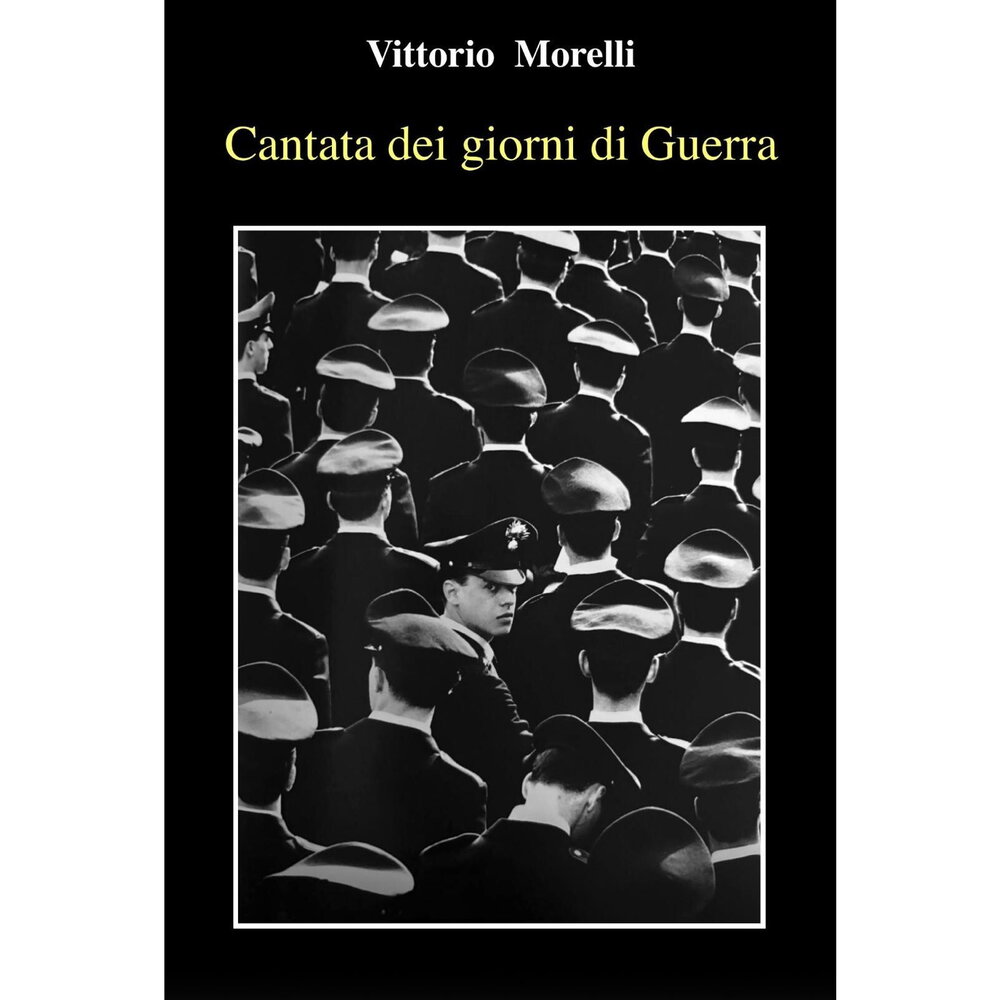
Roma1941. Sicily1960. Afghanistanearly 2000s. They are the three coordinates of space and time within which the story of“War Days Cantata”the latest book by the journalist and writerVittorio Morelli. Three scenarios, three protagonists, three different historical moments, a single common denominator: theguerra– “madness without excuses”, to quote Pope Francis – which imposes individual choices and shapes collective destinies, leaving behind always and only death and desolation.
The first act takes place in the days ofSecond World Warin una Romaworried more by hunger than by bombs. There are two policemen ‘disguised’ as petty thieves who go hunting for classified documents and lists of spies. One of the two is the eldestManfredi Talamohistorical figure: he has to infiltrate the US embassy, and he – with his colleague Piccardo – succeeds, after having hooked up a young usher with the help of a woman. It will be remembered as one of the most brilliant operations of themilitary intelligence‘Black Code’: thanks to the two soldiers, their intuition and their courage, Italy will come into possession of the secret cipher used by the United States, stored in an anonymous black folder, and will be able to read communications on military operations in the Mediterranean and North Africa for months.
The story of the two 007s
Three years later, in a city liberated from the Nazis and with the fascists on the run (“the black shirt? They put it away in the closets or perhaps they burned it”), General Amè, who for the entire duration of the war had been head of theSimil Military secret servicetells the story of the two 007s to the allied officers who interrogate him in a roomPalazzo Baracchini: a story with a tragic epilogue, withKapplerwho takes ‘revenge’ for a searing defeat suffered by Talamo by having him tortured and massacred atFosse Ardeatine.
The feud in the Nebrodi
Twenty years later, the ‘backdrop’ of the scene are the woods and bodies of water of theNebrodi Mountainsin theSicilyof the north. Two families are divided by a feud that “is lost in memory”, “as old as human greed”, and which has already caused dozens of victims. Sebastiano, a farm labourer, known as u’sciancatu, lives obsessed with revenge and imagines in his head, day after day, the murder of his rival, the local boss, ‘u’ patri nostru’ as they call him in the village between deference and fear.
Sebastiano and Marshal Miceli
Except that there is also someone else looking for the boss, a marshal of thecarabinieriMiceli, that that “cuckold of the worst kind”, also accused of having woven a dense network of ties between local and American criminals, wants to see him not underground but in a cell. The two stories run parallel, with the film in the backgroundAllied landingon the island, “the sea full of vapours”, “the sky illuminated like day by thousands of lights, tracers, flares”, “the iron storm on the coastal defense units”. The last act takes place on a sunny Sunday, in the club where the boss sanctifies every Sunday with the post-mass card game: Sebastiano arrives with the gun stuck in the belt of his trousers, Marshal Miceli with two colleagues, the most experienced and trusted. It ends in blood, as was inevitable.
The escape from Afghanistan
Other mountains, much more recent years, those of the international missionIsaf. In a remote outpost in the province ofFaraha young Sicilian Alpine soldier,Carmelo Rapisardashaken by the tragic death of a little girl and tired of the war, decides to say enough, “I don’t want to stay here anymore, I want to disappear”, “I will be a good soldier in another life”. No sooner said than done. But it’s not easy to leave the country. To try, he agrees to carry a relic, the ‘cloak of the Prophet’, up toPakistanwith the help of Noour, widow of a Taliban.
The kidnapping and the epilogue
But desertion is too scandalous to be tolerated: in a feverish crossroads of communications betweenRoma e Kabulbetween the Italian bases sunk in the sand and the Roman rooms of the government and defense, is passed off as a kidnapping. “Italian soldier kidnapped in Delaram”, the agencies shout, and shortly afterwards the terrorists also claim responsibility, and the request for the release of five Taliban leaders locked up in the prison ofBagram. When Carmelo and Noour arrive in front of the Mullah – without knowing that they have been followed throughout the journey – their fate is already sealed. There is only room for one last prayer.
Historical memory and war
Past and present, justice and conscience, sense of duty and feeling:Morellisent to the main international crisis areas, intertwineshistorical memoryand personal experiences, giving the reader three different keys to understanding the tragedy ofguerra. “Nothing you will read has ever existed. Except, of course, what is true”, is Jean Claude Izzo’s exergue quote. And there is a lot of truth in this book.