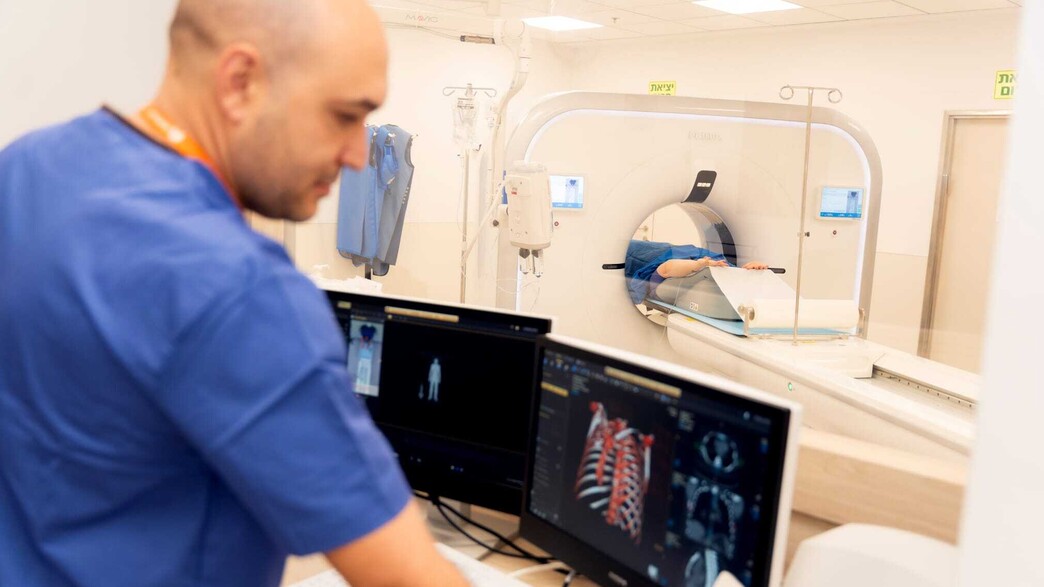
In science we usually prefer direct measurement – to measure exactly how a certain physiological index changes, such as heart rate in response to an external factor such as a scary movie. However, when the focus of research is the brain, it is more complicated to directly measure the neural activity, because it is protected under the skull. We are usually interested in what happens in the brain of a living and functioning being: although it is possible to extract a lot of information from studies on tissues and post-mortem dissections, they are not effective in order to understand what is happening in the brain in real time and do not allow us to see change over time.
dictation Originally published on the Davidson Institute for Science Education website
One of the common methods in neuroscience, especially in human studies, she Functional brain imaging with magnetic resonance (and in English Functional Magnetic Resonance Imaging, or fMRI for short). The signal measured by this method is called the BOLD signal, an acronym for Blood Oxygenation Level Dependent, and it measures the change in the oxygenation level of hemoglobin, the protein that carries oxygen in the blood. That is, the signal shows whether oxygen is bound to hemoglobin, or whether the cells have already used it and the hemoglobin does not carry oxygen. The premise is that active nerve cells that “exercise” will consume more energy and oxygen, and the more oxygen they use, the more oxygen-carrying blood cells will be needed.
As a result, a signal with a characteristic form of change called the hemodynamic response function is obtained: initially, the nerve cells consume the oxygen from the hemoglobin, the hemoglobin to which oxygen is not bound creates a disturbance in the magnetic field and sometimes a small decrease is seen in the measured signal (it is not always measurable). Then, since the nerve cells are still active and need more oxygen, the body responds by pumping a lot of blood into the area, blood in which hemoglobin is bound to oxygen. This flux is seen as a rather sharp increase in the signal. After that, when the nerve cells have finished their strenuous activity, we see a decrease in the pulse signal that reflects the decrease in blood flow volume – the area no longer needs such a significant supply of oxygen. Nerve cells operate quickly, in milliseconds, while changes in the diameter of blood vessels take several seconds. Therefore, the bold signal is slow in relation to the neural activity, but it has a great advantage: it allows non-invasive measurement of the activity while the subject is awake and performing various tasks. The method has become very common in neuroscience, and tens of thousands of studies have been carried out with its help.
But a new study, in which they followed the oxygen utilization of nerve cells, Show that the connection between it and the bold letter is not always It is clear as we thought: in about 40 percent of the cases the oxygen utilization of the nerve cells does not correspond to the increase in the BOLD signal, and sometimes the relationship between the oxygen utilization and the BOLD signal in general is reversed: in areas of the brain where the signal decreases, the oxygen consumption increases and vice versa.
Expand the image
The innovation in the study is that the measuring tool was an MRI, but in addition to the signal measured in an anatomical scan, which reflects differences in tissue composition, and the bold signal mentioned above, quantitative measures were also used to assess blood flow to the brain and the volume of blood flowing. The combination of the methods makes it possible to evaluate the oxygen consumption in the brain without direct measurement from the blood vessels in the brain. This is based on Pick’s law, which states that the oxygen consumption is equal to the multiplication of the blood flow rate by the oxygen extraction rate. Hence, to know how much oxygen the brain needs, we must know not only how much blood reaches it, but also how much of the oxygen in the blood actually reaches the cells.
At first glance, it seems that the findings destroy thousands of studies that used fMRI and measured the BOLD signal. However, those who delve into the field will not be surprised to find out that there are areas of the brain where an increase in the BOLD signal does not reflect an increase in oxygen consumption. Already in 1998, Timothy Davis (Davis) and his colleagues proposed A theoretical model For a mathematical calculation of the relationship between the Bould signal and changes in blood flow in the brain and oxygen metabolism. The model predicts that the classic reaction, that is, the common BOLD signal in fMRI studies, will only occur when the increase in blood flow rate significantly exceeds the rate of oxygen use, and on the other hand, it predicts that when nerve cells consume a lot of oxygen but the blood flow rate does not increase significantly, the BOLD signal will appear unchanged, or even a negative change will occur: the BOLD signal will decrease as if the area in the brain is less active, even though in reality the nerve cells are active and consume a lot of oxygen.
The research findings actually add a new factor to the picture: the rate of oxygen extraction from the tissues. When the nerve cells are active and need oxygen and extra energy, it is possible that a lot of oxygen-rich blood will reach the brain and the cells will use it, which will affect the classic blood signal, but there is another possibility – the nerve cells that need oxygen will use it more efficiently, absorbing more oxygen from the red blood cells without changing the blood flow rate. This index, the change in the oxygen extraction rate, is probably responsible for the high variability measured between the oxygen consumption and the pulse signal and the mismatch between the oxygen consumption of certain areas and the measured pulse signal.
Different brain areas – different extraction of oxygen
Is this a specific area of the brain where the cells can use up oxygen differently? not quite. 40 subjects participated in the study who performed several tasks: a memory task, a mathematical calculation task, a review task, a verbal task in which they were required to observe a sequence of English letters and press a button if the first letter in the sequence is a movement (“punctuation letter”), and a resting state, in which the subjects did nothing and let their thoughts wander freely. The different tasks are aimed at activating different areas of the brain related to different functions.
The researchers chose tasks that are considered “classic” in the study, and on which there is already an established body of knowledge, including which areas show a change in the bold letter while performing the task. For example, in a memory task we observed an increase in the bold letter in the hippocampus, An area of the brain associated with memory. When all the brain areas related to all the tasks were examined, it was found that in 32 percent of the gray matter areas the change in the BOLD signal corresponded to the change in oxygen consumption, meaning that these areas behaved according to the known hemodynamic response function. Conversely, in 22 percent of the areas the relationship between oxygen extraction and the bold signal was reversed, while in the remaining 46 percent there was no change in activity following the tasks.
The researchers noticed that most of the areas tested where the activity was opposite to the bold signal were in areas of the brain that belong to the default network, a network of areas that is activated mainly during daydreaming and rest. When the subjects performed the calculation task there was a decrease in the bold signal in the default network, but when they had to recall the autobiographical detail the bold signal in the network increased, perhaps because the activity of the default network is linked to the perception of the self. The network’s BOLD responses were expected and consistent with previous studies, however, when the cells’ oxygen utilization was examined, about two-thirds of the default network areas measured showed the opposite response – that is, the cells’ oxygen utilization did not match the BOLD signal. The mismatch between the oxygen extraction and the change in the BOLD signal was unexpected, and it is possible that, especially in this network, the classic hemodynamic response function is not the index that accurately describes the behavior of the cells.
In light of the research findings, it is possible that the research community should re-evaluate the interpretation of previous fMRI studies: it is possible that the fluctuations in the BOLD signal express changes in blood flow, and not necessarily changes in neuronal activity in a certain area of the brain. The research findings remind us of the importance of two of the most basic principles in science: doubt and mental flexibility. It is possible that in the future, using methods to assess oxygen extraction will allow a better understanding of the brain changes that occur in psychiatric conditions, in aging processes or in degenerative diseases of the brain.
https://21bets.co.com/en/welcome-bonus/
https://21bets.co.com/es/app/
https://21bets.co.com/es/bonuses/
https://21bets.co.com/es/deposit/
https://21bets.co.com/es/download/
https://21bets.co.com/es/free-spins/
https://21bets.co.com/es/login/
https://21bets.co.com/es/no-deposit-bonus/
https://21bets.co.com/es/promo-code/
https://21bets.co.com/es/registration/
https://21bets.co.com/es/review/
https://21bets.co.com/es/welcome-bonus/
https://21bets.co.com/fi/app/
https://21bets.co.com/fi/bonuses/
https://21bets.co.com/fi/deposit/
https://21bets.co.com/fi/download/
https://21bets.co.com/fi/free-spins/
https://21bets.co.com/fi/login/
https://21bets.co.com/fi/no-deposit-bonus/
https://21bets.co.com/fi/promo-code/
https://21bets.co.com/fi/registration/
https://21bets.co.com/fi/review/
https://21bets.co.com/fi/welcome-bonus/
https://21bets.co.com/fr/app/
https://21bets.co.com/fr/bonuses/