Mr. Hieu, 42 years old, weighs 123 kg, of which fat accounts for nearly half of his body weight.
When he arrived at Tam Anh General Hospital in Hanoi, Mr. Hieu weighed 123 kg, was 1.7 m tall, and had a BMI of 42 kg/m², belonging to the very obese group. Results of body composition analysis using the InBody machine show a very high fat percentage, about 58 kg of fat, 225 cm² of visceral fat. Mr. Hieu also has high blood pressure, dyslipidemia and blood sugar disorders, increased liver enzymes, fatty liver, and hepatitis C virus infection.
Dr. Le Ba Ngoc, Head of the Department of General Internal Medicine, said that the patient’s liver is affected by many factors at the same time including viral infection, fat accumulation and metabolic disorders related to obesity. Without treatment and weight control, liver damage can continue to progress, increasing the risk of chronic hepatitis and cirrhosis. Severe obesity with hypertension, dyslipidemia and dysglycemia creates metabolic syndrome, increasing the risk of coronary artery disease, myocardial infarction and stroke.
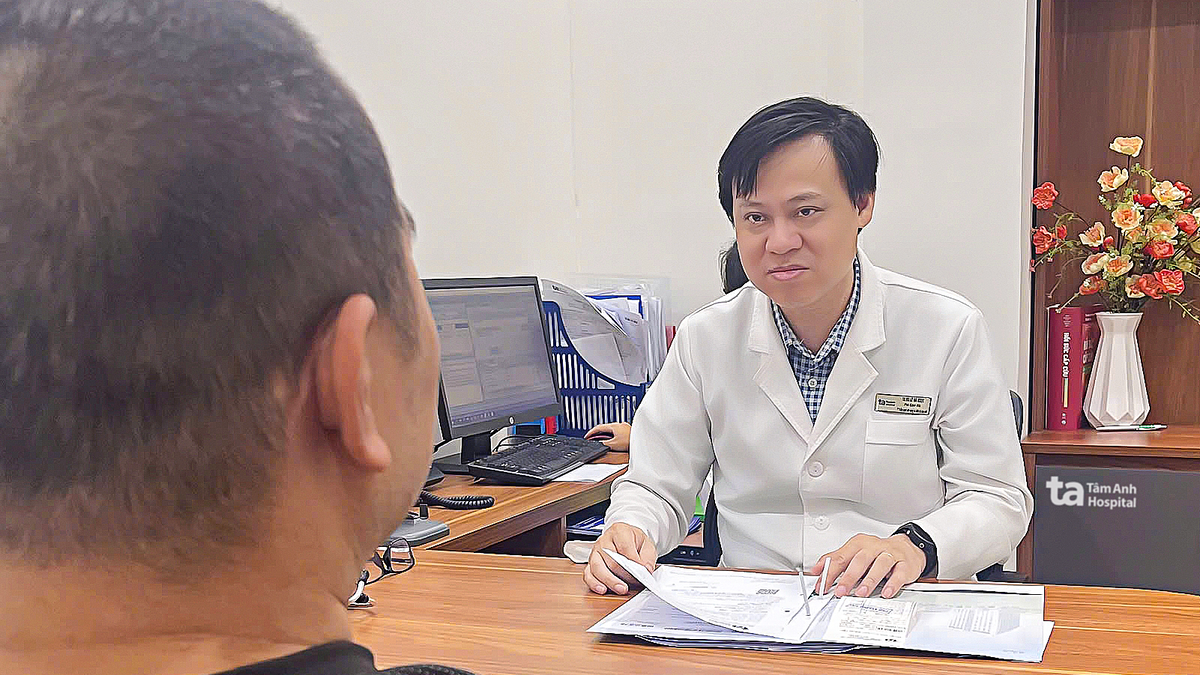
Doctor Ngoc is consulting a patient. Image: Tam Anh General Hospital
Doctors develop a multimodal obesity treatment regimen, including nutritional adjustment, increased exercise, and use of injections to support weight control. The goal of treatment is not only to reduce weight but also to reduce fat mass, protect muscle mass and improve related metabolic disorders.
Patients are simultaneously treated for hepatitis C and monitored for liver and kidney function as well as unwanted effects that may occur when combining drugs.
Dr. Tran Quyen An, nutritionist, Tam Anh General Hospital, Hanoi, said that obese patients are often given a diet with an energy intake lower than the body’s needs to lose weight. However, the diet must still provide enough protein, vitamins and minerals to limit muscle loss, maintain physical strength and ensure health during the weight loss process.
Patients should prioritize whole grains, vegetables and foods rich in fiber; Limit animal fats, fried foods and trans fats. At the same time, stop drinking alcohol, limit soft drinks and processed foods to reduce the metabolic burden on the liver.
After nearly a month of treatment, Mr. Hieu lost 9 kg, down to 114 kg, and his BMI was about 39 kg/m². Body fat percentage also decreased, and blood pressure improved more than before. He is less tired, sleeps better, and is less short of breath when exercising. Currently, he continues to lose weight in stages, aiming for a long-term goal of 70 kg, periodically monitoring his weight and underlying disease.
According to Dr. An, overweight and obese people losing 5-10% of their initial weight can help improve blood sugar, blood pressure, blood fat and metabolic risk factors. Overweight and obese people should be examined to develop a suitable weight loss plan. Proper obesity treatment contributes to reducing the risk of cardiovascular and liver damage and dangerous complications.
Activity
School Idol Tomodachi – 3mmgmj9yvx: Profile
README.md · a144a4f9b485588711ab6c3e869fd926d7fea15c · mz9j1 3gmz9j1 / Pinko казино · GitLab
ggne3gmz9j1
389A45E007598008A8B7E4602Eb3723E
Volunteer Profile – AMPP
5 Companies Redefining the Future of Work in 2026
Pinco Casino
chojnow.pl – qs8899nnet
The future of gambling platforms and new technologies – Bastlírna HWKITCHEN
Pinco казино – TartaClubItalia
http://pub45.bravenet.com/forum/static/show.php?usernum=3828411584&frmid=32&msgid=1078599&cmd=show
Многие пользователи при выборе онлайн-платформы ценят прежде всего удобство и… — g.eral.dgriffin.bl59
BeoWorld Forum
Как стать ФИНАНСОВО НЕЗАВИСИМОЙ? — Официальный сайт Милы Левчук – эксперта по семейным отношениям
LocostUSA.com – Viewing profile – 4zda3hauju
MONEY-FX » Pinco казино
BrickLink About Me Pages – About dennis40
Taylor Strecker Show & Kenny Zimlingshow Fans » Пинко КГ
Untitled Haiku Deck
Ryantho's Superb Site
Pinco casino
Zlusoi2Klpcctoc
melindamurr – FYERS Community: Learn, Share & Trade Smarter
казино Pinco