The US Army has published a detailed study of the IDF military medical service’s experience during the war that began on October 7, 2023. American military experts have found that thanks to changes in the organization of medical care, new treatment protocols and accelerated evacuation, the mortality rate among wounded Israeli troops decreased from 14.8% during the Second Lebanon War in 2006 to 7.1% in 2024. At the same time, the severity of the injuries received by military personnel increased significantly.
The Israeli Defense Force Medical Lessons Learned study was prepared by the 68th U.S. Army Europe/Africa Medical Command. The authors of the 78-page report are Colonel Benjamin Baker, Lieutenant Colonel Angelina Gerardot and Dr. Jacob Stoil. The document was prepared in November 2025 and published on the US Army website on April 30, 2026. On October 10, Fox News drew attention to him. After this publication, information about the report was widely circulated on social networks.
The study is based on materials provided by the IDF medical service, meetings with Israeli military doctors and an analysis of 4,541 injury cases for which complete medical data were available. American experts note that the reduction in mortality was achieved despite a significant increase in the proportion of seriously injured: if in 2006 8% of victims had severe injuries, then in 2024 this figure reached 23%.
The IDF Medical Service has published a “Guide to Trauma and Combat Medicine”
One of the main changes was a sharp reduction in the time between injury and the beginning of qualified medical care. Whereas in 2006 it took 10 to 25 minutes for a paramedic or other specialist capable of performing advanced resuscitation to arrive, during the current war this period has been reduced to 0-4 minutes.
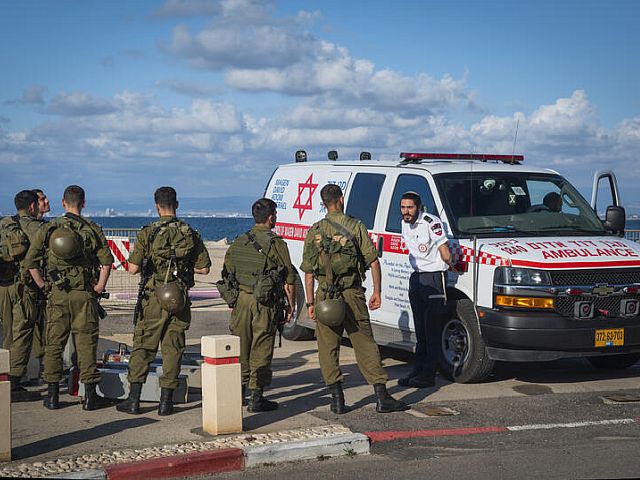
To achieve this, the IDF placed medical teams directly in combat units. Each company has two medical vehicles, each crewed by a doctor or paramedic and two medics. Thanks to this, treatment for severe bleeding and other life-threatening injuries can be provided almost immediately after injury.
American researchers paid special attention to changing protocols for treating wounded people who have lost a large amount of blood. Before the current war, the IDF primarily used freeze-dried plasma. During combat operations, whole donor blood, containing all the main components of blood, became the main remedy for severe blood loss.
Israeli military doctors began delivering supplies of whole blood directly to the site of combat operations. For this purpose, special refrigerated containers are used, as well as refrigerators installed in armored medical vehicles and other evacuation vehicles.
The result was a reduction in the time to start whole blood transfusion for severe wounds from 20 minutes in 2018-2023 to five minutes in 2024. According to the American report, during the fighting directly in the field, 368 wounded received blood products, and 297 of them were transfused with whole blood.
Aid priorities have also changed. After stopping massive bleeding, doctors immediately check for signs of hemorrhagic shock and begin blood transfusions if necessary. An analysis of 112 seriously injured patients found that early blood or plasma transfusions were associated with improved survival, while some respiratory procedures performed before hospitalization did not show a similar association with survival. Based on these findings, the IDF revised the relevant protocols.
Another factor was the accelerated evacuation. To transport the wounded from the battlefield, armored medical vehicles are used, including the Namer armored personnel carrier, specially equipped off-road vehicles and helicopters of the 669 Israeli Air Force unit. The report notes that the average time to hospital for seriously injured service members was 62 minutes. Moreover, 48% of such victims were hospitalized within the first hour after injury.
American experts also studied the implementation of a digital medical documentation system. During the war, the IDF switched from paper cards to secure tablets that could record information about a wounded man’s condition and treatments. In the latest version of the system, information is transferred between medical evacuation units using a magnetic card attached to the wounded person. In the future, it is planned to integrate the system with a secure military network and ensure data transfer directly to civilian hospitals.
A separate section of the report is devoted to the supply of units with donor blood. American experts note the role of the national blood service Magen David Adom, which is capable of dramatically increasing the volume of blood collection in emergency situations. After October 7, 2023, daily blood collection in Israel increased from approximately 1,100 to 4,000 doses.
In addition, the IDF is testing the ability to deliver blood to forward positions using drones. During the experiments, special containers with blood were dropped from a height of about 200 meters using parachutes. Tests have shown that the contents can retain the necessary medical properties after landing, but the technology is still being developed.
The study’s authors believe that the IDF’s experience is especially important for preparing the US army for possible large-scale military conflicts in which medical evacuation may be difficult and units are forced to operate for long periods of time away from hospital medical facilities.
Recommendations include expanding whole blood supplies directly to combat units, equipping military vehicles with refrigeration units, developing digital medical systems, improving evacuation and exploring the use of drones to supply doctors.
American experts emphasize that some Israeli solutions can be adapted almost immediately, while others will require additional research, funding and changes in the organizational structure of the medical service.
The report concludes by noting that after October 7, 2023, the IDF had to urgently rebuild the military medical system during combat operations. The authors believe that the US army can avoid such a painful process if it studies the Israeli experience in advance and prepares for its application.