For the first time in history, humanity was able to watch videos in 4K resolution sent from the far side of the moon using laser beams, which allowed us to see the lunar surface as never before – sharp, scarred and magnificently beautiful. The new “Earth Sunrise” image released by the team, in which the small blue Earth rises above the black lunar horizon, has already become a cultural icon reminding us how fragile our home is in the vastness of infinity.
But the most spectacular scientific challenge is undoubtedly dealing with the extreme heat. As soon as Orion hits the upper layers of the atmosphere at a speed of 40,000 km/h, the air in front of it will not be able to move and it will be compressed with such force that it will produce a heat of 2,760 degrees Celsius – a temperature at which most metals turn into steam. To survive this hell, the spacecraft is equipped with the largest heat shield ever built for a manned spacecraft, with a diameter of 5 meters. The shield is made of a material called “Avocate” (Avcoat), a special ceramic material designed to degrade in a controlled manner. In a process called “ablation”, the outer layer of the shield burns, turns into carbon and peels off the spacecraft, thereby carrying the extreme heat away from the aluminum body where the astronauts sit. This is a physical sacrifice mechanism in which the shield “sacrifices” itself to keep the temperature inside the cabin at a comfortable level of only 25 degrees Celsius.
Technologically, today (Thursday) one of the most fateful maneuvers will be performed: OTC-4, the last course correction maneuver before penetration. Orion’s small engines will be fired for a few seconds to fine-tune the angle of entry into the atmosphere. There is no room for mistakes here. If the angle is too sharp, the spaceship could burn up from the enormous friction; If it gets too blunt, it could “bounce” out of the atmosphere back into space like a stone skipping across water, without enough fuel to get back up again. NASA will use the sophisticated Skip Re-entry method, in which the spacecraft enters slightly, “jumps” up to reduce speed and heat, and then re-enters for good. This is a technology that allows for a much more precise landing near the rescue ships in the Pacific Ocean, and reduces the G-load on the exhausted astronauts’ bodies.
Tomorrow, Friday, the team will devote its time to a final rest and summaries in front of the control center in Houston. They will repeatedly go through the emergency procedures in case the parachutes do not open properly or in case of a leak in the capsule after landing in the water. The tension at NASA is at its peak, but the results so far are very encouraging and indicate that Orion is the safest machine ever built for such journeys. The success of Artemis 2 is not just a victory for four people, but a critical demonstration of capability for the entire Western space program. The data collected on cosmic radiation, on the performance of edge computers and the ability of humans to function at such a high level so far from home, is the foundation on which the next human settlement will be built. extraterrestrial
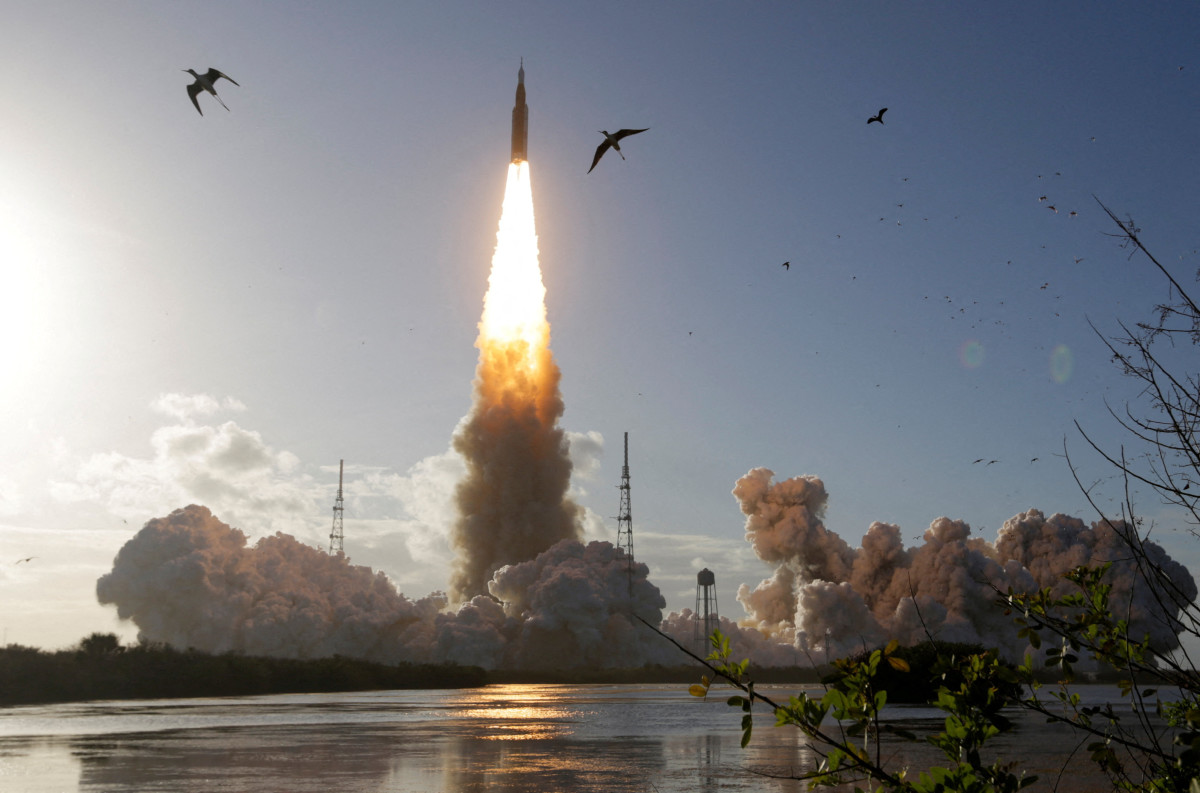
When we look to the sky this Friday night (Israel time), we will know that these four heroes are making their way to a fiery encounter with the atmosphere, protected by the degradable avocado layer and by human engineering at its best. This is the end of a wonderful journey that began with flames at launch and will end with a landing in the cool waters of the Pacific Ocean. The data they will bring with them in the spaceship’s digital memory and in their aching bodies will be the ones that will enable the next, even bigger mission.
The next flight to the moon, the Artemis 3 mission, is expected to take place in 2028, and it will be the real highlight: this time humanity will not be satisfied with a distant orbit, but will make a real manned landing on the surface of the moon in the hope of establishing a permanent base that will be a springboard to the next destination – Mars.
https://emmetrecords.us/property-records
https://emmetrecords.us/warrant-search
https://erathrecords.us/
https://erathrecords.us/arrest-records
https://erathrecords.us/court-records
https://erathrecords.us/criminal-records
https://erathrecords.us/divorce-records
https://erathrecords.us/inmate-search
https://erathrecords.us/property-records
https://erathrecords.us/warrant-search
https://essexrecords.us/
https://essexrecords.us/arrest-records
https://essexrecords.us/court-records
https://essexrecords.us/criminal-records
https://essexrecords.us/divorce-records
https://essexrecords.us/inmate-search
https://essexrecords.us/property-records
https://essexrecords.us/warrant-search
https://fairfieldrecords.org/
https://fairfieldrecords.org/arrest-records
https://fairfieldrecords.org/court-records
https://fairfieldrecords.org/criminal-records
https://fairfieldrecords.org/divorce-records
https://fairfieldrecords.org/inmate-search
https://fairfieldrecords.org/property-records