YouTube has started testing a new conversational search experience on the platform, with which it will offer results that will include both long videos, such as YouTube Shorts and text in combination, on the related topic for which information is being sought.
The streaming platform owned by Google has shared its intention to improve the way in which users discover and search for content, making it easier to find videos of interest along with detailed information, helping to delve deeper into specific topics in a “more interactive” way.
In this sense, it has begun to test an experience for the YouTube search powered by artificial intelligence (AI)) which, instead of showing video results as usual, that is, in list format with their corresponding thumbnails, will offer more complete responses in a specific conversational interface.
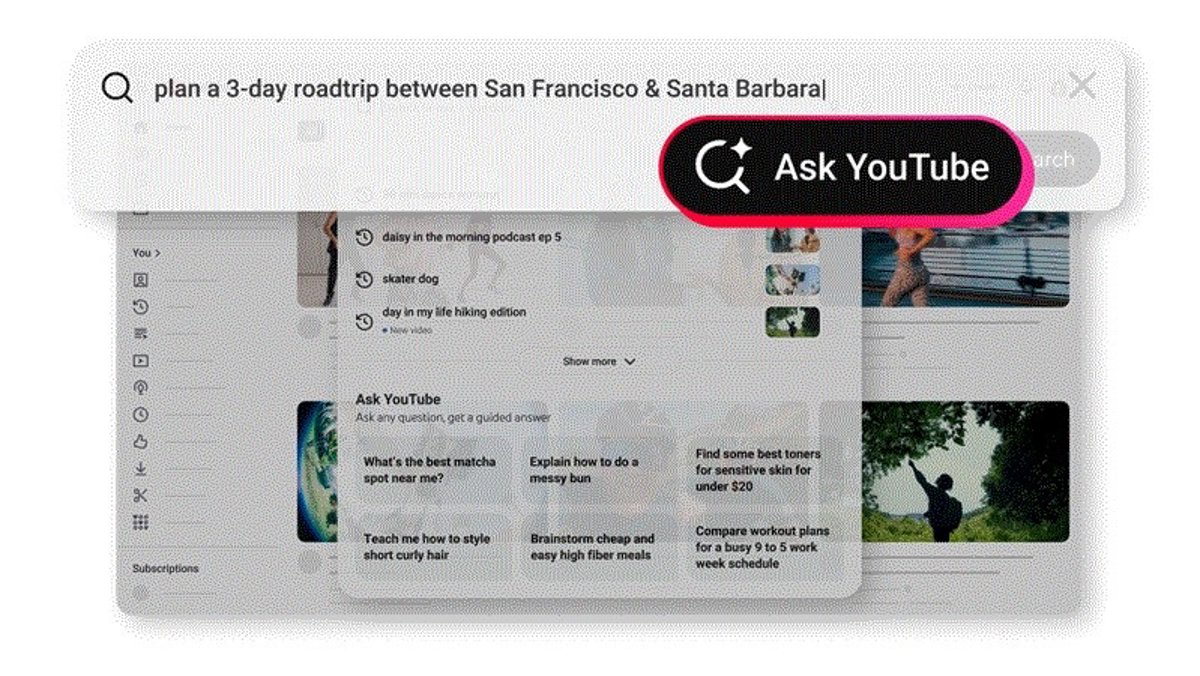
Specifically, it is the ‘Ask YouTube’ featurewhich will appear as a new option in the search bar to, once activated, return both videos and text in a new dedicated interface, which will allow “ask additional questions and delve deeper into the topic”, as in conversations with an assistant.
However, it is a experimental functionavailable through YouTube Labs for users subscribed to YouTube Premium in the United Statesover 18 years of age, as detailed on its YouTube support page.
Thus, the company has specified that users will be able to ask questions such as “plan a 3-day road trip from San Francisco to Santa Barbara”, as a result, they will obtain a structured step-by-step travel itinerary, including a combination of long and short videos and informative text with tips local or essential places.
After that, users will be able to ask additional questions such as where to stay or other route options. Likewise, it is also will show relevant video segments where this information is found.
YouTube has also clarified that Videos will be displayed with their titles and channel detailsso users can easily discover new creators and content.
With all this, although it is still a test, YouTube has clarified that it foresees expand the experiment to users other than premium subscribers “in the future.”