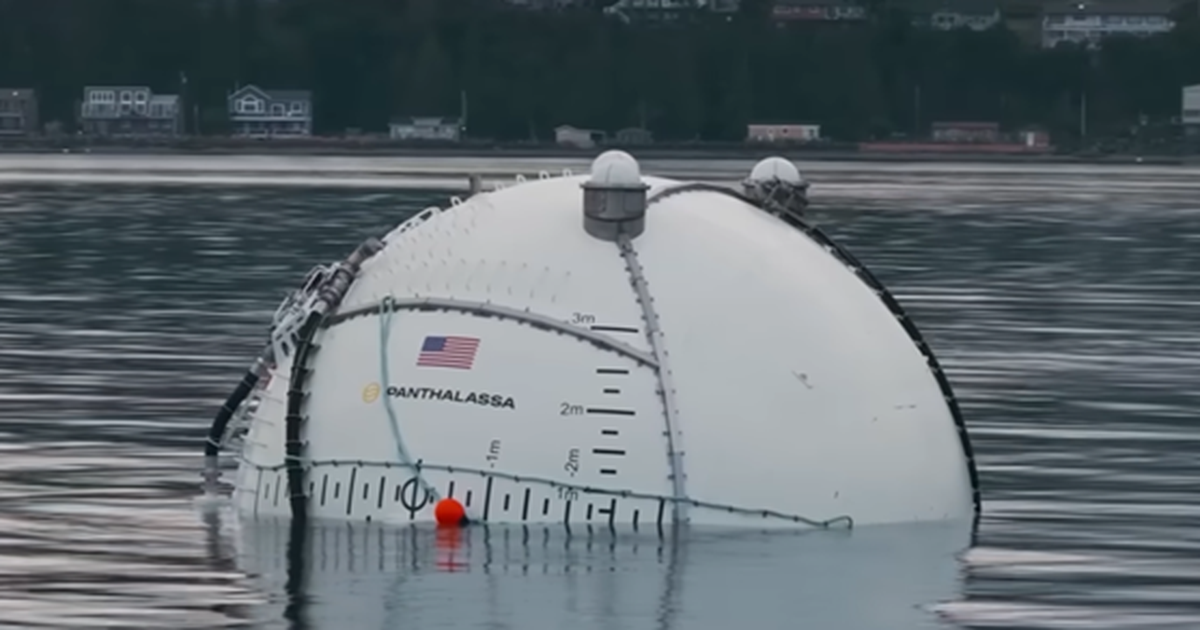
While Croatia plans to solve the growing energy needs of artificial intelligence by building a huge solar data center in Topusko, the American technology company Panthalassa is moving forward with a radically different plan: moving data processing to the open sea. Backed by new financing that raises its value to almost one billion US dollars, the company plans to use wave energy. After ten years of developing the technology, the startup has attracted big names, including PayPal co-founder and early Facebook investor Peter Thiel, who led a $140 million investment round.
- We are now ready to build factories, set up fleets and provide the public with a sustainable new source of energy – said Garth Sheldon-Coulson, co-founder of č and CEO of Panthalassa.
The energy crisis of artificial intelligence
Panthalassa’s idea connects two pressures that rarely meet head-on: the growing demand for computing power needed for artificial intelligence and the limitations of land-based energy systems. The development of artificial intelligence has led to a dramatic increase in electricity consumption, and data centers for AI consume significantly more than classic ones. It is estimated that the energy consumption of data centers in the European Union could reach almost 150 TWh by 2026, while in the USA by 2030 it could be up to 9.1 percent of the total national consumption.
This “hunger” for energy creates enormous pressure on the existing electrical networks, causing long waits for connections in major European hubs such as Frankfurt, London and Amsterdam. This has encouraged the industry to look for alternative solutions that are independent of overburdened terrestrial networks. By placing both power generation and computing operations onshore, Panthalassa claims to be able to circumvent grid limitations and cooling challenges.
How does the ocean current work?
The plan is to use the motion of the waves to push water through a turbine, generating electricity to directly power AIs at sea. The company houses this entire system in a structure it calls a “vor,” an 85-meter structure of solid steel that is mostly located below the surface of the ocean. Inside it, in a hermetically sealed tank, there is an AI server that is cooled by the surrounding seawater. Vessels can move themselves to their destination using the shape of their hull, without the need for an engine or fuel.
Unlike other projects that use ocean energy, Panthalassa will never transmit electricity back to land. Instead, AI chips on the vessel will receive user queries via SpaceX’s Starlink satellite link and send processing results back via the same channel.
Terawatts of unused energy
- There are three energy sources on the planet with the potential of tens of terawatts of new capacity: solar energy, nuclear energy and the open ocean – said Sheldon-Coulson.
Waves are created by the action of wind, and wind is created by heat from the sun. This means that the waves are essentially doubly concentrated sunlight that continues to move even when the wind stops. The company’s ships have no hinges, flaps or gears that could fail in hostile ocean conditions, making them easier to mass produce. They use only abundant materials, such as steel, with reliable supply chains that support rapid deployment, which represents a huge opportunity for data center development.
The scale of this opportunity has attracted the attention of some of Silicon Valley’s most prominent investors.
- The future requires more computing power than we can imagine. Alien solutions are no longer science fiction. Panthalassa opened the ocean frontier – said Peter Thiel.
John Doerr, an early investorč in Google and Amazon, called Panthalassa’s system a turning point in “solving global energy needs and producing the same energy”.
“It’s a triple win: workers benefit, communities benefit, and we get a strategic asset that strengthens America’s technology leadership,” Doerr added.
Plans and inevitable challenges
Panthalassa plans to deploy its Ocean-3 pilot wells in the North Pacific Ocean this year, with commercial installations planned for 2027. The company is moreć demonstrated its capabilities with the Ocean-1, Ocean-2 and Wavehopper prototypes in 2021 and 2024.
However, moving from prototypes to a commercial fleet of hundreds or thousands of aircraft is a completely different challenge. The ocean is unpredictable, and maintaining floating data centers in remote waters, far from any port, will require logistics that no company has ever been able to establish. Saltwater corrosion, biofouling and storm damage are not theoretical problems for marine equipment, rather; a daily reality that has sunk many promising ocean energy ventures before this. Thiele’s money buys time and production capacity, but it does not buy immunity to the laws of physics or the hostility of the sea.