Malaysian Prime Minister Anwar Ibrahim announced that he will conduct cloud seeding to create artificial rain and add water to the northern rice growing region.
Theo AFP, This method involves spraying particles such as silver iodide and salt into clouds from an airplane to create rain, often to change the weather or reduce air pollution. However, success depends on atmospheric conditions and will not be effective without clouds. Officials hope to begin cloud seeding soon, although an exact time has not been announced.
The new solution was introduced this week after planting in Malaysia’s northern “rice bowl” slowed due to drought, causing supply concerns. “This year is affected by prolonged dry weather, low rainfall and reduced water levels at dams,” said Mohamad Sabu, Malaysia’s Minister of Agriculture and Food Security.
Farmers missed two of the three normal planting stages of the wet sowing method (taking soaked and germinated rice seeds and sowing them directly into a wet field) with rice, which requires the field to be flooded. Dry sowing is an alternative method that lasts until June, but farmers say this technique gives lower yields, and sporadic rains also make its application impossible in some fields.
Although more than 50% of the rice fields in the area have been prepared, only a small portion has been planted because farmers are waiting for rain. Minister Mohamad confirmed that planting has not been canceled but temporary adjustments are being implemented.
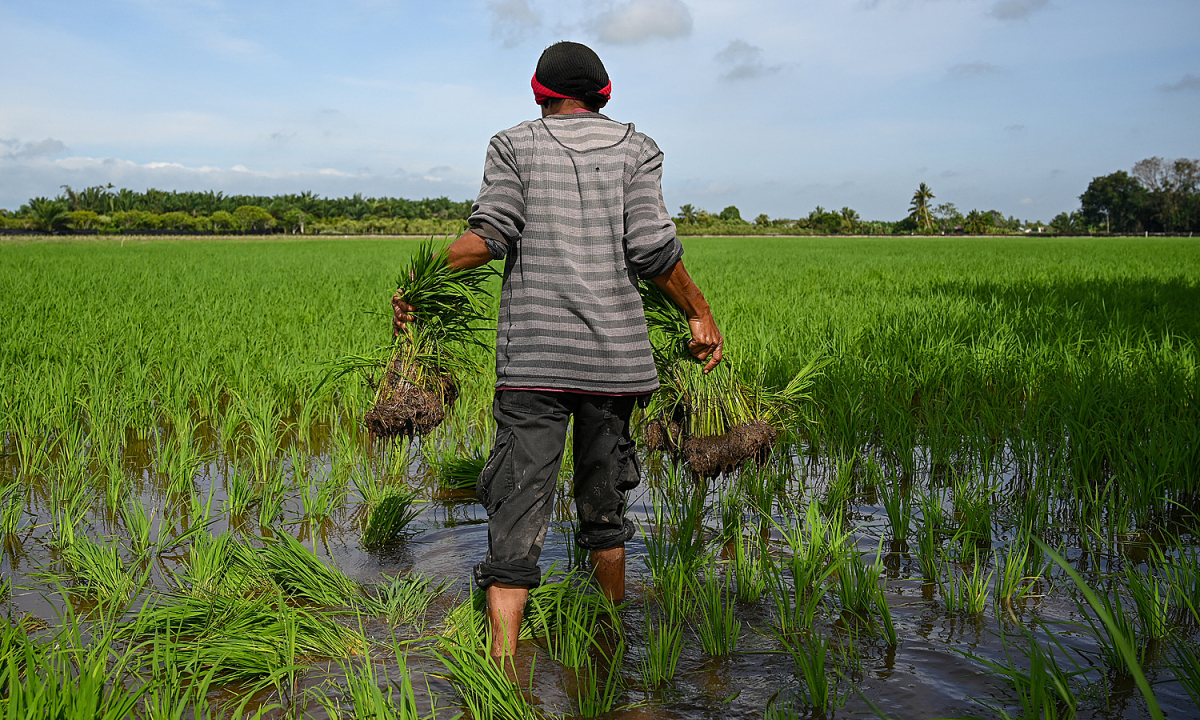
Farmers bring seedlings to plant in rice fields in Sekinchan, Selangor state, Malaysia, 2021. Photo: AFP
Rice is the main food crop in Malaysia. The country consumes about 2.5 million tons of rice each year, half of which is produced domestically. Most of the supply comes from northern peninsular Malaysia, of which Kedah state is the largest producing region. Minister Mohamad said this place “is of strategic importance to Malaysia’s food security”. He also assessed that Malaysian rice farmers have struggled with drought or erratic rainfall before, but this year’s challenge is “more serious”.
The crisis comes as Asia prepares for the possibility of El Nino returning, bringing changes in winds, air pressure and rainfall. According to weather forecasters, this phenomenon could form as early as May-July and initial observations show it to be particularly strong. Asia is regularly hit hard by El Nino, with some places experiencing heat and drought, others experiencing heavy rain.